
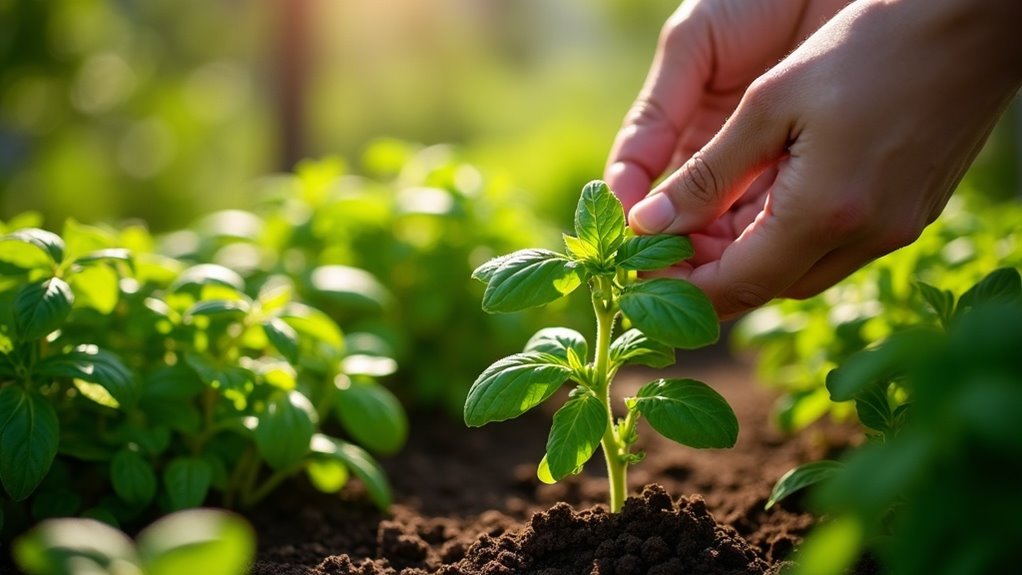
If you want bushy growth in your plants, focus on herbs like basil, cilantro, and oregano, as well as flowering plants such as zinnias and cosmos. Vegetables like tomatoes and peppers also benefit greatly from pinching. This technique encourages branching and fuller foliage, enhancing overall plant health and productivity. Remember to pinch during the active growing season for the best results. There are more details and tips to guarantee your plants thrive ahead.
Key Takeaways
- Basil: Pinching encourages multiple stems, leading to increased leaf yield and bushier growth.
- Cilantro: Redirects energy from flowering to produce more leaves and reduce stalk growth.
- Oregano: Prevents flowering and promotes more leafy growth, enhancing overall plant density.
- Zinnias and Cosmos: Pinching at 12-18 inches boosts bushiness and maximizes bloom production.
- Tomatoes: Redirects energy for additional fruiting stems, increasing overall yield and bushiness.
Understanding the Benefits of Pinching
When you pinch back your plants, you not only encourage a bushier growth habit but also boost their overall health and productivity.
Pinching redirects energy from the central stem to side-shoots, stimulating new growth and enhancing the plant’s density. This technique prevents tall, rangy plants, resulting in a more aesthetically pleasing appearance.
Regular pinching, performed when plants are 8-12 inches tall with 3-5 sets of leaves, promotes branching in herbs like basil and cilantro, markedly increasing your harvest.
Essential Herbs That Thrive With Pinching
Pinching isn’t just beneficial for overall plant health; it’s particularly advantageous for specific herbs that thrive under this practice. By regularly pinching these herbs, you promote fuller growth and enhance your culinary yields.
| Herb | Benefit of Pinching | Resulting Growth |
|---|---|---|
| Basil | Encourages multiple stems | Increased leaf yield |
| Cilantro | Redirects energy from flowering | More leaves, less stalk |
| Oregano | Prevents flowering | More leafy growth |
| Lavender | Promotes dense shrub form | Better aesthetic appeal |
| Rosemary | Develops additional stems | Continuous harvest |
Embrace this technique for thriving herbs!
Flowering Plants That Benefit From Pinching
When it comes to flowering plants, zinnias, cosmos, and petunias are ideal candidates that respond positively to pinching.
You can enhance their growth by employing specific techniques at the right time, typically when they reach 12-18 inches tall.
This practice not only redirects energy to side-shoots for bushier growth but also maximizes bloom production throughout the season.
Ideal Flowering Candidates
To achieve a lush and vibrant garden, incorporating pinching techniques into your care routine for certain flowering plants can make a significant difference.
Annual flowers like zinnias, cosmos, petunias, and sweet peas particularly thrive with pinching, promoting a bushy plant structure and enhancing flower production.
Perennials such as asters and chrysanthemums also benefit from regular pinching before mid-summer, fostering lateral growth for a fuller appearance.
Additionally, delphiniums and dahlias respond well, resulting in increased branching and robust blooms.
Pinching Techniques Explained
Effective pinching techniques can transform the growth habits of various flowering plants, promoting a fuller and more robust appearance.
To achieve bushy growth, pinch plants like basil, zinnias, and cosmos when they reach 8-12 inches tall with 3-5 sets of leaves. Use clean, sharp snips or your fingers to remove 3-5 inches of tender growth just above a leaf node. This stimulates branching, redirecting energy to side shoots and enhancing overall plant health.
Regular pinching, especially for annuals, encourages prolonged flowering and prevents leggy growth, making your garden more visually appealing with suitable varieties like dahlias and marigolds.
Timing for Optimal Growth
Timing plays an essential role in maximizing the benefits of pinching flowering plants, as it directly influences their growth and blooming potential.
For annual plants like petunias and zinnias, pinch back when they reach 12 to 18 inches tall, typically from June to August, to encourage a growth spurt and bushier appearance.
Fall-blooming perennials, such as asters and chrysanthemums, should be pinched every few weeks until around the 4th of July for fuller blooms.
Additionally, pinch herbs early in the season before the first bud sets to enhance leaf production instead of flowers.
Ideal timing guarantees healthier, more vibrant plants.
Vegetables That Respond Well to Pinching
Many vegetables thrive when you incorporate pinching into your gardening routine. This technique encourages bushy growth and enhances the yield of various plants.
Incorporating pinching into gardening promotes bushy growth and boosts vegetable yields.
Here are some vegetables that respond particularly well to pinching:
- Tomatoes: Redirects energy for more fruiting stems.
- Peppers: Stimulates multiple branches, increasing yield.
- Basil: Enhances leaf production for a more abundant harvest.
- Snap peas: Promotes vigorous side shoots, resulting in more pods.
Perennials That Need Pinching for Healthier Growth
While some gardeners may overlook the importance of pinching, it plays an essential role in the health and vigor of perennial plants. Key perennials that benefit from this practice include:
| Plant | Benefits of Pinching | Timing |
|---|---|---|
| Asters | Promotes bushy growth and blooms | Every few weeks until July |
| Chrysanthemums | Enhances flower display | Regular intervals |
| Russian Sage | Encourages multiple stems | Early spring |
| Phlox | Redirects energy for fuller growth | Early growing season |
| Salvia | Stimulates new shoots and flower yield | Mid-season |
Engaging in pinching guarantees a vibrant garden full of flourishing flowers!
Timing and Techniques for Effective Pinching
To achieve bushier growth, you should time your pinching carefully and use the right techniques.
Aim to pinch your plants when they reach 8-12 inches tall with 3-5 sets of leaves, using clean, sharp snips to remove 3-5 inches of the top growth just above a node.
For continuous herb production, remember to pinch back regularly every few weeks, cutting at least one-third of the top growth.
Optimal Pinching Timing
When you’re looking to encourage bushy growth in your plants, timing your pinching technique is essential for achieving optimal results.
For ideal pinching timing, consider these key points:
- Pinch when plants reach 8-12 inches tall with 3-5 sets of leaves.
- Early spring is best, before the first bud sets, to maximize branching and produce more flowers.
- For herbs like basil, pinch regularly every few weeks, removing at least one-third of the top growth.
- Avoid pinching perennials about 8 weeks before the first frost to guarantee new growth matures before winter.
Frequent pinching throughout the growing season maintains a compact, lush appearance.
Effective Pinching Techniques
Achieving bushy growth in your plants not only relies on timing but also on employing effective pinching techniques.
Pinching should occur when your plants reach 8-12 inches tall and have 3-5 sets of leaves. Use clean, sharp snips or your fingers to cut back 3-5 inches of tender growth above a leaf node. This promotes branching and prevents leggy plants.
While early spring is ideal for pinching, you can still encourage growth if you’re delayed, though it may affect flowering.
For herbs like basil, aim to cut at least one-third of the top growth during each session to enhance bushiness.
Common Mistakes to Avoid When Pinching Plants
While pinching plants can promote bushier growth and increased flowering, several common mistakes can undermine your efforts. To avoid setbacks, keep these points in mind:
Pinching plants encourages bushy growth, but common mistakes can hinder your success. Stay informed to maximize results.
- Pinch too late in the growing season, delaying flowering.
- Use clean, sharp tools to prevent damage and disease transmission.
- Identify the correct node to pinch just above a leaf or bud for best results.
- Avoid over-pinching; limit to one-third of the plant’s top growth at a time to prevent stress.
Neglecting regular pinching can lead to leggy, sparse plants instead of the desired bushy appearance.





