
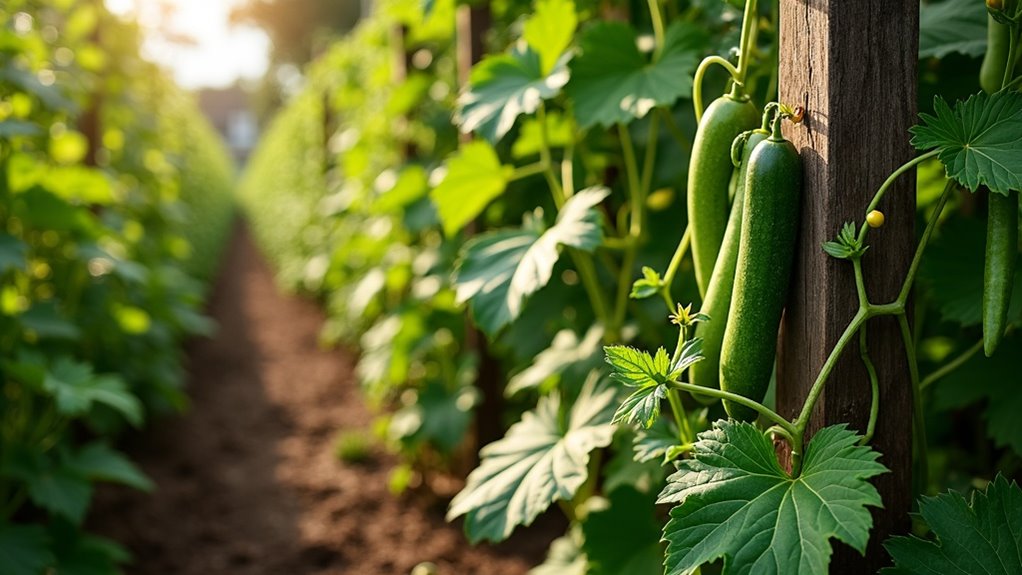
In vegetable gardens, you’ll want to trellis climbing varieties like cucumbers, indeterminate tomatoes, and pole beans. These plants thrive when supported vertically, maximizing space and improving air circulation. Trellising not only enhances sunlight exposure but also reduces the risk of soil-borne diseases, making harvesting easier. Consider early planting of cool season crops to set the stage, and explore the various trellis types available. Discovering the right techniques can further elevate your gardening success.
Key Takeaways
- Climbing vegetables such as cucumbers, indeterminate tomatoes, and pole beans require trellising for optimal growth.
- Trellising improves air circulation and sunlight exposure, reducing the risk of diseases for these plants.
- Pole beans can grow up to 6 to 8 feet tall when provided with adequate trellis support.
- Vining cucumbers produce straighter fruit and enhance yields when trained on a trellis.
- Indeterminate tomatoes benefit from vertical support, allowing continuous production until frost.
Benefits of Trellising in Vegetable Gardens
When you trellis your vegetable plants, you maximize vertical space in your garden, which allows for higher plant density and increased yields, especially in limited areas.
By using support systems, you encourage plants to grow vertically, improving air circulation and sunlight exposure. This leads to healthier crops while reducing the risk of soil-borne diseases.
Additionally, trellised plants are easier to harvest since fruits and vegetables are more accessible and less likely to rot from ground contact.
Trellising also helps manage pests effectively, as elevated plants are less susceptible to ground-dwelling pests and diseases, enhancing overall garden productivity.
Key Vegetables That Require Trellising
When planning your vegetable garden, consider key climbing vegetables like cucumbers, indeterminate tomatoes, and pole beans that thrive on trellises.
These plants not only benefit from vertical support, improving airflow and reducing disease risk, but they also maximize space and yield.
Understanding their specific needs can enhance your gardening success.
Climbing Vegetables Overview
Climbing vegetables are essential for maximizing space in your garden, as they not only grow vertically but also produce abundant yields.
Examples include pole beans, which can reach 6 to 8 feet with adequate trellis support, and peas, thriving at 3 to 6 feet.
Vining cucumbers benefit from trellises, resulting in straighter fruit, while indeterminate tomatoes require vertical support to grow tall and continue producing until frost.
Additionally, Malabar spinach, a heat-loving vine, climbs trellises up to 10 feet, making it ideal for summer gardens.
Utilizing trellising effectively enhances your garden’s productivity and organization.
Benefits of Trellising
Trellising offers numerous advantages for climbing vegetables, enhancing both their growth and your gardening experience. By supporting vertical growth, trellises improve air circulation and sunlight exposure, which can greatly enhance yields. They also help maximize space, allowing you to grow more plants in smaller areas. Additionally, trellising reduces ground contact for vining crops, producing cleaner fruits and minimizing rot and pest issues. Below is a table summarizing key benefits:
| Benefit | Description | Impact on Gardening |
|---|---|---|
| Vertical Growth | Supports upward growth | Increases yield potential |
| Air Circulation | Enhances airflow | Reduces disease risk |
| Cleaner Fruits | Minimizes ground contact | Improves fruit quality |
| Maximizes Space | Allows more plants in less area | Optimizes garden layout |
| Easier Harvesting | Simplifies picking | Saves time and effort |
Seasonal Planting for Trellised Vegetables
When planning your vegetable garden, timing is essential for trellised crops.
Start with cool season vegetables like sugar snap peas and fava beans as soon as the soil is workable, then shift to warm season plants such as indeterminate tomatoes and cucumbers.
This strategic planting guarantees you maximize vertical space and yield throughout the growing season.
Cool Season Planting
To maximize your garden’s potential, consider planting cool season vegetables like sugar snap peas, snow peas, and fava beans on trellises.
These climbing plants thrive with vertical support, allowing for improved air circulation, which reduces disease risk and promotes healthier growth.
Plant them as soon as the soil is workable in early spring to take advantage of cooler temperatures for best yields.
Utilizing trellises not only facilitates easier harvesting but also enhances sunlight access.
This approach is especially beneficial in small garden spaces or raised beds, effectively maximizing your available garden space while ensuring robust growth of your cool season crops.
Warm Season Planting
While the warmth of the growing season brings an array of vibrant vegetables to your garden, it’s essential to utilize trellising for peak growth and yield.
Indeterminate tomatoes, cucumbers, and pole beans thrive with vertical support, maximizing space efficiency in your gardening efforts. Trellised cucumbers, supported by 5- to 6-foot tall structures, produce straighter, healthier fruit.
Pole beans naturally twine around trellises, reaching heights of 6 to 8 feet with minimal training. Plant fast-growing varieties early to enjoy a plentiful harvest.
Additionally, consider trellising tomatillos, asparagus beans, and luffa gourds for improved air circulation and easier harvesting.
Flowers That Thrive on Trellises
Trellises not only enhance the aesthetics of a garden but also provide essential support for a variety of climbing flowers.
These flowering plants thrive when given the chance to grow vertically, improving air circulation and sunlight exposure.
Consider these climbing varieties:
- Sweet peas: Plant them in early spring for stunning displays reaching 6 to 8 feet.
- Climbing nasturtiums and passion vines: These warm-season favorites add vibrant colors and attract pollinators.
- Coral vine: Known for rapid growth, it provides beauty and shade while covering structures quickly.
Embrace these options for beautiful blooms and a healthier garden environment!
Types of Trellises for Supporting Plants
Choosing the right trellis can greatly impact the success of your climbing plants in the garden.
A-frame trellises provide a sturdy support system for beans and peas, allowing easy access.
Vertical garden trellises help maximize your garden space by enabling upward growth, perfect for small gardens.
Wire mesh trellises are versatile, effectively supporting heavier fruits like cucumbers.
Lattice trellises combine decorative appeal with functional support for flowering plants.
For lighter climbing plants, netting trellises offer a framework that doesn’t overwhelm delicate vines.
Selecting the appropriate trellis guarantees your plants thrive while enhancing the overall garden aesthetics.
Best Practices for Attaching Plants to Trellises
Attaching plants to trellises properly is essential for their growth and overall health. Here are some best practices to guarantee effective support for climbing plants:
- Use soft materials like garden twine or fabric strips for ties, preventing damage to delicate stems.
- For vigorous climbers, choose clips that allow for growth adjustment while guaranteeing secure attachment points.
- Regularly check ties and clips to allow natural movement, preventing constriction and promoting upward growth.
Choosing the Right Trellis for Your Garden
When selecting the right trellis for your garden, it’s important to contemplate both the plants’ specific needs and the overall aesthetic of your outdoor space.
Choose sturdy trellises made from durable materials like galvanized fencing to guarantee they withstand outdoor conditions.
Assess height requirements; tall trellises are important for plants like tomatoes that reach 5-6 feet.
Verify the structure can support weight; heavier fruits like cucumbers need a strong trellis.
Position your trellis early in the season for ideal growth, allowing plants to climb effectively.
These choices enhance visual harmony while providing essential support for your garden’s growth.





