
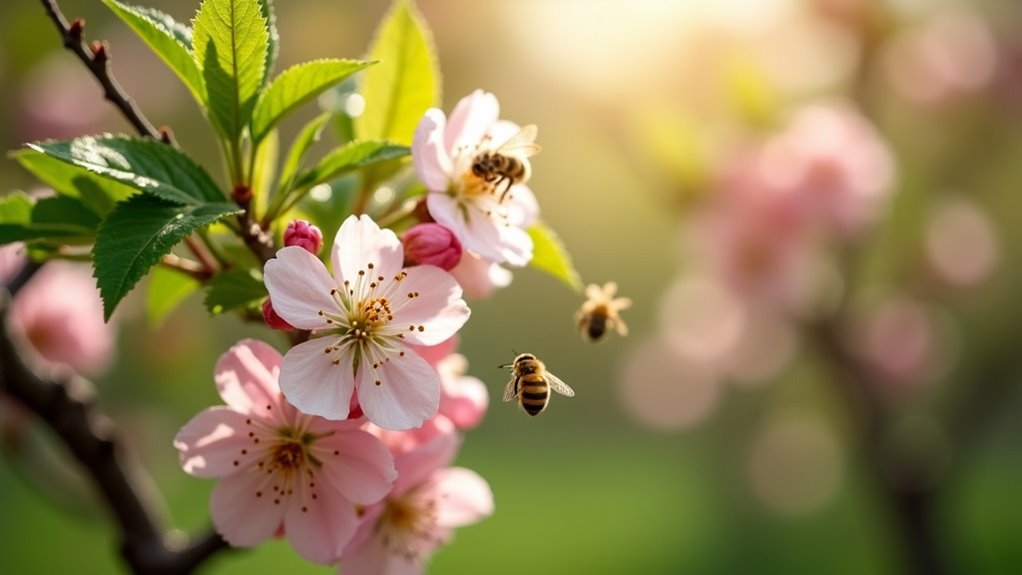
Many fruit plants, like apples, pears, and stone fruits, need cross-pollination for fruit set. Most apple and pear varieties are self-unfruitful, so planting at least two compatible cultivars is essential. Stone fruits, such as sweet cherries and plums, also require cross-pollinators to produce fruit effectively. Even some small fruits, like blackberries and blueberries, benefit from genetic diversity through multiple varieties. Understanding these requirements can enhance your gardening success and improve overall yields.
Key Takeaways
- Most apple and pear varieties are self-unfruitful and require cross-pollination with other compatible cultivars to produce fruit.
- Many stone fruits, including sweet cherries and plums, need cross-pollination for successful fruit set.
- Blackberries, certain blueberry varieties, and red raspberries benefit from cross-pollination to enhance fruit size and yield.
- Climatic factors like temperature and wind can significantly impact the effectiveness of cross-pollination in many fruiting plants.
- Planting multiple varieties of the same fruit type within 50-100 feet ensures optimal pollination and fruit production.
Pollination Requirements for Apples
When it comes to growing apples, understanding their pollination requirements is vital for a successful harvest. Most apple varieties are self-unfruitful, so cross-pollination with another apple or crabapple variety is necessary for ideal fruit set.
It’s essential to guarantee overlapping bloom periods between the varieties; otherwise, effective pollination won’t occur. Some varieties, like Winesap and Jonagold, produce sterile pollen and can’t pollinate other trees.
To maximize your yield of good fruit, plant at least two different apple varieties within 50-100 feet of each other. This strategy notably enhances both the quantity and quality of apples produced.
Pollination Needs for Pears
Understanding the pollination needs of pears is crucial for achieving a bountiful harvest, as most varieties are self-unfruitful.
To optimize fruit set, consider these key points:
To optimize fruit set, plant at least two compatible pear cultivars with overlapping bloom periods.
- Plant at least two different pear cultivars within 50-100 feet.
- Confirm these cultivars have overlapping bloom periods.
- Choose compatible varieties; for example, Bartlett doesn’t pollinate Seckel.
- Enhance yield by pairing self-unfruitful types with varieties like Bosc or Anjou.
Pollinators, especially honeybees, play a critical role during the bloom period, making their activity essential for successful cross-pollination among your selected pear cultivars.
Cross-Pollination in Stone Fruits
Cross-pollination is equally important for many stone fruits, where the genetic diversity provided by different cultivars can greatly enhance fruit yield and quality.
Sweet cherries, like Bing and Lambert, are self-unfruitful and require cross-pollination with compatible varieties to achieve fruit set. Most European plums also need cross-pollination with another European variety, while Japanese plums thrive with American or Japanese hybrids.
Apricot varieties such as Perfection and Rival are self-unfruitful, necessitating other apricot types for fruit set.
Although many peach cultivars are self-fruitful, some, like J.H. Hale, benefit from cross-pollination, so it’s wise to plant two.
Pollination Considerations for Small Fruits
While many small fruits are self-fruitful, their yields and fruit quality can greatly improve with cross-pollination.
Consider these points when selecting your plants:
When choosing your plants, consider the benefits of cross-pollination for improved yields and fruit quality.
- Blackberries: Varieties like Dallas require cross-pollination for good fruit set.
- Blueberries: Planting multiple varieties boosts fruit size and yield through effective cross-pollination.
- Raspberries: Red raspberry varieties may enhance crop size with compatible cultivars nearby.
- Strawberries: Diverse varieties contribute to better fruit quality and yield due to increased genetic diversity.
In contrast, currants and gooseberries are self-fruitful and don’t require cross-pollination, simplifying their cultivation.
Climatic Factors Affecting Pollination Success
Successful pollination goes beyond the selection of compatible plant varieties; climatic factors play a vital role in determining the effectiveness of pollination.
For instance, temperatures below 55–60°F greatly reduce bee activity, important for apple trees and other fruit crops requiring cross-pollination. Conversely, high temperatures exceeding 85–90°F can dry out stigmatic surfaces, hindering pollen germination and reducing fruit set.
Additionally, windy conditions can impede bee movement, while rain during anthesis negatively affects stigmatic receptivity.
It’s also essential to reflect on nearby flowering plants, as they may attract bees away from your crops, further complicating successful pollination.
Enhancing Pollination in Your Garden
To enhance pollination in your garden, select compatible plant pairings that bloom simultaneously.
For example, when planting apple trees, guarantee you choose varieties with overlapping bloom periods for effective pollen transfer.
Additionally, incorporating native pollinator-friendly plants attracts bees, further improving your garden’s overall pollination success.
Suitable Plant Pairings
Cross-pollination is essential for maximizing fruit production in many garden plants. To guarantee good pollinizer relationships, consider these suitable pairings:
- Apple Trees: Plant at least two varieties like Honeycrisp and Fuji, which require pollination for ideal fruit set.
- Sweet Cherries: Pair Bing with Stella or Rainier for enhanced productivity since many varieties are self-unfruitful.
- European Pears: Include cultivars like Bartlett and Bosc, needing at least two different types nearby.
- Apricots: Combine Perfection with Moorpark to improve yield, as they’re self-unfruitful and benefit from cross-pollination.
Optimal Bloom Timing
Effective pollination hinges on the timing of blooms, as overlapping flowering periods among compatible plants can greatly enhance fruit production.
To achieve successful cross-pollination, make sure you plant at least two varieties with matching bloom times within 50-100 feet of each other. This positioning facilitates bee movement, fulfilling pollination requirements.
Monitor local climate conditions closely; cool temperatures or rain during bloom can hinder pollinators.
Additionally, select good pollinizers wisely, such as pairing European plums with other European varieties to maximize cross-pollination success.





