
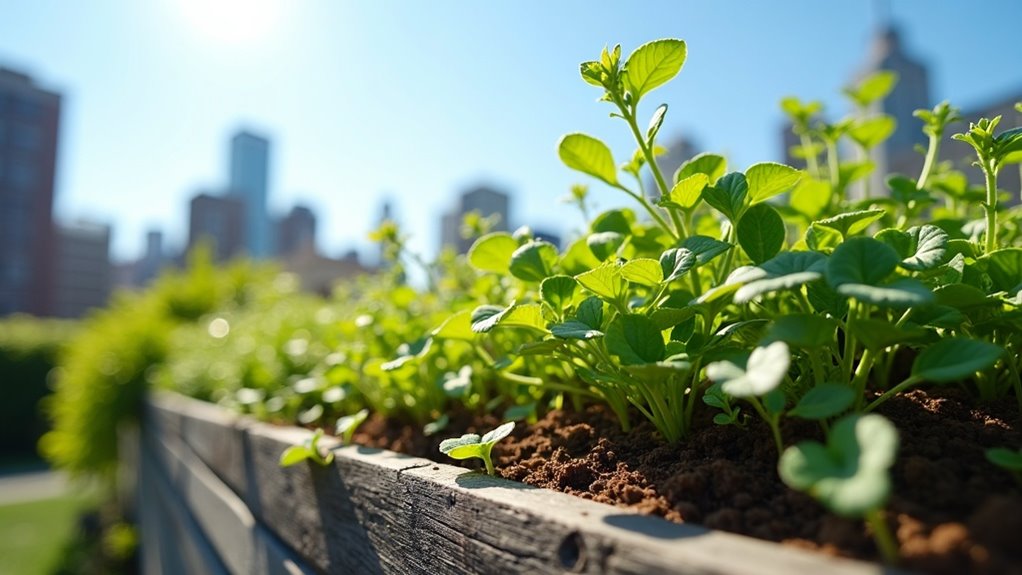
For your rooftop garden, consider plants with shallow root systems like sedums, creeping phlox, and moss rose. These species extend no deeper than 12 inches, thriving in well-draining, slightly acidic soil. Herbs like thyme and lavender also fit well, attracting pollinators. Regular watering and at least 6-8 hours of sunlight are essential. Maintaining biodiversity with flowering perennials enhances aesthetics and resilience. There’s much more to explore about optimizing your rooftop garden for success.
Key Takeaways
- Sedums, such as Sedum kamtschaticum and Sedum rupestre, are excellent drought-resistant choices for shallow rooftop soils.
- Creeping phlox (Phlox subulata) provides effective ground cover and thrives in shallow conditions.
- Moss rose (Portulaca grandiflora) is another resilient option that does well in limited soil depth.
- Herbs like thyme and lavender attract pollinators while having shallow root systems suitable for rooftops.
- Flowering perennials, such as daisies (Leucanthemum), enhance biodiversity and thrive in shallow-root settings.
The Importance of Shallow Root Systems
When you consider rooftop gardens, understanding the importance of shallow root systems is essential. These systems, typically extending no more than 12 inches deep, help plants avoid damaging underlying structures.
Shallow-rooted plants efficiently access limited moisture and nutrients, making them ideal for rooftop environments. Species like sedums and creeping thyme are drought-tolerant, thriving where soil is restricted.
Their lateral growth not only stabilizes soil but also prevents erosion in elevated settings. By choosing plants with shallow root systems, you contribute to the sustainability of rooftop gardens, ensuring they require less maintenance while supporting healthier urban ecosystems.
Ideal Growing Conditions for Rooftop Plants
To create a thriving rooftop garden, you need to focus on three key factors: sunlight exposure, soil depth, and watering needs.
Guarantee your plants receive at least 6-8 hours of direct sunlight daily, and use well-draining, slightly acidic soil to prevent root rot.
Regular watering is essential, especially for shallow-rooted species that can dry out quickly in rooftop conditions.
Sunlight Exposure Requirements
How much sunlight do your rooftop plants need to flourish? For peak growth, aim for full sun exposure, which means at least 6-8 hours of direct sunlight daily. Without adequate light, your plants may suffer stunted growth.
Consider these factors:
- Roof orientation matters; south-facing roofs get the most light.
- Surrounding structures can cast shadows, impacting sunlight.
- Some plants tolerate partial shade, but full sun is ideal.
- Vegetables and flowering plants thrive under full sun.
- Shallow roots benefit from well-draining, sunlit environments.
Soil Depth Considerations
While selecting plants for your rooftop garden, understanding soil depth is essential for their success. Ideally, you need at least 6 inches of soil for effective root development, with a maximum depth of 12 inches for ideal growth. Focus on selecting shallow-rooted plants and drought-tolerant species, as they thrive in limited soil media and can withstand dry conditions. Proper drainage is vital to prevent waterlogging, which can harm these sensitive plants.
| Soil Depth (inches) | Recommended Plants | Notes |
|---|---|---|
| 6 | Sedums | Excellent drought-tolerant |
| 8 | Herbs (Thyme, Oregano) | Compact growth |
| 10 | Lettuce | Quick-growing |
| 12 | Flowers (Marigold) | Bright colors |
| 12 | Groundcovers | Erosion control |
Watering Needs Overview
Understanding the watering needs of your rooftop garden is essential for fostering healthy growth, especially since shallow-rooted plants can dry out quickly in exposed conditions.
Here are key considerations for successful watering:
- Use well-draining soil to prevent root rot.
- Water regularly to maintain consistent moisture levels.
- Adjust frequency based on seasonal changes.
- Consider slightly acidic soil for better moisture retention.
- Utilize mulch to minimize evaporation and reduce watering frequency.
Top Shallow-Rooted Plants for Rooftop Gardens
When it comes to selecting plants for rooftop gardens, focusing on shallow-rooted species is essential for ensuring successful growth in limited soil depths.
Sedums, like Sedum kamtschaticum and Sedum rupestre, are ideal for their drought resistance and ability to thrive in poor soils.
For effective ground cover, consider creeping phlox (Phlox subulata) and moss rose (Portulaca grandiflora), which require minimal root depth.
Herbs such as thyme (Thymus spp.) and lavender (Lavandula angustifolia) not only flourish in shallow soils but also attract pollinators.
Flowering perennials, including daisies (Leucanthemum) and ornamental grasses like blue fescue (Festuca glauca), enhance the biodiversity of green roofs.
Tips for Successful Rooftop Gardening
Selecting shallow-rooted plants lays a strong foundation for a thriving rooftop garden, but proper care and management are equally important. Here are some tips to guarantee success:
- Choose herbs like thyme and rosemary that thrive in a shallow root system.
- Utilize lightweight, well-draining soil mixes to reduce structural load.
- Ascertain containers or raised beds have proper drainage to prevent waterlogging.
- Regularly monitor soil moisture, as rooftop gardens can dry out quickly.
- Incorporate diverse plant types, including ground covers, for aesthetic appeal and ecological benefits.
Maintenance of Rooftop Gardens
Maintaining a rooftop garden requires consistent attention to several key factors that guarantee your plants thrive in their unique environment.
Regular watering is essential, especially for plants in shallow soils, as the media dries out quickly due to sun and wind exposure. You should also prune and deadhead frequently to encourage new growth and enhance aesthetics.
Tailoring fertilization to your plants’ specific needs is vital since nutrients deplete faster in shallow media. Conduct seasonal assessments to verify plant health and viability, and remember to clean planters and remove debris to prevent pests and maintain visual appeal.
Benefits of Drought-Tolerant Plants
Drought-tolerant plants offer significant advantages for rooftop gardens, primarily through water conservation strategies that reduce the need for frequent irrigation.
Their low maintenance requirements make them an ideal choice for urban settings, allowing you to enjoy a beautiful garden without extensive upkeep.
Additionally, these plants enhance soil health by promoting a balanced ecosystem that supports beneficial microorganisms and improves nutrient retention.
Water Conservation Strategies
When you’re planning a rooftop garden, incorporating plants that thrive in low-water conditions is crucial for effective water conservation.
Drought-tolerant plants not only require less water but also feature shallow root systems that efficiently absorb moisture. By selecting these species, you can enhance your garden’s resilience and sustainability.
Benefits include:
- Reduced water consumption
- Adaptability to poor soil conditions
- Minimal maintenance requirements
- Enhanced urban water conservation efforts
- Increased resilience to climate variability
Utilizing drought-resistant plants like succulents and certain grasses guarantees your rooftop garden remains vibrant while conserving essential water resources.
Low Maintenance Requirements
Incorporating shallow-rooted plants into your rooftop garden not only supports water conservation but also greatly reduces maintenance demands.
Drought-tolerant plants, like sedums and thyme, thrive in poor soil with limited moisture, requiring less frequent watering. Their shallow root systems allow them to flourish in the shallow media typical of rooftop settings.
By choosing these species, you greatly lower maintenance time and costs since they’re less vulnerable to pests and diseases.
Additionally, plants such as lavender and creeping phlox enhance your garden’s aesthetic while promoting sustainability through decreased water usage and increased biodiversity in urban landscapes.
Enhanced Soil Health
Shallow-rooted plants play an essential role in enhancing soil health within rooftop gardens.
By incorporating drought-tolerant plants, you can achieve various benefits that improve your garden’s ecosystem:
- Improve aeration with shallow root systems.
- Reduce soil compaction, facilitating nutrient absorption.
- Require less fertilizer and maintenance.
- Mitigate urban heat effects through cooling shade.
- Promote biodiversity by attracting pollinators and wildlife.
These advantages not only contribute to a healthier soil environment but also create a vibrant, sustainable rooftop garden that thrives with minimal resources.
Embracing drought-tolerant plants is a smart choice for both your garden and the planet.
Enhancing Aesthetic Appeal With Ornamental Plants
To create a visually striking rooftop garden, including ornamental plants is essential, as they not only elevate the aesthetic but also contribute to the overall biodiversity of the space.
Consider planting low-maintenance varieties like juniper, which thrive in drought conditions while maintaining year-round greenery. Roses add vibrant colors and attract pollinators, while coreopsis and succulents such as Echeveria offer beautiful blooms and unique shapes with minimal water needs.
Additionally, Kousa dogwood brings seasonal interest with its stunning flowers in spring and colorful foliage in fall, making it an excellent choice for enhancing your green roof’s beauty.
Common Challenges in Rooftop Gardening
How can you effectively navigate the unique challenges of rooftop gardening?
It’s essential to understand the specific obstacles you’ll face:
- Limited soil depth requires choosing shallow-rooted plants.
- Adequate drainage is key to prevent waterlogging.
- Variability in sunlight exposure necessitates plants adaptable to microclimates.
- Wind exposure leads to moisture loss, making drought-tolerant plants important.
- Regular maintenance, including watering and pest monitoring, is necessary for healthy growth.





