
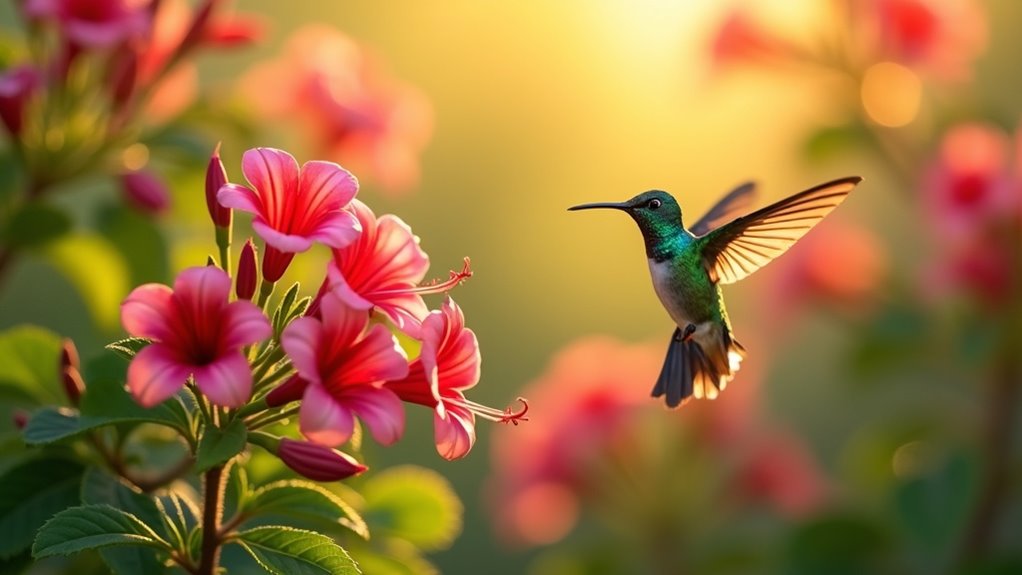
To attract hummingbirds to your garden, focus on nectar-rich plants like trumpet-shaped flowers such as Coral Honeysuckle and Trumpet Creeper. Opt for native species like Bee-balm and Cardinal Flower, which thrive in local conditions and produce abundant nectar. Bright colors like red and orange are particularly effective in drawing these birds. Planting a variety of flowers that bloom at different times guarantees a continuous food supply throughout their migration periods. Continue exploring the best practices for creating thriving hummingbird habitats.
Key Takeaways
- Trumpet-shaped flowers, such as Trumpet Creeper and Coral Honeysuckle, are highly attractive to hummingbirds due to their abundant nectar.
- Native plants like Bee-balm and Red Columbine produce significant amounts of nectar, supporting local hummingbird populations.
- Cardinal Flower thrives in moist conditions and effectively draws hummingbirds with its nectar-rich blooms.
- Flowering shrubs like Fuchsia and Butterfly Bush offer both nectar and shelter for hummingbirds.
- Tubular flowers, including trumpet vine, allow easy access to nectar, making them favorites among hummingbirds.
Importance of Nectar Sources
As hummingbirds migrate, their survival hinges on consistent access to nectar sources, making these plants crucial for their journey. The availability of hummingbird plants directly influences their energy levels during critical migration periods.
A steady supply of food is essential, especially in late summer and fall when these birds are traveling long distances. By planting a diverse array of flowers that attract hummingbirds, you can create a supportive environment that enhances their chances of survival.
Native plants, adapted to local ecosystems, often provide the most reliable nectar sources, ensuring continuous blooms and maximizing feeding opportunities for these remarkable creatures.
Planting Nectar-Rich Flowers
To guarantee hummingbirds have the sustenance they need during migration, planting a diverse selection of nectar-rich flowers is crucial. Focus on native plants like bee-balm and coral honeysuckle, which thrive in local ecosystems. Tubular-shaped flowers, such as trumpet vine and cardinal flower, provide little birds with easy access to nectar. Choose brightly colored blooms in red, orange, and purple to attract these tiny pollinators. Continuous blooming throughout the growing season guarantees a consistent nectar supply, essential for supporting hummingbird populations.
| Flower Type | Nectar Characteristics |
|---|---|
| Native Plants | Abundant, ecosystem-adapted |
| Tubular Flowers | Easy access for little birds |
| Brightly Colored | High attraction rate |
Recommended Plants for Hummingbirds
Creating a vibrant garden that attracts hummingbirds involves selecting specific plants known for their nectar production.
Consider including trumpet-shaped flowers like Trumpet Creeper and Coral Honeysuckle, which offer ample sugary nectar. The Cardinal Flower thrives in moist conditions, drawing in these birds effectively.
Bee-balm serves as an easy-to-grow option, benefiting both hummingbirds and bees. Native plants such as Jewelweed and Red Columbine excel in nectar production, supporting local ecosystems.
Additionally, flowering shrubs like Fuchsia and Butterfly Bush not only provide nectar but also shelter, enhancing your garden’s appeal for hummingbirds while fostering a thriving habitat.
Color Attraction
While many factors influence a hummingbird’s choice of feeding sites, color plays a pivotal role in attracting these vibrant birds. Hummingbirds are particularly drawn to bright colors, especially red, which signals the availability of nectar-rich flowers. Many feeders incorporate red or bright hues to enhance visibility, effectively luring them in.
Besides red, they also favor shades of orange, purple, and yellow, expanding their feeding options. Tubular or trumpet-shaped flowers are ideal, allowing easy access to nectar.
Colorful blooms represent reliable food sources, encouraging frequent visits and ensuring that these birds return to your garden for sustenance.
Creating a Natural Habitat
To create a thriving natural habitat for hummingbirds, you must focus on essential food sources through a diverse selection of nectar-rich plants.
Incorporating native species and strategically timed planting guarantees a continuous bloom, meeting the birds’ needs throughout their migration.
Essential Food Sources
Establishing a diverse array of nectar-rich plants is crucial for creating a natural habitat that effectively supports hummingbirds during their migration.
To guarantee a reliable food source, consider these key factors:
- Plant tubular-shaped flowers like trumpet creeper and bee balm to attract hummingbirds.
- Incorporate native plants such as coral honeysuckle and cardinal flower to support local ecosystems.
- Guarantee continuous blooming from late summer to fall for sustained energy needs.
- Mix flowering shrubs, vines, and perennials to enhance food source diversity, appealing to various hummingbird species.
Implementing these strategies fosters a thriving environment for these essential pollinators.
Diverse Plant Selection
Creating a diverse selection of plants is crucial for fostering a natural habitat that effectively attracts and sustains hummingbirds during their migration.
Focus on native species like bee-balm and coral honeysuckle, as they adapt well to local conditions and offer high-quality nectar. Incorporate various flower shapes, especially tubular or trumpet-shaped blooms, to cater to different hummingbird species.
Planting a mix of perennials and annuals with staggered blooming times guarantees a continuous nectar supply. Additionally, integrating flowering shrubs and vines can create layered habitats, providing not only nectar but also essential shelter and nesting sites for these vibrant birds.
Seasonal Planting Strategies
While planning your garden for hummingbirds, seasonal planting strategies become essential to guarantee a consistent nectar supply throughout the year.
Consider these approaches:
- Late Summer Planting: Add nectar-rich flowers to support migrating hummingbirds in fall.
- Diverse Blooming Schedule: Incorporate plants that flower at different times for continuous nectar availability.
- Native Plants: Select species native to your climate to enhance habitat suitability for hummingbirds and local wildlife.
- Feeder Balance: Maintain a mix of flowering plants and feeders to create an inviting environment.
Regularly monitor and adapt your plant choices based on seasonal changes and hummingbird activity for peak attraction.
Seasonal Considerations
When planning your garden for hummingbirds, timing is essential.
Late summer is ideal for planting to guarantee that your chosen nectar sources align with the birds’ fall migration.
Optimal Planting Times
To maximize the availability of nectar for hummingbirds, understanding ideal planting times is crucial. Consider these key points:
- Late Summer Planting: Plant nectar-rich flowers to guarantee blooming during hummingbirds’ fall migration.
- Fall-Blooming Plants: Focus on species that provide critical food sources as birds migrate.
- Early Planting: Establish roots early for a robust nectar supply by the time hummingbirds arrive.
- Seasonal Awareness: Monitor local climate conditions to determine best planting times for various species.
Seasonal Blooming Patterns
Understanding seasonal blooming patterns is crucial for creating a hummingbird-friendly garden, as these patterns directly influence the availability of nectar.
Late summer and fall are critical; you need to plant flowers that bloom during this period to support migrating hummingbirds. Regularly monitoring local flowering patterns guarantees that nectar-rich plants are accessible when these birds are most active.
Seasonal changes greatly affect blooming times, so align your plantings with local climate conditions. By engaging with local gardening resources, you can identify the best native flowering plants, providing a continuous food supply throughout the growing season for these essential pollinators.
Migration Timing Awareness
As you prepare your garden to attract hummingbirds, staying attuned to migration timing becomes essential.
To effectively support these birds, consider the following:
- Plant nectar-rich flowers in late summer to guarantee blooming coincides with migration.
- Monitor local climate conditions as seasonal changes can affect blooming times.
- Replenish feeders regularly during migration to provide fresh nectar.
- Track local hummingbird migration patterns to optimize your garden’s setup and feeder maintenance.
Benefits of Native Plants
While many gardeners may consider a variety of plant options, choosing native plants offers distinct advantages, particularly for attracting hummingbirds.
Native plants thrive in local climates and soils, simplifying maintenance and ensuring a sustainable habitat. They produce more nectar than exotic species, providing a superior food source for hummingbirds and essential pollinators.
Native plants flourish in local environments, offering abundant nectar and fostering sustainable habitats for hummingbirds and vital pollinators.
Additionally, native flora enhances biodiversity, creating balanced ecosystems that support various wildlife. By incorporating these plants, you help sustain local hummingbird populations, contributing to their conservation.
Moreover, native plants typically require less water and fewer pesticides, fostering a healthier environment for both hummingbirds and the surrounding ecosystem.
Engaging With Birding Community
Engaging with the birding community offers a valuable avenue for expanding your knowledge about local hummingbird species and their feeding habits.
Here are four ways to deepen your understanding:
- Join social media groups for sharing photos and tips on attracting hummingbirds.
- Participate in local birdwatching clubs to gain hands-on experience in hummingbird habitats.
- Subscribe to newsletters from organizations like Perky-Pet for the latest research and trends.
- Contribute to citizen science projects tracking hummingbird sightings, aiding in monitoring migration patterns.
These interactions not only enrich your insights but also foster a collaborative environment for conservation efforts.





