
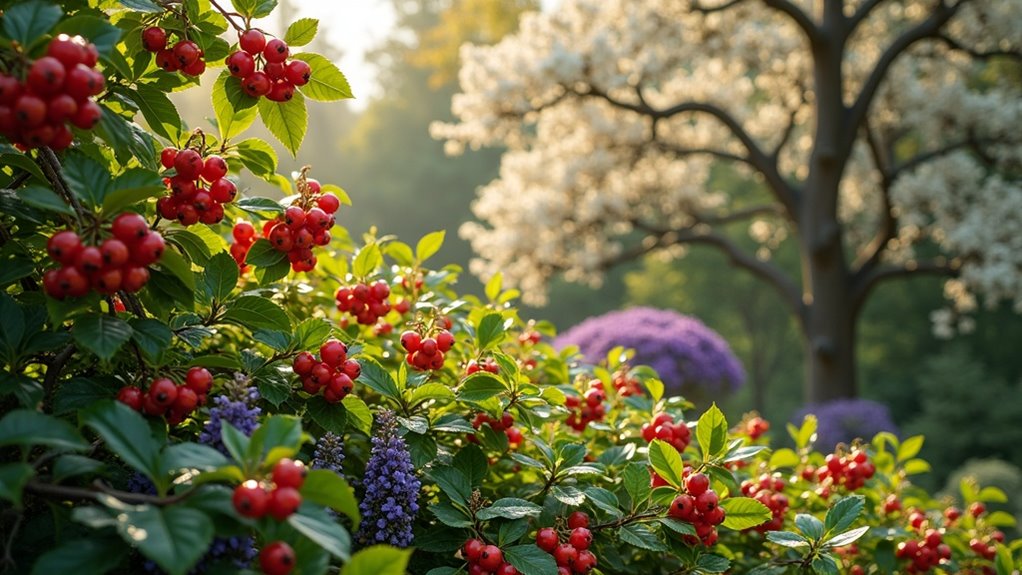
To enhance your wildlife garden, consider planting native berry-producing shrubs like American Beautyberry, Red Chokeberry, Winterberry, and Elderberries. These plants not only attract birds and other wildlife but also contribute to local biodiversity and soil health. Timing is essential; berries ripen seasonally, providing food throughout the year. By incorporating these shrubs, you’ll create a vibrant and sustainable habitat that supports various species. Explore more options and strategies to maximize your garden’s ecological impact.
Key Takeaways
- American Beautyberry provides vibrant purple berries that attract birds and enhance visual interest in gardens.
- Red Chokeberry produces red berries in late summer, offering essential sustenance for wildlife.
- Winterberry features bright red berries that persist through winter, serving as a food source for various birds.
- Elderberries yield dark clusters that attract a diverse range of birds, supporting local wildlife populations.
- Incorporating these native berry-producing shrubs fosters biodiversity and creates essential food sources for wildlife year-round.
Importance of Native Berry-Bearing Plants
When you incorporate native berry-bearing plants into your wildlife garden, you create an essential food source for birds and other wildlife, especially during winter months when their options are limited.
These plants thrive in local climates, enhancing biodiversity by attracting diverse bird species and beneficial insects. By promoting healthy soil and conserving water, they contribute to the ecological balance of your garden.
Native berry-bearing plants enhance biodiversity, attract beneficial insects, and promote ecological balance in your wildlife garden.
Additionally, berry-producing natives like Winterberry and Elderberries add vibrant colors, creating visual interest throughout the colder seasons.
To identify suitable species for your region, consult a local native plants database, ensuring you support local wildlife effectively.
Top Native Berry-Producing Shrubs
Incorporating native berry-producing shrubs into your wildlife garden offers numerous benefits, including enhanced biodiversity and food sources for local fauna.
Popular varieties like American Beautyberry and Winterberry not only attract birds but also provide visual interest throughout the seasons.
Understanding the specific attributes of these shrubs can help you create a thriving ecosystem in your garden.
Benefits of Native Shrubs
Native berry-producing shrubs offer significant ecological benefits that enhance wildlife gardens.
These native plants provide essential food sources, attracting various wildlife species. Consider the following advantages:
- Food source: Berries from shrubs like Elderberry and Viburnum serve as abundant fruit for birds and insects.
- Seasonal support: Winterberry and American Beautyberry sustain birds during winter when food is scarce.
- Aesthetic appeal: Red Chokeberry and Spicebush add vibrant colors to your garden.
- Ecosystem support: These shrubs also host butterfly and moth caterpillars, promoting biodiversity.
Incorporating these native shrubs creates a thriving habitat for wildlife year-round.
Popular Berry-Producing Varieties
Berry-producing shrubs are vital components of wildlife gardens, offering both beauty and functionality.
Consider planting American Beautyberry, which boasts vibrant purple berries that attract birds like mockingbirds and persist into mid-winter.
Red Chokeberry’s red berries ripen in late summer, providing essential food for wildlife, while Winterberry‘s bright red berries remain throughout winter, important for various birds.
Elderberries produce dark clusters that draw a diverse range of birds and are native across much of the U.S.
Finally, Spicebush features fragrant leaves and bright red berries in fall, serving as a host for the spicebush swallowtail butterfly.
Seasonal Availability of Berries
Understanding the seasonal availability of berries in your wildlife garden is essential for supporting local fauna.
In spring and early summer, shrubs like serviceberries and winterberry bloom, attracting pollinators and providing initial food sources for nesting birds.
As you shift into late summer and fall, viburnum, spicebush, and elderberries offer abundant fruit, while winterberry and chokeberries guarantee sustenance for birds during the harsh winter months.
Spring and Early Summer
As spring unfolds and early summer approaches, gardens come alive with the vibrant blooms of plants like serviceberries and winterberries, which play an important role in supporting local wildlife.
These plants provide essential nectar for pollinators and berries for birds. Consider these key features:
- Serviceberries (Amelanchier spp.) offer sweet fruits, crucial for robins and cedar waxwings.
- Winterberries (Ilex verticillata) develop striking red berries, important for birds in winter.
- Blooming flowers attract bees and butterflies, enhancing biodiversity.
- Berry ripening coincides with migratory birds’ return, ensuring a reliable food source during nesting.
Late Summer and Fall
While late summer and early fall mark a peak in berry production, native shrubs like viburnum, spicebush, and elderberries become vital sources of nutrition for migratory birds. These berries coincide with the needs of birds preparing for migration, providing an important food source.
| Shrub Type | Berry Characteristics |
|---|---|
| Viburnum | Abundant, sweet berries |
| Spicebush | Aromatic, nutrient-rich |
| Elderberry | High in antioxidants |
Incorporating these berry-producing shrubs in your wildlife gardens guarantees a reliable food source, supporting diverse bird species during this significant time.
Winter Berry Availability
During the winter months, berry-producing plants become essential for wildlife, as they provide critical nourishment when other food sources are scarce.
Here are some key species that guarantee local wildlife thrives:
- Winterberry (Ilex verticillata) – Produces vibrant red berries that persist through the winter.
- American Beautyberry (Callicarpa americana) – Offers purple berries that attract birds until mid-winter.
- Red Chokeberry (Aronia arbutifolia) – Features red berries that ripen in late summer and linger into winter.
- Elderberries (Sambucus spp.) – Dark berries that draw various birds and remain a food source until winter’s end.
These plants effectively meet the winter needs of wildlife.
Wildlife That Benefits From Native Berries
Many species of wildlife thrive in environments enriched with native berry-producing plants, as these plants offer crucial food resources year-round.
Birds like robins and bluebirds rely on these berries as a primary food source during winter months when other food is scarce.
Additionally, species such as Elderberries and Spicebush support various wildlife species by attracting pollinators and serving as host plants for butterfly caterpillars.
The timing of berry production aligns with migratory bird seasons, providing essential nutrition during their journeys.
Designing a Wildlife-Friendly Garden
Creating a wildlife-friendly garden not only enhances the beauty of your landscape but also supports local ecosystems by providing essential food and shelter for various species.
Enhance your landscape while supporting local ecosystems by creating a wildlife-friendly garden that offers food and shelter.
To design your garden effectively, consider these elements:
- Incorporate native berry-producing shrubs like American Beautyberry and Winterberry for essential food sources.
- Create layered plantings with taller shrubs at the back and ground covers in front, fostering diverse habitats.
- Group shrubs in clusters for visual appeal and easier access for wildlife.
- Include a water source like a small pond or birdbath to meet hydration needs for visiting birds and animals.
Native Shrubs for Year-Round Interest
Incorporating native shrubs in your wildlife garden not only enhances visual appeal but also assures that your space remains vibrant and beneficial throughout the year.
Native berry-bearing shrubs, like Winterberry and American Beautyberry, provide crucial food sources for birds in winter. The Red Chokeberry offers bright red berries in late summer and stunning fall foliage, enriching aesthetics.
Spicebush supports the spicebush swallowtail butterfly and produces fragrant leaves alongside its red berries. Elderberries attract diverse birds, essential for local ecosystems.
Community Engagement for Wildlife Conservation
While fostering a wildlife-friendly garden can seem like an individual endeavor, engaging with your community amplifies the impact of conservation efforts notably.
To enhance local biodiversity, consider these actions:
- Collaborate with gardening groups to share resources and knowledge on native plants.
- Organize workshops that teach sustainable gardening practices, empowering residents to create wildlife-friendly spaces.
- Advocate for local regulations that support native plant cultivation, reinforcing community efforts.
- Initiate campaigns to raise awareness about the benefits of wildlife conservation, inspiring collective action for sustainable habitats.
Together, you can notably contribute to wildlife populations and ecological health.





