
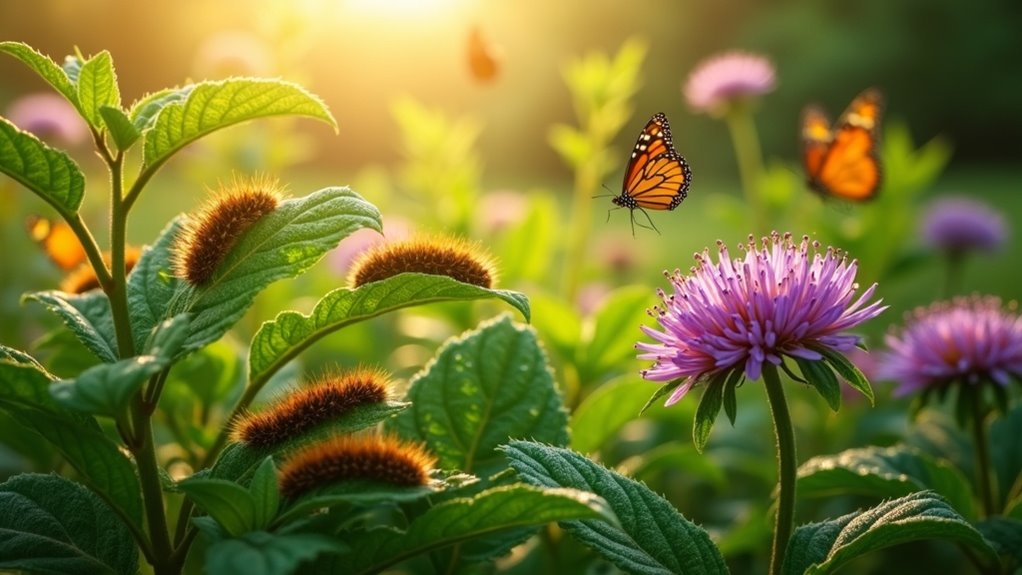
If you’re looking to support butterflies, focus on specific host plants vital for their survival. Monarchs rely exclusively on milkweed, with varieties like Common and Butterfly Milkweed being essential. Other butterflies, like Black Swallowtails, thrive on dill and fennel, while Painted Ladies prefer hollyhock and asters. Maintaining a diverse range of host plants in your garden enhances biodiversity and ecosystem health. Learn more about the varieties and their importance to caterpillars and butterflies alike.
Key Takeaways
- Milkweed species, particularly Common Milkweed and Butterfly Milkweed, are essential host plants for Monarch butterfly larvae.
- Bronze Fennel and Common Rue serve as host plants for Black Swallowtail caterpillars, thriving in sunny and poor soil conditions.
- False Nettle is crucial for various butterfly species, flourishing in moist, shaded environments.
- Golden Alexanders support American Painted Lady caterpillars, contributing to a diverse butterfly-friendly garden.
- Incorporating native plants like oaks and willows enhances butterfly biodiversity and overall ecosystem health.
Importance of Butterfly Host Plants
Butterfly host plants play an essential role in the lifecycle of butterflies, as they provide necessary resources for egg laying and caterpillar development.
These larval host plants are important; without them, less than 10% of butterfly eggs survive to adulthood. Specific host plants for butterflies, like milkweed for Monarchs and dill for Black Swallowtails, underscore the need for biodiversity in gardens.
Incorporating native plants, such as oaks and willows, not only supports various butterfly species but also enhances ecosystem health.
Types of Milkweed Plants
Milkweed plants are fundamental components of any garden aimed at supporting Monarch butterflies, as they serve as the primary host for the larvae.
Various species, such as Common Milkweed (Asclepias syriaca) and Butterfly Milkweed (Asclepias tuberosa), provide significant habitats.
Various milkweed species, including Common and Butterfly Milkweed, offer vital habitats for Monarch butterflies.
Antelope Horn Milkweed (Asclepias asperula) also serves as an essential host plant, enhancing the survival of Monarch caterpillars during their larval phase.
Additionally, Balloon Milkweed (Gomphocarpus physocarpus) contributes uniquely with its balloon-like seed pods.
Other Butterfly Host Plants
Creating a butterfly-friendly garden involves more than just planting milkweed; incorporating a variety of other host plants is important for supporting diverse butterfly species.
Consider these essential plants:
- Bronze Fennel – Hosts black and anise swallowtail caterpillars, thriving in sunny spots.
- Common Rue – Resilient and thrives in poor soil, attracting black swallowtail butterflies.
- False Nettle – Key for many species, it flourishes in moist, shaded areas.
- Golden Alexanders – A beautiful host for American Painted Lady caterpillars, enriching your garden’s ecosystem.
Additional Butterfly Host Plants
While many gardeners focus solely on milkweed for butterfly attraction, a broader selection of host plants can greatly enhance biodiversity and support various butterfly species.
Golden Alexanders thrive in sunny spots, serving as essential host plants for black swallowtail caterpillars. The Passionflower vine, climbing up to 50 feet, supports fritillary caterpillars and requires minimal maintenance.
Dill not only beautifies your garden but also attracts black and anise swallowtail caterpillars. Meanwhile, hollyhocks provide vibrant colors and host Painted Ladies, while Birds Foot Violet is vital for fritillary butterflies, ensuring a balanced and thriving butterfly ecosystem in your garden.
Caterpillar Mortality and Rearing
When you consider caterpillar mortality, it’s striking that fewer than 10% of butterfly eggs survive to adulthood, largely due to predation and environmental stresses.
The role of host plants becomes critical, as they not only provide nourishment but also essential shelter for these vulnerable stages.
Rearing techniques can offer insights into caterpillar development, but they also raise challenges regarding their impact on wild populations and the importance of preserving natural habitats.
Survival Rates of Caterpillars
Although butterfly eggs may seem like a small beginning, the survival rates of caterpillars reveal a stark reality about their developmental challenges. Less than 10% make it to adulthood, facing numerous threats.
Consider these factors:
- Caterpillars serve as crucial prey for birds, increasing mortality rates.
- Host plants must be abundant and healthy for their survival.
- Rearing caterpillars indoors can disrupt natural populations.
- Butterfly gardening requires maintaining habitats to support their growth.
To guarantee future generations of butterflies, it’s essential to understand these survival rates and the delicate balance of ecosystems they depend on.
Importance of Host Plants
Host plants play a crucial role in the lifecycle of butterflies, especially during the caterpillar stage, where survival hinges on the availability of these essential resources. Less than 10% of butterfly eggs reach adulthood, underscoring the importance of specific host plants that provide critical nutrients for caterpillar growth and metamorphosis. Additionally, diverse host plants in gardens not only enhance caterpillar survival against predation but also promote overall biodiversity.
| Host Plant | Benefits |
|---|---|
| Milkweed | Essential for monarchs |
| Dill | Attracts swallowtails |
| Fennel | Supports various species |
| Clover | Nutrient-rich for larvae |
| Nettles | Key for many butterflies |
Rearing Techniques and Challenges
The high mortality rates among caterpillars present significant challenges for those interested in rearing butterflies. Less than 10% survive to adulthood due to predation and environmental factors.
When raising caterpillars, consider these important aspects:
- Select specific host plants that caterpillars prefer.
- Create a controlled butterfly garden to mimic natural habitats.
- Maintain suitable environmental conditions, like temperature and humidity.
- Be aware of the potential impacts on wild populations.
Proper rearing techniques are essential for successful larval development.
Organizations like Monarch Watch can guide you in supporting both captive and wild populations effectively.
Caterpillar Friendly Gardening
When you embrace caterpillar friendly gardening, you create a nurturing environment that supports the entire lifecycle of butterflies and moths.
By leaving last year’s leaves and yard waste, you provide critical overwintering habitats. A light-handed cleanup preserves these essential environments, enhancing biodiversity.
Avoid raking around shrubs and garden beds to maintain shelter for caterpillars. Additionally, planting a diverse mix of larval host plants and nectar-rich flowers in sunny areas attracts specific butterfly species.
Incorporating native plants is crucial, as they foster a balanced ecosystem that promotes caterpillar growth and development, ultimately supporting butterfly populations in your garden.
Favorite Butterflies & Their Host Plants
Understanding the relationship between favorite butterflies and their specific host plants is essential for fostering a vibrant butterfly ecosystem in your garden.
Each butterfly species has unique host plants critical for their lifecycle.
Consider adding the following:
- Monarchs: They exclusively rely on milkweed (Asclepias spp.).
- Painted Ladies: They thrive on hollyhock and asters.
- Eastern Tiger Swallowtails: They favor wild cherry and wild plum.
- Black Swallowtails: They’re attracted to dill, fennel, and parsley.





