
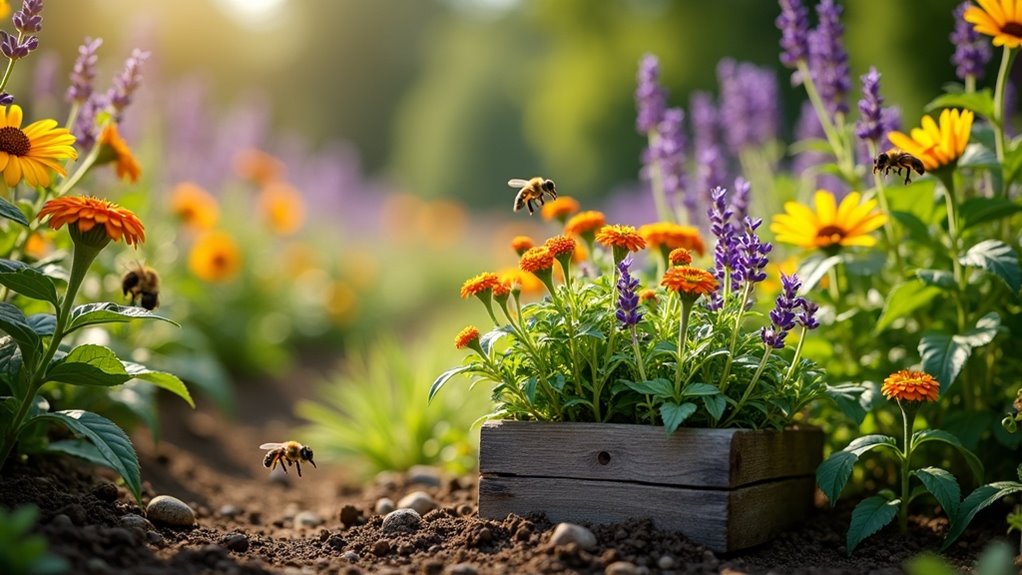
To support bees in your urban garden, focus on native plants like Anise Hyssop, Milkweed, and Sunflowers. These plants provide essential nectar and pollen, fostering diverse bee populations. Incorporating flowering herbs such as Basil, Lavender, and Thyme will further attract various bee species throughout the season. Make sure you create a habitat with varied blooming times and provide water sources for hydration. Discover more ways to enhance your garden’s bee-friendly environment for thriving pollinator populations!
Key Takeaways
- Native plants like Anise Hyssop and Milkweed provide essential nectar and pollen for urban bees.
- Planting clusters of native flowers enhances visibility and accessibility for bees.
- Incorporate flowering herbs such as Basil and Lavender to attract diverse bee species.
- Avoid chemical pesticides to protect the health of pollinators in urban gardens.
- Ensure a consistent water source using shallow dishes or bird baths for hydration.
Importance of Native Plants for Urban Bees
As urbanization continues to transform landscapes, the significance of native plants for urban bees can’t be overstated.
These plants provide essential nectar and pollen, perfectly adapted to local climates. By incorporating native species into your garden, you create a thriving pollinator habitat that supports diverse bee populations, including over 4,000 native bee species in North America.
Not only do native plants require less water and maintenance, but they also enhance local biodiversity, benefiting other wildlife.
Recommended Native Plants for Pollinators
Creating a pollinator-friendly garden starts with selecting the right native plants that cater to bees and other pollinators.
Start your pollinator-friendly garden by choosing native plants that support bees and enhance biodiversity.
These plants provide essential resources for various bee species, ensuring a thriving ecosystem. Here are four recommended native plants:
- Anise Hyssop – Offers nectar and pollen, attracting diverse bee populations.
- Milkweed – Crucial for monarchs and supports bees, making it a significant addition.
- Sunflowers – Bright petals draw honeybees and bumblebees, plus they provide seeds for wildlife.
- Mountain Mint – Attracts honeybees and butterflies, with edible leaves for culinary use.
Include these to enhance urban biodiversity and support pollinators effectively.
Flowering Herbs That Attract Bees
If you’re looking to attract bees to your garden, flowering herbs like basil, lavender, and bee balm are some of the best choices.
These herbs not only provide essential nectar for pollinators but also offer culinary uses that can enhance your meals.
Proper growing tips can guarantee these plants thrive, creating a vibrant and bee-friendly environment.
Best Bee-Attracting Herbs
Have you ever wondered which herbs can bring buzzing bees to your garden? Incorporating the right herbs not only supports beneficial insects but also enhances your pollinator garden.
Here are some of the best bee-attracting herbs:
- Basil – Offers vibrant blooms that attract bees.
- Anise Hyssop – A perennial with blue to purple flowers that return each year.
- Lavender – Highly favored by bees, providing food throughout the season.
- Thyme – Produces tiny, nectar-rich flowers, supporting diverse bee species.
Planting these native plants guarantees a flourishing habitat for bees and promotes a thriving ecosystem in your urban garden.
Herb Growing Tips
To successfully grow flowering herbs that attract bees, it’s essential to take into account their specific needs and growing conditions. Incorporate native plants like basil, mint, and anise hyssop into your urban gardens for best results. These pollinator-friendly native plants thrive with minimal maintenance and provide crucial nectar throughout the growing season.
| Herb | Benefits |
|---|---|
| Bee Balm | Abundant nectar source |
| Oregano | Flowers at different times |
| Thyme | Drought-resistant and low care |
Creating visually appealing landscapes with these herbs not only beautifies your garden but also supports local bee populations effectively.
Culinary Uses for Herbs
While incorporating flowering herbs into your culinary repertoire, you not only enhance the flavors of your dishes but also support local bee populations.
These culinary herbs provide essential nectar and pollen crucial for pollinators. Here are four excellent options to reflect upon, especially if they’re native to your area:
- Basil – Its flowers attract various bee species while adding zest to meals.
- Chives – Their purple globular flowers draw honeybees and elevate your dishes.
- Oregano – Blooms in summer, offering nourishment during peak seasons.
- Anise Hyssop – Enjoy fragrant blooms and brew delightful herbal teas.
Creating a Diverse Pollinator Habitat
Creating a diverse pollinator habitat is vital for supporting bee populations and enhancing local ecosystems. Incorporate a variety of native plants that bloom at different times to guarantee a continuous food source for pollinators.
Consider flowering plants like Anise Hyssop, Bee Balm, and Milkweed, which attract various bee species with essential nectar and pollen. Planting in clusters enhances visibility and accessibility, making it easier for bees to find food.
Avoid chemical pesticides, and include plants that provide shelter and nesting sites for ground-nesting bees. This approach creates a thriving diverse habitat, essential for maintaining healthy bee populations in urban gardens.
Water Sources for Urban Pollinators
To support urban pollinators, you’ll need to provide essential water sources that cater to their needs.
Shallow dishes, bird baths, or ponds filled with soil and pebbles create safe drinking areas for bees, allowing them to perch while they hydrate.
Regularly replenishing these water sources not only attracts more bees but also boosts the biodiversity of your garden.
Essential Water Sources
Access to fresh water sources is essential for urban pollinators, particularly bees, as they need hydration to thrive, especially during periods of heat or drought.
You can enhance your garden’s appeal to these pollinators by incorporating the following water sources:
- Shallow dishes or bird baths filled with fresh water, adding pebbles for safe perching.
- Slightly dirty water with natural scents, achieved by mixing in organic materials.
- Aquatic plants in garden ponds, providing both hydration and resting spots.
- A variety of water features that attract bees and support overall ecosystem health.
Safe Drinking Areas
How can you guarantee that urban pollinators, especially bees, find safe drinking areas in your garden? Create shallow dishes or bird baths with pebbles, so bees can perch while drinking without drowning. Bees prefer slightly dirty water, so add some leaves or soil for natural scents. Consider incorporating aquatic plants in garden ponds for additional perching spots.
| Safe Drinking Area | Benefits |
|---|---|
| Shallow Dishes | Easy access for bees |
| Bird Baths | Safe haven from drowning |
| Aquatic Plants | Supports diverse habitats |
Consistent water sources enhance pollinator health and promote biodiversity.
Sustainable Gardening Practices
While many gardeners may not realize it, adopting sustainable gardening practices is crucial for supporting bee populations and enhancing biodiversity.
Adopting sustainable gardening practices is vital for protecting bees and boosting biodiversity in our gardens.
Here are four effective methods:
- Minimize pesticide use to protect bee health and guarantee their survival.
- Plant a diverse selection of native flowers that bloom at different times, providing consistent food sources for pollinators.
- Implement organic mulching techniques to retain soil moisture and support ground-nesting pollinators.
- Create habitat features like brush piles and bare soil patches to encourage nesting opportunities for various native bee species.
These practices greatly contribute to a thriving ecosystem in urban gardens.
Local Resources for Native Plant Selection
Finding the right native plants to support local bee populations can considerably enhance your garden’s ecological health. Resources like the Xerces Society provide tailored native plant lists that highlight species beneficial for urban pollinators.
Additionally, the USDA PLANTS Database offers standardized information on U.S. native species, helping you identify suitable plants.
The Ladybird Johnson Wildflower Center’s Native Plant Database allows you to filter by bloom time and soil preferences, ensuring you select bee-friendly options.
Local native plant societies can direct you to nearby nurseries that stock these essential plants, making your gardening efforts even more effective in supporting bees.





