
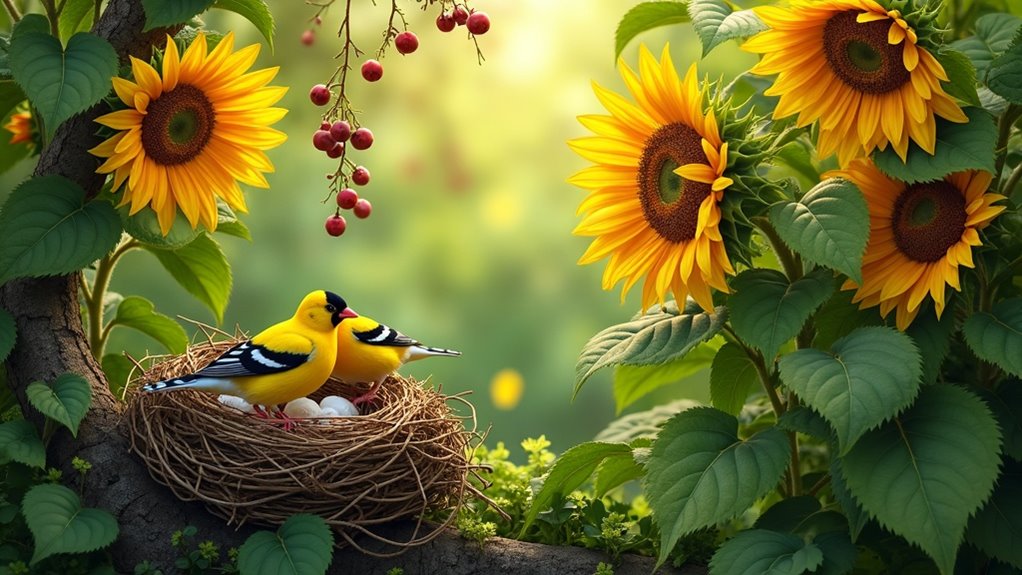
To support birds with shelter and food, incorporate native plants into your garden. Trees like oaks, black cherries, and elms provide essential fruits and caterpillars, while shrubs such as American Beautyberry and Serviceberry offer nutritious berries. Flowering plants, including Purple Coneflowers and Milkweed, attract pollinators that birds rely on. Native grasses enhance habitat structure, providing important nesting materials and seeds. Understanding these plants’ contributions can greatly boost your local bird populations. Discover more about creating a bird-friendly environment.
Key Takeaways
- Native trees like oaks and cherries provide vital fruits and caterpillars, supporting diverse bird species with food and nesting sites.
- Shrubs such as American Beautyberry and Fragrant Sumac offer berries and dense foliage, creating shelter and nourishment for birds.
- Flowering plants like Purple Coneflowers and Milkweed attract pollinators, which in turn support birds by enhancing ecosystem health.
- Native grasses, including Indian Grass, produce seeds and offer protective cover, serving as essential food sources and nesting materials for birds.
- Multi-story habitats formed by a mix of trees, shrubs, and grasses enhance biodiversity, providing ample shelter and food sources for various bird species.
Importance of Native Plants for Birds
While many gardeners may overlook the significance of their plant choices, native plants play an essential role in supporting local bird populations. Co-evolved with these birds, native vegetation provides fundamental food sources like berries, seeds, and insects that are imperative for their survival.
Research shows gardens with native plants support over 90% of bird species, especially during breeding seasons when diverse insect populations are crucial for feeding nestlings. A single native oak can host over 500 caterpillar species, enhancing food availability.
In contrast, non-native plants often lack the nutritional benefits and habitat value necessary for sustaining healthy bird populations.
Trees That Provide Shelter and Food
When you choose trees for your garden, selecting native species can considerably enhance the habitat for local bird populations.
Native trees like oaks are vital, supporting over 500 species of caterpillars, which offer essential food for birds and protective nesting cover.
Black cherry and common chokecherry produce fruits favored by various birds, while their leaves attract caterpillars.
Cedar elms and American elms provide shelter and nourishment for Yellow-rumped Warblers and Red-bellied Woodpeckers.
Additionally, native willows and hollies, such as Yaupon and Possumhaw, produce berries and attract insects, creating a diverse ecosystem that supports a rich bird population.
Shrubs Beneficial for Bird Populations
When considering shrubs that benefit bird populations, it’s imperative to recognize the fundamental characteristics these plants should possess.
Look for native species that provide food, shelter, and nesting materials, as they play a significant role in supporting avian diversity.
In the following sections, we’ll explore top bird-friendly shrubs and their specific contributions to bird habitat and nutrition.
Essential Shrub Characteristics
Essential shrub characteristics play a vital role in supporting bird populations by providing necessary habitat and food sources. Native shrubs offer critical shelter and nesting sites, creating safe environments for various bird species.
For instance, American Beautyberry supplies abundant berries, attracting Mockingbirds and Tufted Titmouse. Fragrant Sumac not only provides red berries favored by many birds but also offers cover from predators.
Additionally, multi-story habitats formed by these shrubs enhance biodiversity, attracting insects that serve as important food sources for insectivorous birds.
Planting a mix of native flowering shrubs guarantees a continuous supply of nectar and seeds, promoting ecological health and diverse avian communities.
Top Bird-Friendly Shrubs
Several native shrubs stand out as top choices for supporting bird populations due to their exceptional food and habitat benefits.
American Beautyberry produces berries that attract species like Mockingbirds and Tufted Titmouse, offering essential food for many birds.
Fragrant Sumac not only supplies red berries favored by various birds but also dense foliage that provides shelter.
Serviceberry is vital for American Robins, delivering sweet berries during migration.
Elderberry shrubs yield abundant flowers and summer berries sought after by Cedar Waxwings.
Additionally, Dogwoods’ dense growth offers protective cover for nesting birds while attracting insects, further enhancing avian support.
Flowering Plants That Attract Pollinators and Birds
To create a vibrant garden that attracts both pollinators and birds, incorporating a variety of flowering native plants is essential.
These plants provide food and habitat, ensuring a thriving ecosystem.
Consider adding:
- Purple Coneflowers for butterflies and bees
- Milkweed to support monarchs and serve as bird food
- Cardinal Flowers and Trumpet Honeysuckle to attract hummingbirds
- Sunflowers that offer seeds for goldfinches and attract beneficial insects
- Elderberry for fruits that nourish birds and enhance garden aesthetics
Using these native flowering plants will effectively support birds while fostering essential pollinator relationships in your garden.
Grasses and Their Role in Bird Habitats
Native grasses play a critical role in supporting bird habitats by providing essential seeds and materials for nesting.
Species like Indian Grass and Inland Sea Oats not only attract birds but also enhance habitat structural diversity, allowing for better protection from predators.
However, threats from overgrazing and agricultural practices jeopardize these crucial ecosystems, making their preservation essential for sustaining grassland bird populations.
Benefits of Native Grasses
While many people appreciate the beauty of birds in their backyards, few realize that native grasses play an important role in supporting these avian inhabitants.
Here’s how they benefit local bird species:
- Provide essential nesting materials and cover for ground-nesting birds.
- Produce seeds that serve as an important food source, especially in fall.
- Create dense growth that shields birds from predators and harsh weather.
- Adapt to local ecosystems, requiring less water and care.
- Support healthy natural habitats, essential for maintaining bird diversity.
Grassland Bird Species
Grassland ecosystems are crucial habitats for numerous bird species that depend on native grasses for their survival. Species like sparrows and meadowlarks thrive in these areas, relying on grasses such as Indian Grass and Side-Oats Grama for food and shelter.
These native grasses foster biodiversity, supporting up to 30 different bird species compared to non-native alternatives. Their dense root systems stabilize soil, preventing erosion and maintaining healthy ecosystems significant for grassland birds.
Unfortunately, overgrazing and habitat loss threaten these critical areas, leading to declines in grassland bird populations that depend on native grasses for protection and resources.
Ground Covers and Vines for Nesting
Ground covers and vines play an essential role in supporting ground-nesting birds by providing crucial shelter and food sources.
Incorporating native ground covers and vines in your garden creates ideal nesting sites and enhances biodiversity.
Consider these options:
- Creeping Thyme: Offers protective cover and supports insect populations.
- Wild Strawberry: Provides food sources and shelter.
- Trumpet Honeysuckle: Attracts hummingbirds with its flowers.
- Virginia Creeper: Produces berries for fruit-eating birds.
- Black-eyed Susan Vine: Supplies seeds that finches love.
Supporting Insect Populations for Bird Nutrition
Creating a habitat that supports ground-nesting birds naturally leads to reflections on insect populations, which are essential for bird nutrition.
Native plants play a vital role in this dynamic, as they’ve evolved alongside insects, providing specific foliage and nectar that foster thriving insect communities.
Birds, especially during breeding season, heavily rely on insects for food; for instance, Carolina Chickadees may consume over 9,000 caterpillars in just 16 days for their young.
Community Engagement in Bird Conservation
While individual efforts in gardening can substantially impact local bird populations, community engagement amplifies these benefits by fostering a collective commitment to bird conservation.
Individual gardening efforts can significantly benefit local birds, but community engagement enhances these impacts through shared dedication to conservation.
By working together, you can create environments rich in native plants that provide essential food and shelter.
Consider these strategies:
- Collaborate with organizations like the Tucson Bird Alliance.
- Share gardening experiences and bird sightings to raise awareness.
- Seek guidance from local nurseries on bird-attracting plants.
- Participate in community events focused on bird conservation.
- Strengthen connections among residents passionate about wildlife protection.
Together, you can cultivate habitats that support vibrant bird communities.





