
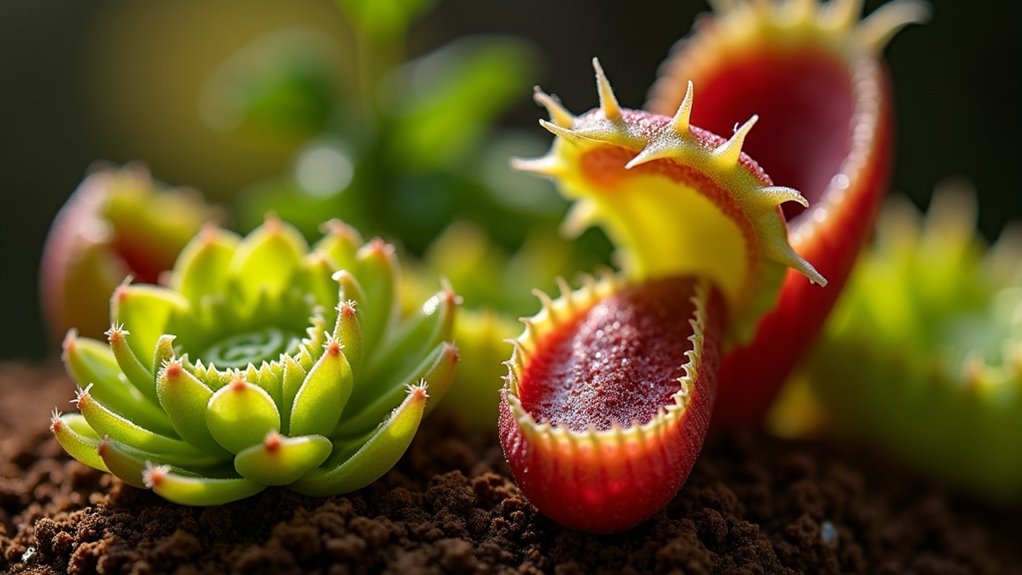
Carnivorous plants, like Venus Flytraps and sundews, actively trap insects for nutrients, making their care distinct from regular houseplants. They thrive in nutrient-poor environments and require specific growing conditions, such as full sunlight, high moisture levels, and mineral-free water like distilled or rainwater. Feeding practices also differ; these plants need only a few insects monthly, and overfeeding can cause health issues. Understanding their unique requirements guarantees vibrant growth, and you might find more fascinating insights ahead.
Key Takeaways
- Common carnivorous plants include Venus Flytrap, Sundews, Pitcher Plants, Bladderworts, and Butterworts, each with unique trapping mechanisms.
- Venus Flytraps and Cape Sundews are beginner-friendly, requiring minimal care and thriving in direct sunlight.
- North American Pitcher Plants need a cold dormancy period, while Tropical Pitcher Plants prefer bright, humid environments.
- All carnivorous plants require distilled water to thrive in nutrient-poor soils, avoiding regular potting soil.
- Feeding is generally unnecessary; only a couple of insects monthly is recommended to prevent overfeeding and health issues.
Types of Carnivorous Plants
Carnivorous plants encompass a fascinating variety of types, each showcasing unique adaptations for capturing prey.
The Venus Flytrap employs rapid leaf closure to trap insects, while Sundews utilize sticky leaves with tentacles to ensnare their victims.
Pitcher Plants, such as Sarracenia and Nepenthes, attract insects into tube-shaped leaves filled with digestive fluid, demonstrating diverse trapping mechanisms.
Bladderworts capture prey underwater using vacuum-like bladders, effectively sucking in small organisms.
Butterworts, found primarily in nutrient-poor soils, also rely on sticky leaves to trap insects.
Each type’s specialized adaptations allow them to thrive in environments where essential nutrients are scarce, such as rainwater.
Beginner-Friendly Carnivorous Plants
For those new to the world of carnivorous plants, selecting the right species can make all the difference in your success and enjoyment.
The Cape Sundew and Venus Flytrap are both beginner-friendly options, effectively catching prey with minimal care.
The Cape Sundew and Venus Flytrap are perfect for beginners, effortlessly ensnaring prey with little maintenance required.
Additionally, tropical pitcher plants like Nepenthes ‘Gaya’ thrive indoors, showcasing beautiful speckled pitchers. These plants require direct sunlight and a soil mix of fine-grade moss peat combined with lime-free horticultural sand or perlite.
Always use distilled water to maintain moisture levels, as they prefer nutrient-poor conditions. You can find these varieties at specialized nurseries, ensuring a rewarding experience.
Care Requirements for Various Carnivorous Plants
While caring for carnivorous plants might seem challenging, understanding their specific requirements can lead to thriving specimens.
Venus Flytraps need full direct sunlight and a moist environment, with pots submerged in distilled water.
North American Pitcher Plants require cold dormancy from November to February, thriving in saturated soil during active growth.
Tropical Pitcher Plants prefer bright, partial sunlight and a loose medium of sphagnum moss and horticultural sand.
All carnivorous plants must avoid regular potting soil, ensuring consistent moisture without standing water.
Monitor water quality closely, using only distilled water to meet their moisture requirements and support healthy growth.
Feeding and Fertilization Practices
Understanding how to properly feed and fertilize your carnivorous plants is essential for their health and growth.
Carnivorous plants need nutrients primarily from live insects, so you should feed carnivorous plants sparingly—just a couple of insects per month. Manual feeding is beneficial, but avoid store-bought meats, as these can introduce harmful chemicals.
Overfeeding can lead to leaf rot and other health issues. If your plants aren’t catching enough prey, some species, like sundews, may benefit from occasional nutrient supplements.
Importance and Maintenance of Carnivorous Plants
Carnivorous plants aren’t just fascinating organisms; they also play an essential role in their ecosystems by promoting nutrient cycling in nutrient-poor environments.
Carnivorous plants are not only captivating but also crucial for nutrient cycling in their challenging ecosystems.
For effective maintenance, you must provide specific environmental conditions: full sunlight, consistently moist soil, and mineral-free water like distilled or rainwater.
Regular care includes monitoring moisture, trimming dead leaves, and repotting in suitable mixes of sphagnum moss and horticultural sand to mimic their natural habitats.
Seasonal care is vital; some species need a cold dormancy, while tropical varieties thrive in warm, humid conditions.
Feeding is generally unnecessary, but if you choose to feed, offer only a few insects monthly.





