
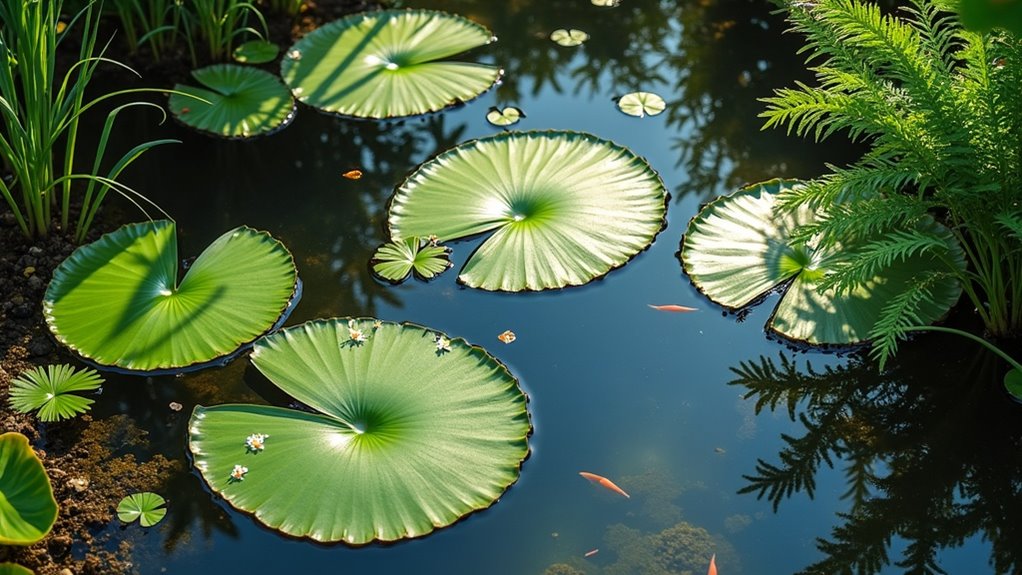
If you’re looking to enhance your backyard pond, consider popular aquatic plants like water lilies, pickerel plants, and blue iris. These species not only add beauty but also improve water quality and provide habitat for wildlife. Make sure to select plants suited for your climate, and use aquatic plant baskets for placement. Regular pruning is essential for maintaining water health. There’s much more to learn about selecting and caring for aquatic plants that can transform your pond.
Key Takeaways
- Popular aquatic plants for ponds include Water Lilies, Pickerel Plant, Blue Iris, Cardinal Flower, and Creeping Jenny.
- Floating plants like Water Lettuce and Water Hyacinth help absorb nutrients and provide shade.
- Emergent plants, such as Pickerel Weed, filter water and offer habitat for wildlife.
- Submerged plants like Hornwort and Eelgrass oxygenate water and compete with algae for nutrients.
- Be cautious of invasive species like Water Hyacinth and Duckweed, which can harm pond ecosystems.
Popular Aquatic Plants for Ponds
When designing a backyard pond, incorporating popular aquatic plants can greatly enhance both its aesthetic appeal and ecological balance.
Water Lilies, with their stunning blooms ranging from 2 to 12 inches, add vibrant colors to the surface.
The Pickerel Plant, growing 24-30 inches tall, features long-lasting lavender flowers perfect for pond edges.
Blue Iris, reaching up to 4 feet, thrives in wetland areas and showcases pale to deep purple flowers.
For shallow water, the Cardinal Flower displays bright red blooms, while Creeping Jenny, a low-growing perennial, contrasts beautifully with rocks, providing additional color and texture to your backyard ponds.
Benefits of Aquatic Plants in Ecosystems
Incorporating aquatic plants into your backyard pond not only enhances visual appeal but also plays a significant role in supporting local ecosystems.
Here are some key benefits:
- Water Quality: Aquatic plants filter pollutants and absorb excess nutrients, reducing algae growth.
- Habitats: They provide critical shelter for fish, amphibians, and invertebrates, promoting biodiversity.
- Erosion Control: Their root systems stabilize shorelines, preventing erosion and maintaining structural integrity.
- Mosquito Control: Aquatic vegetation attracts natural predators, like dragonflies, which help control mosquito populations.
Planting and Care Tips for Aquatic Plants
To successfully establish aquatic plants in your backyard pond, it is crucial to select species that thrive in your specific climate zone, as this guarantees their long-term health and growth. Acclimate floating plants to shade for 2-4 days before full sunlight exposure. Use heavy loam soil or small pebbles to anchor submerged oxygenating plants, promoting effective root establishment. Regular pruning is important to prevent nutrient overload that can harm water quality. Utilize aquatic plant baskets for easy placement and protection of submerged and emergent plants.
| Plant Type | Care Tips |
|---|---|
| Submerged Plants | Use loam soil; regular pruning |
| Floating Plants | Acclimate in shade first |
| Emergent Plants | Protect with plant baskets |
| Oxygenating Plants | Confirm proper sunlight exposure |
Floating, Emergent, and Submerged Plants
Understanding the roles of floating, emergent, and submerged plants is essential for creating a thriving ecosystem in your backyard pond.
- Floating Plants: Water Lettuce and Water Hyacinth absorb excess nutrients and provide shade, improving water clarity.
- Emergent Plants: Species like Pickerel Weed and Sweet Flag filter water while offering habitat above the surface.
- Submerged Plants: Hornwort and Eelgrass oxygenate water and compete with algae for nutrients.
- Ecosystem Balance: Combining these plants enhances aquatic life, but be cautious of invasive species like Water Lettuce that may require management.
Together, they foster a robust habitat in your pond.
Invasive Species to Avoid in Ponds
While a variety of aquatic plants can enhance your pond’s ecosystem, it’s important to be aware of invasive species that can disrupt the balance.
Species like Water Lettuce and Water Hyacinth can rapidly spread, choking waterways and reducing oxygen levels, which harms aquatic life.
Duckweed can form dense mats, blocking sunlight and hindering the growth of beneficial aquatic plants.
Additionally, Giant Reed outcompetes native vegetation, leading to decreased biodiversity.
Always check local regulations regarding invasive species, as their introduction is often prohibited to protect local ecosystems in your backyard ponds.
Choose wisely to maintain a healthy aquatic environment.





