
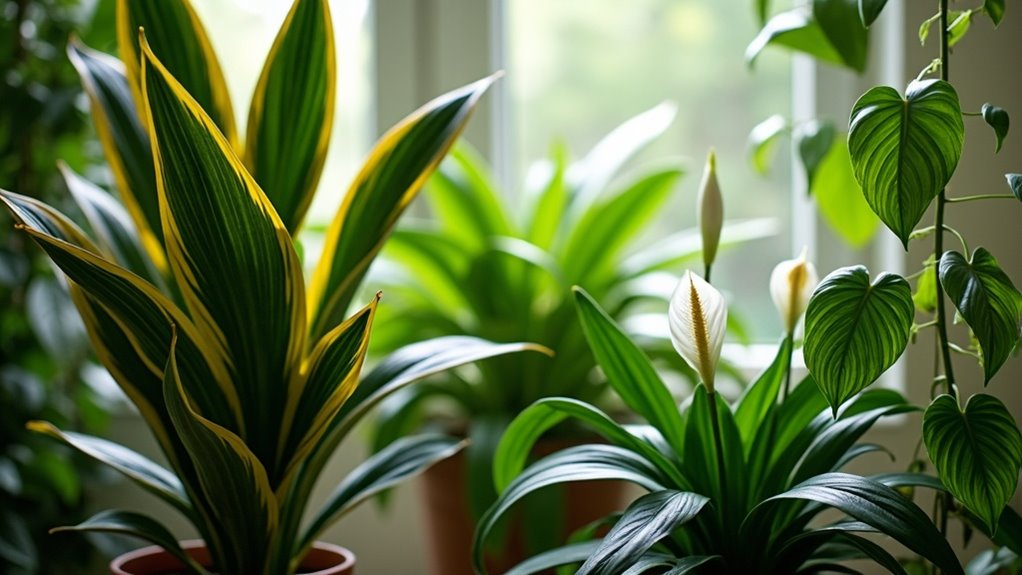
Plants like Peace Lily, Snake Plant, and Spider Plant are excellent for improving indoor air quality. They effectively remove pollutants like formaldehyde, benzene, and carbon monoxide, while also enhancing oxygen levels. Bamboo Palm and Boston Fern thrive in humid conditions, making them ideal for kitchens and bathrooms. Incorporating these plants not only purifies your air but also adds beauty to your home. Discovering which plants best suit your space can elevate your environment even further.
Key Takeaways
- Peace Lily effectively removes formaldehyde and ammonia, making it a great choice for indoor spaces.
- Snake Plant absorbs benzene and releases oxygen at night, enhancing air quality and promoting better sleep.
- Spider Plants filter carbon monoxide and formaldehyde, thriving in various light conditions, ideal for small rooms.
- Bamboo Palm removes benzene and formaldehyde while adding aesthetic appeal to your home.
- Boston Ferns thrive in high humidity, making them perfect for kitchens or bathrooms while improving air quality.
Benefits of Air-Purifying Houseplants
While you may not realize it, incorporating air-purifying houseplants into your living space can have profound benefits for your health and well-being.
These plants effectively reduce indoor pollutants like formaldehyde, benzene, and trichloroethylene, markedly improving air quality. NASA’s Clean Air Study reveals that placing 15 to 18 houseplants in an 1,800-square-foot home can absorb harmful substances, while plants like Boston Ferns and Snake Plants enhance oxygen levels.
Additionally, studies indicate that these houseplants can decrease respiratory issues by 34% and headaches by 24%, creating a healthier, more aesthetically pleasing environment that boosts your overall productivity and reduces stress.
Top Houseplants for Improving Indoor Air Quality
When choosing houseplants to improve indoor air quality, consider options like the Peace Lily and Snake Plant, which excel at removing harmful toxins.
Each plant comes with specific care requirements, ensuring you can select one that fits your lifestyle.
Best Air-Purifying Plants
If you want to enhance your indoor air quality, incorporating certain houseplants can make a significant difference.
The Peace Lily stands out as one of the best air purifying houseplants, effectively removing harmful chemicals like formaldehyde and ammonia.
The Snake Plant excels at absorbing benzene while releasing oxygen at night, perfect for sleep enhancement.
Spider Plants filter carbon monoxide and formaldehyde, purifying air in rooms up to 200 square feet.
Additionally, the Bamboo Palm effectively removes benzene and formaldehyde, adding a tropical touch to your space.
Plant Care Tips
To maximize the air-purifying benefits of your houseplants, it’s vital to understand their specific care requirements.
Start with easy-to-grow options like the Spider Plant, which thrives in various light conditions, effectively cleaning the air in smaller spaces.
The Peace Lily, requiring minimal maintenance, excels at removing formaldehyde and ammonia.
For low-light areas, the Snake Plant is ideal, as it uniquely releases oxygen at night.
If you choose Boston Ferns, verify high humidity and frequent watering for best performance in kitchens or bathrooms.
Finally, regularly clean the leaves to enhance their air-purifying capabilities and maintain indoor air quality.
Comparing Plants and Air Purifiers
When you consider air quality, both houseplants and air purifiers play essential roles.
While plants like the Spider Plant naturally filter pollutants, air purifiers efficiently tackle a wider array of contaminants, especially in larger quantities.
Balancing the aesthetic and health benefits of plants with the immediate effectiveness of purifiers can enhance your indoor environment considerably.
Natural Air Purification Benefits
While both houseplants and air purifiers play essential roles in enhancing indoor air quality, they operate through distinct mechanisms and offer unique benefits.
Indoor plants naturally purify the air by removing carbon dioxide and releasing oxygen. Researchers found that plants like the Spider Plant and Peace Lily are effective in removing formaldehyde and benzene, greatly improving air quality.
Additionally, houseplants enhance the aesthetic of your space while requiring minimal maintenance.
Combining plants with air purifiers can optimize results, as plants also contribute to humidity regulation and a sense of well-being, making your environment healthier and more pleasant.
Efficiency and Maintenance Comparison
Although both indoor plants and air purifiers play pivotal roles in enhancing indoor air quality, their efficiency and maintenance requirements differ markedly.
Air purifiers excel at removing air pollutants immediately, providing high efficiency with minimal maintenance. In contrast, while the best plants offer natural air purification and enhance aesthetics, they require regular care, including watering and monitoring.
NASA suggests 15 to 18 houseplants per 1,800 square feet for effective results, which can demand significant maintenance.
For ideal air quality, consider combining both solutions: plants improve humidity and ambiance, while air purifiers rapidly tackle indoor air pollution and carbon removal.
Additional Tips for Enhancing Indoor Air Quality
To enhance indoor air quality effectively, you should adopt a multi-faceted approach that includes proper ventilation, the use of non-toxic cleaning products, and the integration of air-purifying plants.
Regularly ventilate your spaces by opening windows to allow fresh air circulation, which helps reduce carbon dioxide and cleanse the air of volatile organic compounds.
Utilize exhaust fans in kitchens and bathrooms for removing moisture and contaminants.
Opt for non-toxic cleaning alternatives to minimize harsh chemicals that compromise air quality.
Consider monitoring with devices like the CM-INK-1 to track CO2 levels and humidity, creating a healthier living environment.
Care and Maintenance of Air-Purifying Plants
Incorporating air-purifying plants into your indoor environment not only enhances air quality but also requires attentive care to maximize their benefits.
Guarantee your plants receive appropriate light and water, allowing the topsoil to dry between waterings to prevent root rot. Use high-quality potting soil and regularly wipe leaves with a damp cloth to eliminate dust, promoting efficient photosynthesis.
Monitor for pests, as healthy plants are more effective at filtering air pollutants. Repot your plants when necessary to avoid overcrowding and support healthy root growth, guaranteeing they continue to thrive and contribute to a cleaner indoor atmosphere.
Choosing the Right Plants for Your Space
When you’re selecting plants for your indoor space, it’s essential to contemplate both their air-purifying qualities and the specific conditions of your environment.
Opt for low-maintenance plants like the Snake Plant and Pothos, which thrive in various light conditions. To enhance air purification, include a Spider Plant or Peace Lily every 100 square feet, targeting indoor air pollutants effectively.
Choose low-maintenance plants like Snake Plants and Pothos to improve air quality in your home.
Guarantee proper placement; Peace Lilies prefer indirect light, while Snake Plants tolerate low light.
Finally, consider pet safety; English Ivy and Peace Lilies are toxic to pets, so keep them out of reach or in pet-free areas for a healthier home.





