
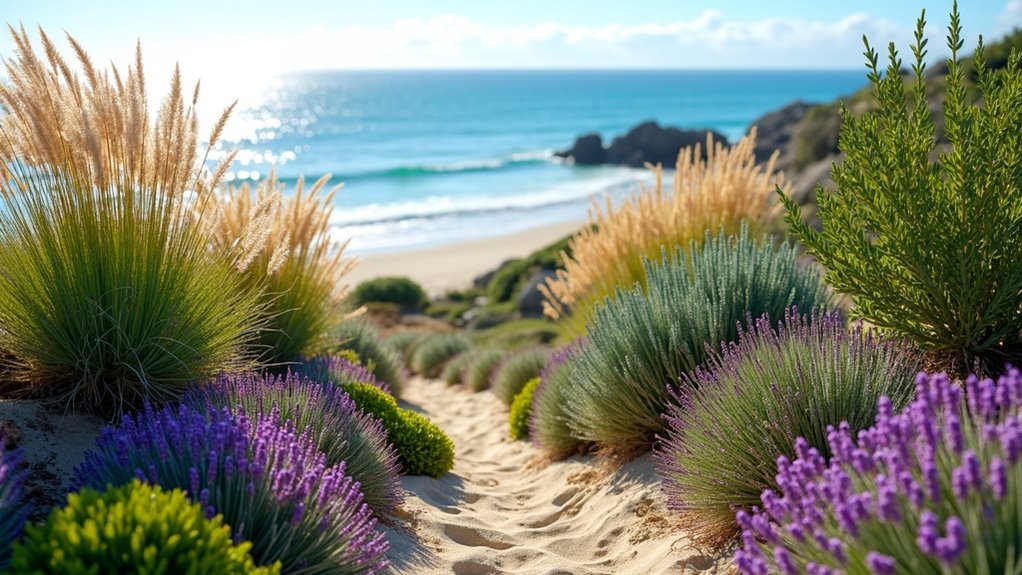
For salt-tolerant coastal gardens, consider plants like Coleus, Bougainvillea vines, and Winterberry Holly, which offer vibrant colors and visual appeal. Pin Oaks and Daylilies thrive in various conditions, enhancing your landscape’s resilience. Moss Rose, Bee Balm, and Ivy Geraniums add further diversity while attracting pollinators. These selections not only beautify your garden but also withstand the unique challenges of coastal environments. Explore more options to create a stunning and sustainable coastal oasis.
Key Takeaways
- Coleus and Winterberry Holly are both attractive options that thrive in salty coastal environments while providing visual appeal with their colorful foliage and berries.
- Bougainvillea vines flourish in full sun and add vibrant bracts, making them excellent for coastal landscapes with moderate salt tolerance.
- Pin Oaks grow rapidly and adapt to various soil conditions, including wet and salty soils, providing shade and privacy for coastal gardens.
- Daylilies are resilient perennials that tolerate drought and flooding, enhancing sandy coastal gardens with their vibrant flowers and effective ground cover.
- These plants support local wildlife and pollinators, contributing to a sustainable ecosystem in coastal areas while withstanding salt exposure.
Coleus (Plectranthus Scutellarioides)
Coleus (Plectranthus scutellarioides) stands out as a vibrant choice for coastal gardens, thanks to its striking, multicolored leaves.
This fast-growing plant demonstrates moderate salt tolerance, making it suitable for coastal environments where salt spray can be a concern. It thrives in USDA Hardiness Zones 10-11, preferring well-drained soil and full sun, although it can tolerate partial shade.
While its foliage adds aesthetic appeal, remember that Coleus is toxic to pets. If you live in colder climates, bring this tropical beauty indoors during winter months to protect it from frost damage and maintain its vibrant display.
Bougainvillea Vines
Bougainvillea vines bring a burst of color to your coastal garden with their vibrant bracts in shades like red, pink, and orange.
They thrive in full sun and well-drained, moist soil, making them perfectly suited for sunny coastal environments.
With moderate salt tolerance, these fast-growing vines not only withstand saline conditions but also provide an eye-catching vertical element to your landscape.
Colorful Bracts and Growth
When you introduce Bougainvillea vines to your coastal garden, you’ll quickly notice their vibrant, colorful bracts that come in an array of shades including red, pink, purple, orange, yellow, and white.
These fast-growing vines, a striking choice among salt-tolerant native plants, thrive in USDA Hardiness Zones 9-11.
While they’re moderately salt-tolerant, protecting them from harsh ocean winds and salt spray is essential for maintaining their vivid appearance.
The showy bracts, actually modified leaves, overshadow the small, inconspicuous flowers, making Bougainvillea a stunning focal point in any coastal landscape, provided you meet their growth requirements effectively.
Sunlight and Soil Needs
To successfully grow Bougainvillea vines in your coastal garden, understanding their sunlight and soil needs is essential.
These vibrant, salt-tolerant plants thrive in full sun, but can handle light shade, making them perfect for bright coastal environments. They prefer well-drained, moist soil, ideally sandy soils commonly found near the coast.
While regular watering is important during establishment, once settled, Bougainvillea exhibits impressive drought tolerance.
Additionally, they flourish in USDA Hardiness Zones 9-11, adapting well to warmer coastal climates.
Winterberry Holly (Ilex Verticillata)
Winterberry Holly (Ilex verticillata) offers striking visual appeal in autumn with its bright red berries, which persist throughout winter.
This deciduous shrub thrives in various soil types and prefers full sun, making it well-suited for coastal gardens that experience salty conditions.
When planning your landscape, consider its adaptability to USDA Hardiness Zones 3-9 while keeping in mind its toxicity to pets and children.
Visual Appeal in Autumn
As autumn approaches, the vibrant emerald green leaves of Ilex verticillata transform into a stunning display highlighted by clusters of striking red berries.
This plant’s striking color contrast against the fall foliage enhances your garden’s visual appeal. Hardy in USDA Hardiness Zones 3-9, Winterberry Holly thrives in various soil types, including salty conditions, making it ideal for coastal gardens.
Its full sun requirement guarantees that the berries remain bright and noticeable throughout the season. Incorporating Winterberry Holly not only adds beauty but also provides a reliable, salt-tolerant option that withstands the challenges of coastal environments.
Soil and Light Requirements
When selecting Winterberry Holly (Ilex verticillata) for your coastal garden, understanding its soil and light requirements is essential for ideal growth.
This adaptable plant thrives in various soil types, particularly those that are moist and well-drained, common in coastal areas. While it prefers full sun, Winterberry Holly can tolerate partial shade, making it versatile for different garden designs.
Importantly, it’s tolerant of salt in the soil, which allows it to flourish in coastal environments without issue. Its vibrant red berries and lush green leaves provide visual interest, enhancing your garden’s aesthetic appeal throughout the fall season.
Pin Oaks (Quercus Palustris)
Pin Oaks (Quercus palustris) stand out as an excellent choice for coastal gardens, thanks to their rapid growth and adaptability to various soil conditions, including those that are occasionally wet.
This moderately salt tolerant species thrives in USDA Hardiness Zones 4-8 and reaches a mature height of 70 feet, providing ample shade and privacy. Their multi-lobed leaves turn a striking deep red in the fall, adding vibrant seasonal color.
Pin Oaks prefer full sun, making them ideal for open coastal environments. For ideal health and structure, remember to prune them during the winter months.
Daylilies (Hemerocallis Spp.)
Coastal gardens benefit from a variety of plant species, and daylilies (Hemerocallis spp.) are a standout choice for their adaptability and resilience. These perennials thrive in sandy soils common in coastal areas and tolerate both drought and flooding. With vibrant flowers in shades of pink, purple, red, and yellow, they enhance coastal landscapes beautifully. Hardy in USDA Hardiness Zones 3-10, daylilies can flourish in diverse environments. Remarkably, the yellow Stella D’Oro variety is popular for prolific blooming and quick spreading, making it an effective ground cover.
| Feature | Details |
|---|---|
| Soil Type | Sandy, well-drained |
| Flower Colors | Pink, purple, red, yellow |
| Hardiness Zones | 3-10 |
| Notable Variety | Stella D’Oro |
Moss Rose (Portulaca Grandiflora)
Moss Rose (Portulaca grandiflora) stands out as an exceptional choice for coastal gardens, thanks to its remarkable drought tolerance and ability to thrive in sandy, well-drained soils.
Moss Rose thrives in coastal gardens with its drought tolerance and vibrant blooms in sandy, well-drained soils.
This annual plant showcases dainty, colorful flowers that resemble miniature roses, blooming vibrantly in full sun while attracting pollinators. It typically grows a few inches tall and spreads along the ground, making it excellent ground cover.
Hardy in USDA Hardiness Zones 2-11, Moss Rose can endure high salt conditions, making it ideal for coastal areas.
However, be cautious, as it’s considered toxic to dogs and cats, requiring care for pet owners.
Bee Balm (Monarda Didyma)
Bee Balm (Monarda didyma) is a resilient perennial that thrives in a variety of soil conditions, making it an excellent addition to coastal gardens.
It flourishes in USDA Hardiness Zones 3-9 and features vibrant, tubular flowers that attract pollinators like bees and butterflies, enhancing biodiversity. Preferring full sun to partial shade, this plant emits a minty fragrance that deters deer and herbivores.
Reaching heights of 2-4 feet, it adds vertical interest to your garden. Its rhizomatic growth allows it to spread easily, providing a low-maintenance option for coastal gardeners seeking colorful, pollinator-friendly blooms.
Ivy Geraniums (Pelargonium Peltatum)
Ivy Geraniums (Pelargonium peltatum) are an excellent choice for coastal gardens, thanks to their impressive adaptability and vibrant blooms. These salt tolerant plants thrive in sunny seaside locations, effortlessly enduring wind and salt spray. With their rapid growth, they make a stunning addition to hanging baskets or as ground cover.
| Characteristics | Details | Benefits |
|---|---|---|
| Height | 1 to 2 feet | Ideal for various setups |
| Soil Preference | Well-drained | Reduces root rot risk |
| Bloom Colors | Multiple vibrant shades | Attracts pollinators |
| Maintenance Level | Low | Easy for novice gardeners |





