
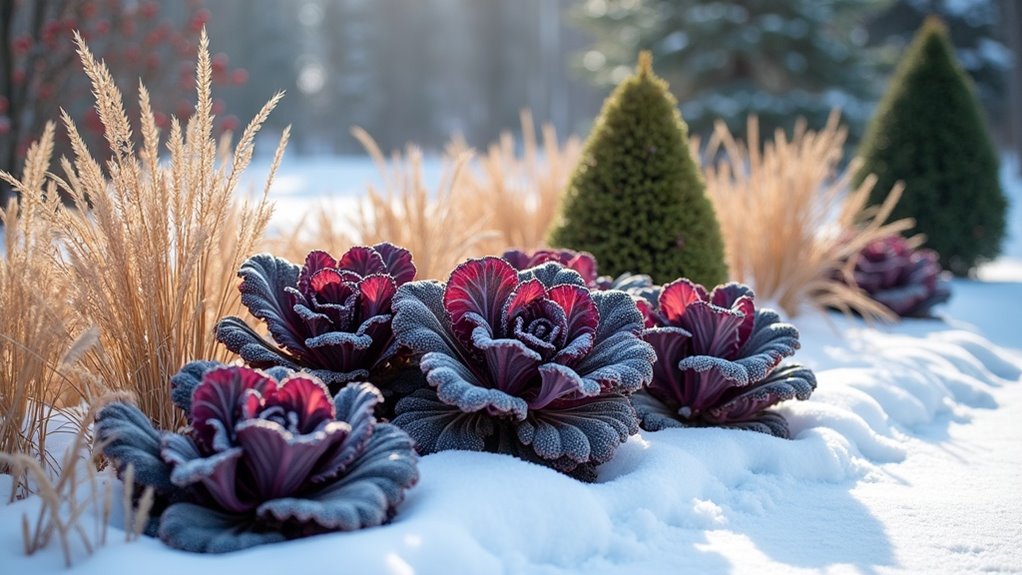
Cold hardy plants, ideal for northern zones, thrive in USDA Hardiness Zones 3 and 4. They’re designed to withstand extreme cold, frost, and heavy snow, making them perfect for winter resilience. Popular choices include lilacs, hardy hydrangeas, and hostas, known for their beauty and low maintenance. Additionally, cold hardy fruits like hardy kiwi and alpine strawberries add diversity and nutritional value to your garden. Keep exploring to discover essential tips for successfully growing these robust plants.
Key Takeaways
- Cold hardy plants thrive in USDA Hardiness Zones 3-4, making them suitable for northern climates with extreme winter conditions.
- Popular cold hardy favorites include lilacs, hardy hydrangeas, and hostas, known for their beauty and resilience.
- Cold hardy fruits like hardy kiwi, sea buckthorn, and alpine strawberries provide nutritional benefits and enhance garden diversity.
- These plants require low maintenance, as they enter dormancy in winter and need less water and fertilizer than non-hardy varieties.
- To ensure optimal growth, select varieties suited for your zone and provide full sun exposure and proper mulching.
What Are Cold Hardy Plants?
Cold hardy plants are specifically chosen varieties that thrive in extreme winter conditions, making them ideal for gardeners in northern zones.
These plants include perennials, shrubs, and evergreens that can withstand harsh temperatures, often rated for USDA Hardiness Zones 3 or 4.
Cold hardy plants encompass perennials, shrubs, and evergreens that thrive in USDA Hardiness Zones 3 or 4.
During colder months, cold hardy plants enter dormancy to conserve energy, allowing them to rebound when temperatures rise. Their natural resilience reduces maintenance needs, promoting sustainability by minimizing annual replanting.
Popular examples include lilacs, hardy hydrangeas, boxwoods, sedums, and hostas, offering a range of colors and shapes to enhance your landscape while enduring the toughest winters.
Characteristics of Cold Hardy Plants
Many cold hardy plants exhibit unique characteristics that enable them to thrive in harsh winter conditions.
These cold hardy varieties are specifically adapted to survive in USDA Hardiness Zones 3 or 4, enduring extreme cold, frost, and snow. They enter a state of dormancy during winter, conserving energy to grow vigorously in spring.
Typically, these plants are perennials, returning year after year, which enhances garden sustainability. Their robust branches and dense foliage allow them to withstand snow loads and resist freezing temperatures.
With diverse sizes, shapes, and colors, cold hardy plants offer versatile landscaping options with minimal maintenance requirements.
Benefits of Cold Hardy Plants
Cold hardy plants offer significant advantages for your garden, including year-round aesthetic appeal and low maintenance requirements.
Their resilience allows for sustainable gardening practices, reducing the need for frequent replanting.
Year-Round Aesthetic Appeal
When you choose cold hardy plants for your northern garden, you’ll enjoy year-round aesthetic appeal that enhances your landscape throughout all seasons.
These plants maintain vibrant foliage and blooms even through winter frost and snow, ensuring visual interest year-round.
Perennials like lilacs and hardy hydrangeas return each spring, providing a reliable backdrop, while the dense foliage of shrubs like boxwoods adds structure.
Incorporating a variety of cold hardy plants allows for seasonal color changes, with evergreens showcasing rich greens in winter and perennials bursting with color in warmer months, creating a dynamic and beautiful garden that requires minimal upkeep.
Low Maintenance Requirements
Choosing cold hardy plants not only enhances your garden’s aesthetic appeal but also greatly reduces maintenance requirements.
Here are three key benefits:
- Perennial Nature: Many cold hardy plants, like sedum and hostas, come back year after year, eliminating the need for annual replanting.
- Low Water and Fertilizer Needs: These plants thrive in harsh conditions, requiring less water and fertilizer than non-hardy varieties.
- Robust Structures: Their dense foliage withstands snow and ice, minimizing damage and the need for intervention.
Sustainable Gardening Practices
Incorporating cold hardy plants into your garden can greatly enhance sustainability while minimizing maintenance efforts.
These plants thrive in harsh winter conditions, reducing the need for annual replanting and resource use. Many cold hardy plants are perennials, returning each year and supporting waste reduction.
By selecting species adapted to your local climate, you improve biodiversity, attract native pollinators, and contribute to ecosystem health.
Additionally, cold hardy plants often require less water, thriving in less than ideal soil and decreasing irrigation needs.
Popular Cold Hardy Favorites
For northern gardeners seeking reliable and visually appealing plants, cold hardy favorites like lilacs, hydrangeas, and hostas offer exceptional beauty and resilience.
Here are three top choices for your garden:
- Lilacs (Syringa) – Beloved for fragrant spring blooms, hardy in USDA zones 3-7.
- Hardy Hydrangeas (Hydrangea paniculata) – Cold-resistant with stunning flower clusters, thriving in zones 3-9.
- Hostas (Hosta) – Known for lush foliage and shade tolerance, flourishing in zones 3-9.
Incorporating these cold hardy plants guarantees a vibrant landscape that withstands northern climates while providing year-round interest.
Designing With Cold Hardy Plants
When designing with cold hardy plants, it’s essential to create a cohesive and visually appealing landscape that thrives in northern climates.
Consider layering plant heights by combining tall shrubs like lilacs with mid-height perennials such as sedum for added depth. Incorporate evergreens like boxwoods to provide structural anchors, ensuring year-round greenery.
Select plants offering seasonal color, like colorful stems from dogwoods, to brighten winter landscapes. Mix textures by pairing smooth-leaved hostas with spiky yarrow, enhancing diversity.
Finally, plan for continuous interest by including cold hardy favorites that bloom at different times, such as columbine in spring and black-eyed Susans in summer.
Cold Hardy Fruits for Northern Gardens
When selecting cold hardy fruits for your northern garden, consider Hardy Kiwi, which can withstand temperatures as low as -40°F and offers a unique flavor profile.
Sea Buckthorn not only thrives in similar conditions but also provides highly nutritious berries rich in vitamins.
Additionally, Alpine Strawberries flourish in cooler climates, producing small, sweet fruits that enhance your garden’s diversity.
Hardy Kiwi Varieties
Although many may not associate kiwis with cold climates, hardy kiwi (Actinidia arguta) is a remarkable option for northern gardens, thriving in temperatures as low as -40°F.
Here are three key aspects of growing hardy kiwi:
- Fruit Characteristics: The small, grape-sized fruits have smooth, edible skin, unlike the fuzzy kiwis typically found in stores.
- Growth Requirements: These vigorous vines need sturdy support structures, like trellises, to flourish.
- Pollination: While hardy kiwi plants are self-pollinating, planting multiple varieties can enhance both fruit yield and size, ensuring a bountiful harvest.
Sea Buckthorn Benefits
Incorporating cold hardy fruits into your northern garden can yield both nutritional benefits and environmental advantages.
Sea Buckthorn (Hippophae rhamnoides) is a remarkable cold hardy plant, thriving in temperatures as low as -40°F. Its vibrant orange berries are loaded with vitamins, antioxidants, and essential fatty acids, promoting excellent health.
Additionally, this nitrogen-fixing shrub enhances soil quality, benefiting neighboring plants. Sea Buckthorn adapts well to sandy or poor soil conditions, making it suitable for challenging environments.
You can harvest the berries from late summer to early fall for use in juices, jams, and supplements, maximizing your garden’s productivity.
Alpine Strawberry Features
Alpine strawberries (Fragaria vesca) are an excellent choice for northern gardens, offering a unique combination of hardiness and flavor.
These cold hardy plants thrive in USDA Hardiness Zones 3 to 8 and provide numerous benefits:
- Compact Growth: They reach only 6 to 12 inches, making them perfect for containers or ground cover.
- Early Harvest: Expect to enjoy sweet, flavorful berries from late spring to early summer, often in their first year.
- Low Maintenance: They tolerate poor soil conditions, ensuring sustainable yields for several seasons with minimal effort.
These features make alpine strawberries a valuable addition to your cold hardy garden.
Perennial Plants for Zones 2-5
When selecting perennial plants for northern zones 2-5, you’ll find a variety of resilient options that thrive in cooler climates.
Consider Lupine for its vibrant flowers and robust foliage, ideal for colder gardens.
Columbine offers low-maintenance beauty with diverse colors, perfect for decorative planters.
Sedum, a drought-tolerant ground cover, features unique plump foliage and is nearly indestructible.
Astilbe provides colorful, fluffy blooms and adapts well to colder soils, while Rudbeckia, or Black Eyed Susans, attracts pollinators with its classic blooms.
These cold hardy plants guarantee your garden flourishes despite the harsh northern winters.
Tips for Growing Cold Hardy Plants
To guarantee your cold hardy plants thrive in northern climates, it’s essential to select varieties suited for USDA Hardiness Zones 3-5.
Follow these tips:
- Sunlight: Make sure your cold hardy plants receive full sun for ideal growth and vigor.
- Mulching: Apply mulch around the base to insulate roots during winter and retain moisture throughout the growing season.
- Watering: Maintain consistent moisture during the growing period, especially in dry spells, to support healthy growth.





