
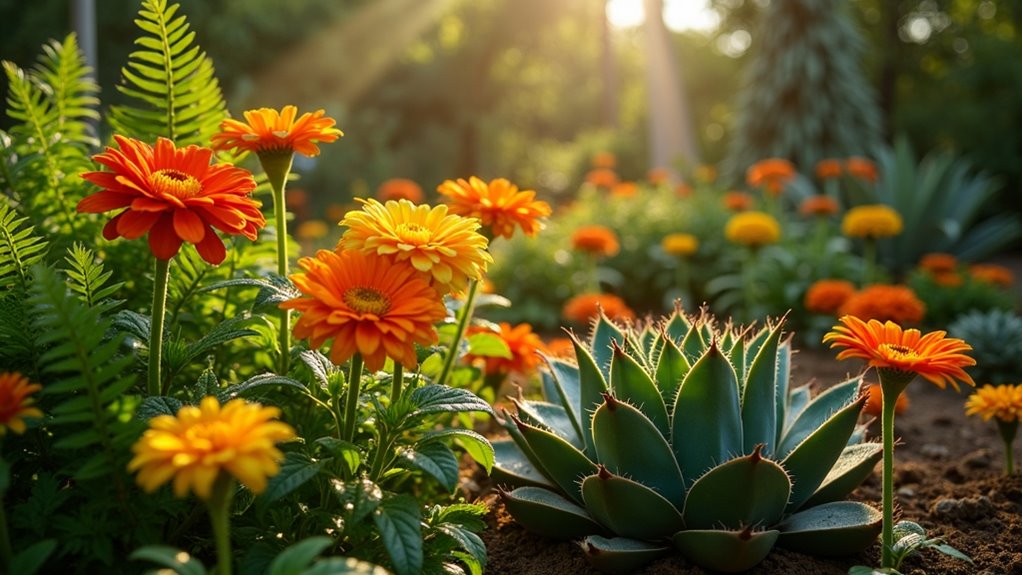
In southern zones, heat-tolerant plants like Lantana, Hibiscus, and Suncredible Yellow Sunflowers thrive in full sun. Perennials such as Autumn Sage and Black-eyed Susan also flourish, while drought-tolerant natives like Gulf Coast Muhly grass provide low-maintenance options. When gardening, consider shrubs like Texas Lantana and Flame Acanthus for vibrant blooms. These plants not only thrive in high temperatures but also support local wildlife and conserve water. Discover more options and care tips to enhance your garden’s resilience.
Key Takeaways
- Lantana and Hibiscus thrive in Southern zones, attracting butterflies and tolerating heat and drought conditions effectively.
- Texas Lantana and Black-eyed Susan are excellent choices for vibrant blooms while withstanding high temperatures.
- Sedum, including Coraljade, offers low-maintenance, drought-tolerant options suitable for hot climates.
- Suncredible Yellow Sunflower provides continuous blooms without deadheading, enhancing garden aesthetics in sunny spots.
- Gulf Coast Muhly grass is a low-maintenance native grass ideal for xeriscaping in Southern regions.
Annual Plants for Full Sun
When you’re looking to brighten up your garden in Southern Zones 9-11, annual plants for full sun are an excellent choice. Heat tolerant varieties like Lantana thrive in direct sunlight, showcasing vibrant colors with at least 6 hours of exposure.
Brighten your Southern garden with heat-tolerant annuals like Lantana, thriving in full sun for vibrant colors all season.
Sunstar Pentas continuously blooms, attracting pollinators like butterflies and hummingbirds, making it ideal for pollinator gardens.
Low maintenance options include Sweet Potato Vine, which offers lush ground cover.
Diamond Snow Euphorbia provides abundant white blooms, thriving in drought conditions.
Finally, the everblooming Suncredible Yellow Sunflower requires no deadheading, ensuring a stunning display from spring to frost.
Sun-Loving Perennials
If you’re looking to enhance your garden with resilient plants, sun-loving perennials are an excellent choice for Southern zones.
Varieties like Lantana, Salvia, and Echinacea not only thrive in full sun but also offer vibrant blooms and attract pollinators, all while requiring minimal maintenance.
Ideal Varieties for Sun
For gardeners in southern zones seeking to create vibrant, sun-drenched landscapes, selecting the right sun-loving perennials is essential.
Here are ideal varieties that thrive in full sun and are perfect for your summer garden:
- Lantana: Attracts butterflies and withstands drought.
- Hibiscus: A tropical beauty that flourishes in hardiness zones 9-11.
- Sedum: Low-maintenance, drought-tolerant varieties like Coraljade.
- Suncredible Yellow Helianthus: Ever-blooming sunflowers that invite pollinators.
- Sweet Potato Vines: Rich foliage for ground cover or container plants.
These heat-tolerant plants will enhance your landscape while enduring the Southern heat.
Benefits of Heat Tolerance
Choosing heat-tolerant sun-loving perennials not only enhances the aesthetic appeal of your southern garden but also delivers several practical benefits. These robust plants thrive in heat and humidity, making them ideal for your climate. Native varieties like Lantana and Hibiscus require less water once established, reducing maintenance. Additionally, many of these plants attract pollinators, such as bees and butterflies, supporting local ecosystems. With options like Diamond Snow Euphorbia and Sweet Caroline Ipomoea, you can enjoy continuous blooms from spring to fall, ensuring your garden remains vibrant.
| Plant | Sun Preference | Pollinator Attraction |
|---|---|---|
| Lantana | Full to Part | Yes |
| Hibiscus | Full | Yes |
| Diamond Snow Euphorbia | Full to Part | Yes |
| Sweet Caroline Ipomoea | Full to Part | Yes |
| Salvia | Full | Yes |
Shrubs for Sunny Spots
When you’re looking to enhance your sunny garden spaces, selecting the right shrubs can make all the difference in creating a vibrant and resilient landscape.
Consider these heat-tolerant options for sunny spots:
- Texas Lantana: Attracts butterflies with its vibrant blooms.
- Autumn Sage: Offers colorful flowers that draw in pollinators.
- Pride of Houston Yaupon Holly: Produces bright red berries, perfect for wildlife gardens.
- Flame Acanthus: Showcases vivid red-orange flowers, thriving in heat.
- Turks Cap: Clusters of red flowers attract hummingbirds, flourishing in full sun.
These shrubs require minimal maintenance while providing beauty and supporting local wildlife.
Drought-Tolerant Native Plants
Drought-tolerant native plants are essential for creating sustainable gardens in Southern zones, especially where water conservation is a priority.
Species like Texas Lantana and Black-eyed Susan thrive in heat and drought, requiring minimal watering once established.
Texas Lantana and Black-eyed Susan flourish in dry, hot conditions, needing little water after they’re established.
Additionally, plants such as Autumn Sage and Flame Acanthus not only withstand dry conditions but also attract pollinators, enhancing biodiversity.
Gulf Coast Muhly grass and Four-Nerve Daisy offer low-maintenance options for xeriscapes, while Turk’s Cap and Texas Kidneywood adapt well to local ecosystems.
Tips for Plant Care in Heat
As temperatures soar in Southern zones, ensuring your plants thrive requires specific care strategies tailored to heat conditions.
- Water plants deeply and less frequently to strengthen roots.
- Apply mulch around plants to retain moisture and keep roots cool.
- Select heat-tolerant plant varieties like Lantana and Hibiscus for vibrant blooms.
- Regularly monitor soil moisture, as drought-resistant plants still need water during dry spells.
- Prune spent blooms and dead foliage to enhance airflow and encourage new growth.
Landscape Design Ideas for Hot Climates
When designing landscapes for hot climates, consider mass planting techniques that feature heat-tolerant plants like Luscious Lantana for impactful displays.
Combine colorful varieties strategically to create visually striking combinations while attracting pollinators with plants like Sunstar Pentas.
Grouping plants with similar water and sunlight needs will enhance your garden’s aesthetics and reduce maintenance efforts.
Mass Planting Techniques
Mass planting techniques offer an effective strategy for creating vibrant landscapes in hot climates, where heat-tolerant plants thrive.
By grouping landscape plants together, you can achieve stunning displays that withstand high temperatures.
Consider these approaches:
- Use diverse textures and colors for visual interest.
- Plant in layers for height variation.
- Incorporate native plants to attract local pollinators.
- Choose species that flourish in full sun, like Lantana and Helianthus.
- Commit to regular maintenance for longevity.
Implementing these techniques guarantees your garden remains resilient and beautiful, enhancing both aesthetics and ecological benefits throughout the summer.
Colorful Combination Recipes
Creating a vibrant landscape in hot climates requires thoughtful plant combinations that not only endure high temperatures but also bring visual excitement.
Combine tough plants like Luscious Lantana, Sunstar Pentas, and Diamond Snow Euphorbia in containers for stunning blooms from summer through fall. Use Sweet Caroline Ipomoea alongside Suncredible Yellow Helianthus for a rich range of colors.
Layer taller varieties, like Rockin’ Salvia, with shorter ones, such as Whirlwind Scaevola, to enhance visibility. Incorporate drought-resistant natives like Black-eyed Susan with tropical Hibiscus to attract butterflies and hummingbirds, ensuring your garden remains hardy in zones while providing beauty and biodiversity.
Pollinator-Friendly Garden Designs
As you design your pollinator-friendly garden, focus on incorporating a variety of heat-tolerant plants that thrive in hot climates while attracting essential pollinators like bees and butterflies.
Consider these elements for your vibrant landscape:
- Mass plantings of colorful blooms like Lantana and Pentas for visual impact
- Native plants such as Black-eyed Susan, ensuring resilience and support for local wildlife
- Layered plantings to provide shelter and nesting opportunities for pollinators
- Containers filled with Butterfly Ginger that add height and structure
- Water features or shallow dishes to hydrate your pollinators during hot weather
Design with purpose, and enjoy the buzzing life your garden attracts!
Benefits of Heat-Tolerant Plants
The resilience of heat-tolerant plants brings numerous advantages to gardeners in Southern zones.
These plants greatly reduce maintenance needs by thriving in low-water conditions, showcasing their drought resistance and conserving valuable water resources.
Varieties like Lantana and Echinacea offer continuous blooms, enhancing garden aesthetics with vibrant color throughout the growing season, while requiring minimal upkeep.
Additionally, selecting heat-tolerant plants supports local wildlife by attracting essential pollinators such as bees and butterflies, which contribute to healthy ecosystems.





