
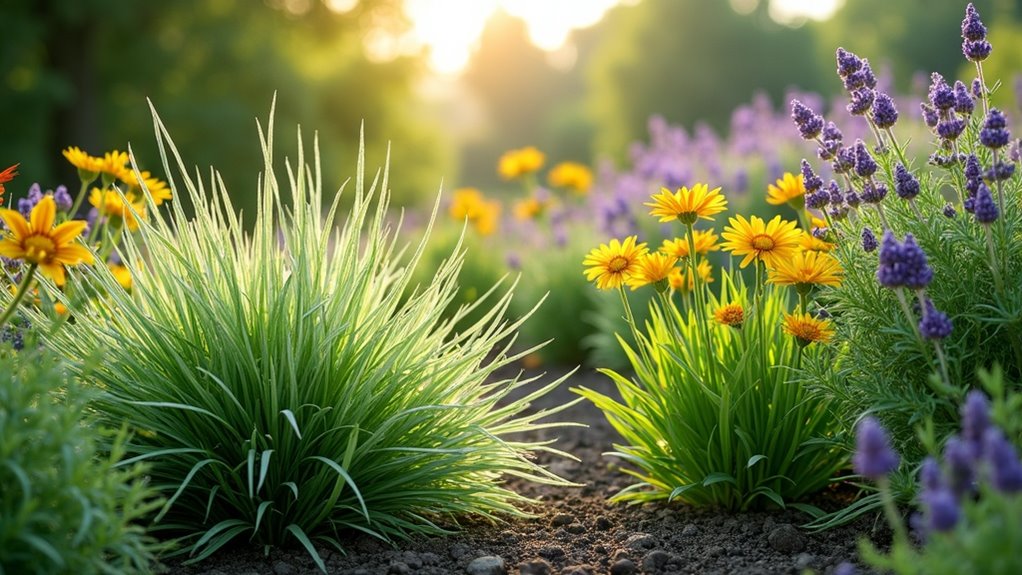
If your soil’s pH ranges from 7.1 to 8.0, consider growing trees like fig, holm oak, and blackthorn. For shrubs, forsythia and lilac thrive well in alkaline conditions, while buddleia attracts pollinators. Edible plants such as broccoli, peas, and marjoram also flourish. These plants adapt naturally, requiring less intervention and enhancing soil health. Explore further to discover more about how these varieties contribute to your landscape and garden productivity.
Key Takeaways
- Fig trees and Holm oaks are excellent choices for alkaline soils, offering drought tolerance and wildlife habitat.
- Forsythia and Buddleia thrive in alkaline conditions, providing vibrant blooms and attracting pollinators.
- Lilacs flourish in full sun and produce fragrant flowers, making them a great addition to alkaline gardens.
- Edible plants like Chinese kale, broccoli, and peas adapt well to alkaline soils, enhancing garden productivity.
- Incorporating alkaline-tolerant species can improve soil health and biodiversity in your garden.
Identifying Alkaline Soil
When you’re trying to identify alkaline soil, start by checking the pH level, which usually falls between 7.1 and 8.0.
Use a pH tester kit for accurate results, as visual clues alone may mislead you. Look for signs of mildly alkaline soil, such as white lumps of limestone or specific plant species thriving in the area.
Additionally, if soil mixed with vinegar froths, it indicates high lime content, confirming its alkaline nature.
Observing the flora in surrounding gardens can also provide insights into the local soil’s pH, helping you differentiate between alkaline and acidic soil conditions.
Benefits of Alkaline Soil Plants
Understanding the characteristics of alkaline soil sets the stage for exploring the benefits of plants that thrive in these conditions. Alkaline soils, with their higher pH levels, often require less intervention, as the best plants to grow in these conditions adapt naturally.
These plants can enhance soil health by promoting beneficial microbial life, supporting biodiversity, and attracting pollinators. Additionally, incorporating alkaline-tolerant species like lilacs boosts garden aesthetics.
Growing these resilient plants reduces the need for adding organic matter and minimizes water and nutrient inputs, resulting in more sustainable gardening practices. Overall, they contribute positively to your garden’s ecosystem.
Top Trees for Alkaline Soil
While many trees struggle in alkaline soils, several species thrive and offer unique benefits for your landscape.
Consider planting these top trees:
- Fig trees (Ficus carica): Tolerant of drought, ideal for warm climates.
- Holm oak (Quercus ilex): Resilient, provides shade and wildlife habitat.
- Blackthorn (Prunus spinosa): Known for dense thickets and stunning spring blooms.
- Native tree species: Local varieties often adapt better to regional alkaline soil conditions.
Best Shrubs for Alkaline Conditions
If you’re looking to enhance your garden with resilient and visually appealing shrubs that thrive in alkaline conditions, you’ve got several excellent options.
Forsythia, with its vibrant yellow spring flowers, flourishes in soils with a pH of 7.0-8.0.
Buddleia, or butterfly bush, not only tolerates alkaline soils but also attracts pollinators.
Lilac (Syringa vulgaris) prefers full sun and does well in pH levels of 7.0-8.5, offering fragrant blooms.
Viburnum opulus features ornamental white flowers and bright red berries, while hydrangeas like ‘Endless Summer’ adapt to slightly alkaline soils, producing beautiful blooms that can shift in color based on pH.
Edible Plants Suited for Alkaline Soil
When cultivating a garden in alkaline soil, selecting the right edible plants can considerably enhance both your yield and flavor profile.
Choose plants that thrive in soil with a pH level of 7.0 to 8.0 for ideal growth.
Consider incorporating:
- Chinese kale
- Broccoli and Brussels sprouts
- Peas and pole beans
- Marjoram and rosemary
These edible plants not only adapt well to alkaline conditions but also benefit from the nutrient availability in such soils.
By choosing wisely, you can maximize your garden’s productivity while enjoying the rich flavors these plants offer.
Happy gardening!





