
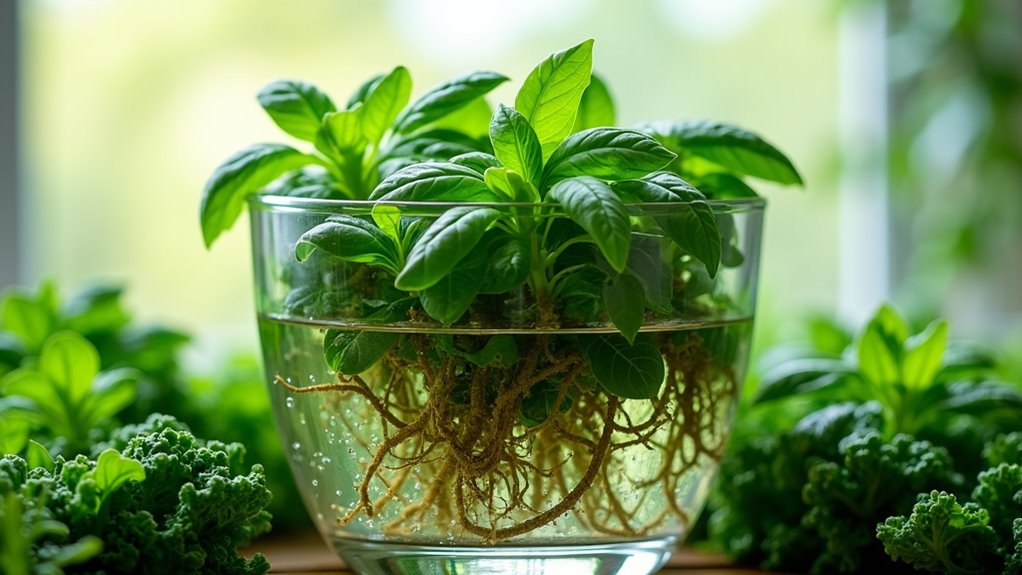
You can successfully grow several houseplants in water, making them perfect for hydroponic care. Popular choices include Pothos, Lucky Bamboo, Spider Plants, Philodendron, and English Ivy. These plants thrive without soil and often root quickly when placed in clean, chlorine-free water. To guarantee healthy growth, monitor water quality, light exposure, and change the water regularly. Each plant has unique requirements, so knowing these details can help you flourish. You’ll be surprised at what other plants can thrive in water!
Key Takeaways
- Pothos, Lucky Bamboo, and Spider Plants thrive in water, making them ideal for hydroponic growth without soil.
- Philodendron is beginner-friendly, as stem cuttings develop roots quickly in water.
- English Ivy roots readily in water and prefers sunny spots for optimal growth.
- Maintain water quality by changing it weekly and monitoring for stagnation or foul smells.
- Provide adequate light, adjusting exposure based on the specific needs of each plant.
Popular Houseplants for Hydroponic Growth
When it comes to hydroponic growth, several popular houseplants stand out for their adaptability and ease of care.
Pothos thrives in water, often growing over a foot in a month with minimal effort.
Lucky Bamboo, requiring no soil, adds aesthetic appeal while allowing for creative arrangements.
Spider Plants root quickly, producing offshoots with regular water changes.
Philodendron is ideal for beginners, as stem cuttings develop roots in just a few weeks.
English Ivy not only roots readily in water but also flourishes in sunny spots, creating a lush indoor environment.
These plants are perfect for anyone interested in hydroponic gardening.
Tips for Successful Water Propagation
To achieve successful water propagation, start by selecting healthy cuttings with robust nodes, as these are essential for root development.
Use clean, chlorine-free water and make certain it’s changed weekly to prevent stagnation and algae growth.
Additionally, place your cuttings in a spot with adequate indirect sunlight to support root growth without exposing them to stress from direct light.
Choose Healthy Cuttings
Selecting healthy cuttings is essential for successful water propagation. To guarantee your cuttings thrive, follow these guidelines:
- Choose cuttings at least 4-6 inches long with multiple leaf nodes, as these nodes are where roots begin to form.
- Inspect for any signs of disease or pests to increase success rates.
- Remove lower leaves that will be submerged in water to prevent rot.
- Use fresh, unchlorinated water in a clear glass container and place it in indirect light for ideal growth.
Regularly monitor your cuttings and change the water weekly to maintain clarity and encourage healthy root development.
Maintain Clean Water
Healthy cuttings thrive best in clean water, making it crucial to maintain the quality of the water used for propagation. Change the water every week to prevent cloudiness and promote healthy root growth.
Always use chlorine-free water, as chlorine can damage delicate roots. Monitor water levels closely, adjusting them regularly to guarantee roots don’t dry out.
Incorporate activated charcoal in the bottom of containers to help keep the water clean and reduce odors, benefiting overall plant health. Rinse and refresh the water frequently to prevent stagnation and harmful bacteria, assuring your plants thrive in a healthy environment.
Provide Adequate Light
While guaranteeing your plants receive adequate light is essential for successful water propagation, understanding their specific light requirements can make all the difference.
Follow these tips for ideal growth:
- Research each plant’s light needs; many prefer bright indirect sunlight.
- Monitor health regularly; stunted growth or yellowing leaves may signal insufficient light.
- Adjust for seasonal changes by relocating plants to maintain ideal light exposure.
- Rotate plants periodically to guarantee even light exposure, promoting balanced growth.
Care and Maintenance of Water-Grown Plants
To guarantee your hydroponic plants thrive, you need to focus on water quality management and regular water changes.
Changing the water every 1-2 weeks helps prevent stagnation and supports ideal growth conditions.
Additionally, monitoring light exposure is essential, as it influences the health and development of your water-grown plants.
Water Quality Management
Managing water quality is essential for the success of hydroponic systems, as it directly impacts plant health and growth.
To guarantee ideal conditions, follow these guidelines:
- Use chlorine-free water; let tap water sit for a day to reduce chlorine levels.
- Regularly change the water every one to two weeks to prevent stagnation.
- Incorporate activated charcoal at the bottom of containers to maintain cleanliness and reduce odor.
- Monitor water quality closely; watch for cloudiness or foul smells indicating bacterial growth.
Light Exposure Needs
Understanding the light exposure needs of your hydroponic plants is vital for promoting healthy growth and development. Different plants require varying light conditions; some thrive in low light while others need full sun. Monitoring light intensity is critical, as insufficient light can stunt growth, whereas excessive direct sunlight may scorch leaves. Seasonal changes may require relocating your plants to guarantee ideal exposure. Regularly observe their health, focusing on leaf coloration and growth patterns, to adjust their light conditions accordingly.
| Plant Type | Light Requirement |
|---|---|
| Philodendron | Low to bright indirect sunlight |
| Lotus | Full sun exposure |
| Impatiens | Shady conditions |
| Succulents | Bright locations |
| Ferns | Indirect sunlight |
Regular Water Changes
While maintaining a clean and healthy environment for your water-grown plants, regular water changes are essential for promoting robust root growth and preventing issues like cloudiness.
To guarantee peak plant health, follow these steps:
- Regularly change the water every week to prevent cloudiness and support healthy root growth.
- Use chlorine-free water to avoid hindering root development.
- Rinse and refresh the water to eliminate debris and algae.
- Monitor water levels closely, especially as roots develop, and adjust accordingly.
Consider adding activated charcoal to the container for cleaner water and reduced odors, enhancing your hydroponic plants’ overall health.
Light Requirements for Hydroponic Plants
Light is an essential factor in the growth and development of hydroponic plants, as each species has specific light requirements that can markedly affect their health.
For ideal growth, plants like basil and mint thrive with 12-16 hours of light daily, while low-light species such as pothos need just 6-8 hours.
Seasonal changes can impact light availability, so you may need to adjust your setups or use grow lights during darker months.
Monitor your plants closely; yellowing leaves indicate insufficient light, while leggy growth suggests brighter conditions are necessary.
Water regularly to support their overall health in hydroponic systems.
Common Challenges in Hydroponic Gardening
Hydroponic gardening offers numerous benefits, but it also comes with its own set of challenges that can impact plant health and yield.
To guarantee your plants thrive, consider these common issues:
- Algae growth: Use opaque containers to limit light exposure.
- pH levels: Monitor regularly, keeping it between 5.5 to 7.0.
- Nutrient imbalances: Use liquid fertilizer every two weeks, adjusting for specific plant needs.
- Stagnant water: Replace the water weekly to prevent root rot and bacterial growth.
Creative Container Ideas for Hydroponic Plants
Container selection plays a crucial role in the success of your hydroponic garden. Glass jars not only provide visibility for the roots but also add a decorative touch to your indoor space, enhancing hydroponic setups.
For plant cuttings, opt for containers with a narrow neck to keep leaves dry while submerging only the roots. Opaque containers, like colored pots, minimize algae growth, simplifying maintenance.
You can also use recycled materials, such as old bottles, to create eco-friendly options. Just verify your chosen container accommodates the plant’s size, allowing sufficient water level for stability and healthy root development.





