
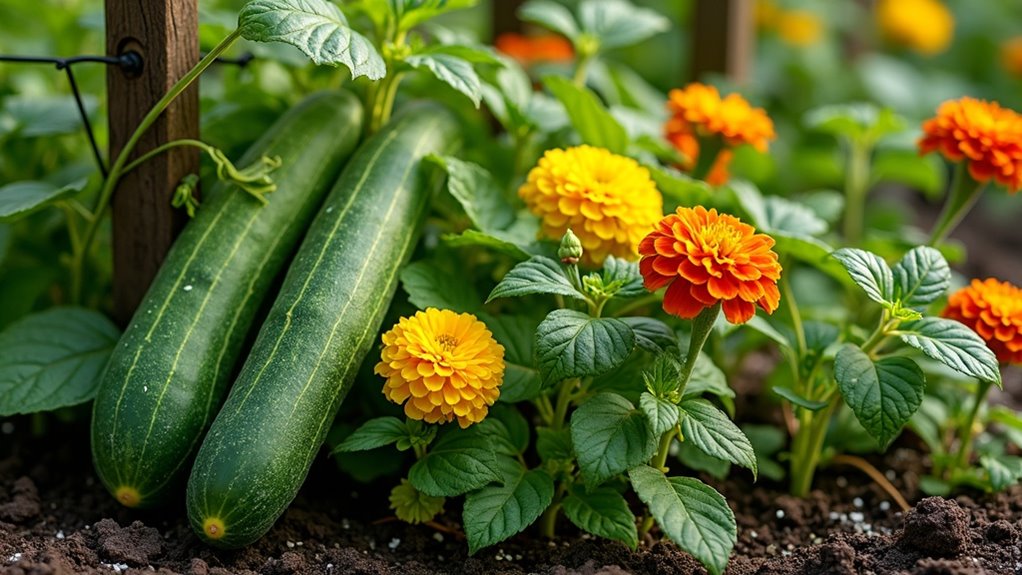
When companion planting with cucumbers, consider pairing them with corn, beans, dill, sunflowers, and marigolds. Corn provides natural support, while beans fix nitrogen, boosting soil fertility. Dill not only improves flavor but attracts beneficial insects, and sunflowers welcome pollinators. Marigolds repel pests that threaten cucumbers. On the other hand, avoid planting with potatoes, aromatic herbs like sage, mint, fennel, and squash, as they can hinder cucumber growth. There’s even more to discover about optimizing your cucumber garden!
Key Takeaways
- Corn provides natural support and shade for climbing cucumber varieties, enhancing their growth conditions.
- Beans, especially bush beans, fix nitrogen in the soil, improving fertility for cucumbers.
- Dill attracts beneficial predators and can enhance the flavor of cucumbers when planted nearby.
- Sunflowers attract pollinators and provide additional support for climbing cucumbers, promoting healthy growth.
- Marigolds repel pests like aphids and spider mites, protecting cucumber plants from harmful insects.
What Is Companion Planting?
Companion planting, which involves strategically growing different plant species together, can greatly enhance the health and productivity of your garden. This method leverages mutual benefits, improving soil quality and increasing yields.
By planting certain crops alongside each other, you can attract beneficial insects that pollinate and provide pest deterrence. For instance, marigolds and nasturtiums can repel harmful pests while inviting pollinators.
Additionally, incorporating nitrogen-fixing plants like beans and peas improves soil fertility, benefiting neighboring crops.
Ultimately, companion planting creates a balanced ecosystem, reducing chemical pesticide reliance and leading to healthier crops and better harvests.
Best Companion Plants for Cucumbers
When planning your cucumber garden, selecting the right companion plants can greatly enhance both growth and pest management.
The best companion plants include corn, which acts as a natural trellis and provides shade, helping prevent bitterness in cucumbers.
Corn serves as a natural trellis, providing shade that helps keep cucumbers sweet and prevents bitterness.
Beans, especially bush beans, fix nitrogen in the soil, enhancing nutrient availability without competing for space.
Dill attracts beneficial predators that control pests, while also improving cucumber flavor.
Sunflowers not only attract pollinators but also offer shade and support for climbing varieties.
Finally, marigolds repel pests like aphids and spider mites, contributing to a more robust cucumber crop.
Good Cucumber Companion Plants
When selecting companion plants for cucumbers, consider integrating nitrogen-fixing plants like beans, which enrich the soil and support cucumber growth.
Additionally, pest deterrent flowers such as marigolds not only repel harmful insects but also attract beneficial ones, creating a healthier garden ecosystem.
These strategic pairings can enhance both the health and yield of your cucumber plants.
Nitrogen-Fixing Plants
Nitrogen-fixing plants, like beans and peas, play an essential role in enhancing the growth of cucumbers by enriching the soil with usable nitrogen.
These plants convert atmospheric nitrogen, promoting healthy growth for your cucumber plants. Dwarf beans are particularly advantageous, as they occupy minimal space and can be planted closely to cucumbers.
Peas can be sown in succession, making efficient use of garden space as cucumber plants decline in late summer.
Both beans and peas thrive in well-tilled soil, making them ideal companions that improve soil fertility and lead to increased yields in your garden.
Pest Deterrent Flowers
Incorporating pest deterrent flowers alongside your cucumber plants can greatly enhance their health and yield. These companion plants not only repel pests but also attract beneficial insects and pollinators vital for a thriving cucumber crop.
| Flower | Pest Repelled | Benefits |
|---|---|---|
| Marigolds | Aphids, Spider Mites | Repel pests with pyrethrins |
| Nasturtiums | – | Attract hoverflies for pest control |
| Borage | – | Attract pollinators, improve yield |
| Dill | Aphids | Enhance flavor, repel pests |
Using these flowers strategically can guarantee a robust cucumber crop!
Worst Companion Plants for Cucumbers
Although cucumbers thrive in a well-planned garden, certain companion plants can hinder their growth and overall productivity.
Potatoes, as heavy feeders, compete for nutrients and moisture, increasing the risk of blight.
Aromatic herbs like sage, basil, and rosemary may stunt cucumber growth due to their strong scents and similar nutrient demands.
Mint, being highly invasive, can overtake the space needed for cucumbers, inhibiting their development.
Fennel releases allelopathic substances that stunt growth in nearby plants, including cucumbers.
Finally, squash varieties, such as pumpkins, attract similar pests and compete for space, which negatively impacts cucumber yield.
Benefits of Companion Planting
Companion planting offers numerous advantages that can greatly benefit cucumber cultivation. By incorporating companion plants for cucumbers, you enhance soil health, especially with nitrogen-fixing varieties like beans and peas. These plants enrich the soil, allowing cucumbers to grow well.
Additionally, some companions, such as marigolds and dill, naturally repel pests and diseases while attracting beneficial insects. Tall plants like corn provide essential support for climbing cucumber vines, maximizing space utilization.
This method also encourages biodiversity, resulting in healthier plants and higher yields. Overall, companion planting creates a balanced ecosystem that effectively supports your cucumber garden.
Crop Rotation for Cucumbers
Crop rotation is essential for maintaining soil health and preventing diseases in your cucumber garden, so aim to rotate every three years.
By grouping your crops—like legumes, brassicas, and root vegetables—you can enhance nutrient availability and disrupt pest cycles effectively.
Additionally, planting cucumbers alongside nitrogen-fixing plants, such as beans, boosts soil fertility for future crops.
Importance of Crop Rotation
To maintain a healthy and productive cucumber crop, understanding the importance of crop rotation is crucial. Implementing crop rotation every three years helps prevent soil-borne diseases and nutrient depletion.
By alternating cucumbers with nitrogen-fixing plants like beans and peas, you enhance soil health and fertility for future crops. This practice not only supports sustainable gardening but also improves overall garden productivity and biodiversity.
Dividing crops into groups, such as brassicas and root vegetables, allows you to effectively manage soil nutrients and pest populations. Embracing crop rotation ultimately reduces reliance on chemical fertilizers and pesticides, promoting a healthier garden ecosystem.
Recommended Crop Groups
When planning your cucumber rotation, it’s essential to evaluate which crop groups can enhance soil health and minimize disease risk. Here are some recommended options:
- Legumes (like beans and peas) – These fix nitrogen, improving soil fertility for your next cucumber planting.
- Root vegetables (such as carrots and beets) – They occupy different soil layers, reducing nutrient competition.
- Cover crops (like clover) – Incorporating these improves soil structure and fertility.
- Avoid the Brassica family (like cabbage and broccoli) – Their similar nutrient needs and susceptibility to garden pests can harm cucumbers.
Benefits for Soil Health
Maintaining soil health is essential for successful cucumber cultivation, and incorporating crop rotation offers significant benefits. By rotating cucumbers every three years, you can break the life cycle of pests and diseases, reducing their impact. Including legumes like beans in your rotation enhances soil nitrogen levels, which greatly benefits your subsequent cucumber crops.
| Benefits | Details |
|---|---|
| Nutrient Management | Prevents depletion of specific nutrients |
| Pest Control | Disrupts pest life cycles |
| Soil Fertility | Enhances nitrogen levels through legumes |
| Soil Biodiversity | Improves soil structure and health |
Regular rotation promotes sustainable practices, leading to long-term soil fertility.
General Cucumber Care
Cucumbers flourish best in well-tilled, nutrient-rich soil that’s high in nitrogen during their active growth phase.
To guarantee healthy growth, focus on the following care tips:
- Provide consistent watering, keeping the soil moist but not waterlogged.
- Grow cucumbers vertically to improve air circulation and reduce disease risks.
- Regularly monitor for cucumber pests, particularly aphids, which can harm your harvest.
- Implement crop rotation every three years to maintain soil health and prevent diseases.





