
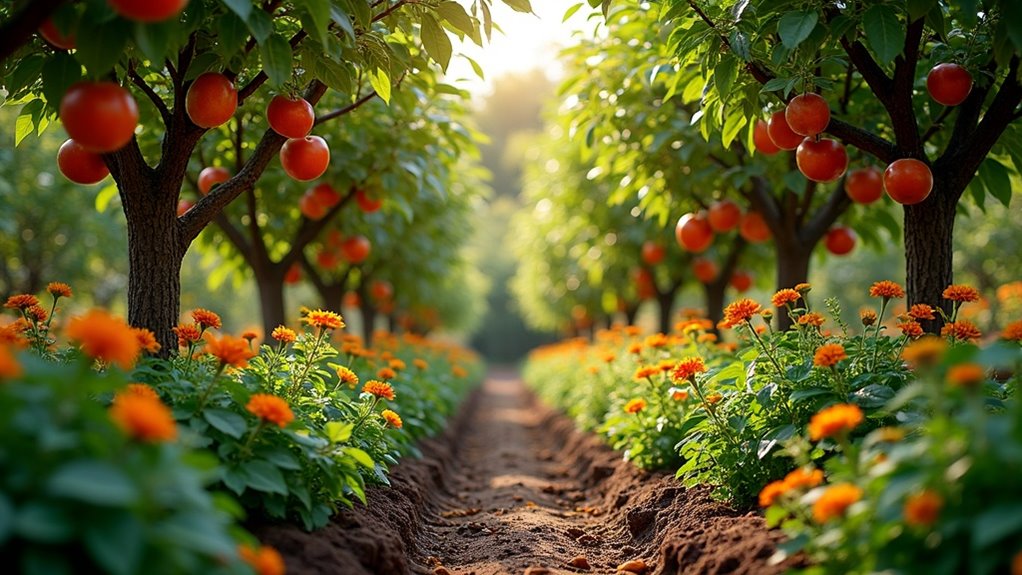
When companion planting with fruit trees, consider herbs and flowers that enhance growth and deter pests. For pome fruits, chives, garlic, and comfrey work well. Stone fruits benefit from marigolds, borage, and lavender, while citrus trees thrive with legumes, rosemary, and clover. These plants boost pollination, improve soil health, and attract beneficial insects. Understanding these dynamics can create a thriving ecosystem around your fruit trees, so keep exploring for more companion planting strategies.
Key Takeaways
- Pome fruits benefit from chives, garlic, and comfrey to repel pests and enhance growth through nutrient-rich mulch.
- Stone fruits thrive alongside marigolds, lavender, and borage, which manage pests and attract beneficial pollinators.
- Citrus trees pair well with legumes, borage, and marigolds for improved soil fertility and natural pest control.
- Nitrogen-fixing plants like clover enrich soil, while ground covers enhance moisture retention for fruit trees.
- Aromatic herbs such as chives and garlic deter harmful pests and attract beneficial insects, promoting a healthy ecosystem.
The Importance of Companion Planting for Fruit Trees
While you might think of fruit trees as solitary entities in your garden, companion planting reveals their potential for thriving in a diverse ecosystem.
By planting around your fruit trees with strategically selected companions, you enhance biodiversity, which boosts ecosystem resilience. These diverse plantings attract beneficial insects, improving pollination and increasing yields.
Enhancing biodiversity around fruit trees attracts beneficial insects, boosting pollination and increasing yields for a thriving garden ecosystem.
Incorporating nitrogen-fixing plants enriches soil health, making your trees more resilient against stress. Additionally, companion plants serve as pest deterrents, reducing the reliance on synthetic pesticides.
Creating fruit tree guilds fosters a self-sustaining environment that promotes ideal growing conditions and healthier fruit tree development.
Ideal Companions for Pome Fruits
When selecting companions for your pome fruits, consider plants that offer both pest control and soil enrichment.
Herbs like chives and garlic can deter harmful insects, while comfrey provides nutrient-rich mulch that boosts growth.
Incorporating these companions not only enhances the health of your apple and pear trees but also improves the quality of your harvest.
Benefits of Companion Planting
Companion planting offers numerous benefits for pome fruits like apples and pears, greatly enhancing their growth and resilience.
By integrating plants such as chives and garlic, you can repel pests like apple aphids, reducing reliance on chemical pesticides.
Daffodils and marigolds deter underground and above-ground pests, respectively, while nasturtiums serve as effective trap crops, protecting your fruit trees.
Additionally, incorporating comfrey enriches soil quality with nutrient-dense mulch, promoting moisture retention.
These strategies not only attract beneficial insects and pollinators but also foster healthy crops, creating a balanced ecosystem that supports your fruit trees’ health and longevity.
Recommended Companion Plants
Creating a flourishing orchard starts with selecting the right companion plants for your pome fruits.
Consider these ideal companions:
- Chives and Garlic: These plants effectively repel pests like apple aphids, protecting your apple trees.
- Nasturtiums: Use them as trap crops to attract aphids away from your fruit trees, minimizing infestations.
- Comfrey: This powerhouse improves soil health by providing nutrient-dense mulch, enhancing moisture retention.
Best Companion Plants for Stone Fruits
When choosing companion plants for your stone fruits, consider species that attract pollinators, deter pests, and enhance soil fertility.
Marigolds and lavender can help manage pests while drawing in beneficial insects, and chives offer natural pest control.
Additionally, incorporating comfrey not only enriches the soil but also provides nutrient-dense mulch to support your fruit trees’ health.
Pollinator Attracting Plants
Attracting pollinators is essential for the successful cultivation of stone fruits like peaches, cherries, and plums, as these beneficial insects play a pivotal role in fruit set and overall yield.
Consider planting these companion plants to enhance pollination:
- Lavender: Attracts beneficial insects while repelling harmful moths.
- Borage: Draws in pollinators and enriches the soil with nutrients.
- Marigolds: Deter pests and promote overall plant health.
Pest Deterrent Species
Companion planting with pest deterrent species can greatly enhance the health and productivity of your stone fruit trees. Utilizing plants like marigolds, lavender, and chives can effectively repel harmful pests while attracting beneficial insects. Marigolds deter nematodes, lavender attracts pollinators and repels moths, and chives fend off aphids. Here’s a quick reference table for your companion planting:
| Companion Plant | Benefits |
|---|---|
| Marigolds | Repel nematodes and above-ground pests |
| Lavender | Attract pollinators, repel moths |
| Chives | Deter aphids, provide natural defense |
Incorporating these species will create a healthier ecosystem for your stone fruits.
Nutrient-Rich Companions
In addition to pest deterrents, selecting nutrient-rich companions can considerably enhance the health and productivity of stone fruit trees like peaches, cherries, and plums.
Consider these effective companion plants for your fruit tree guild:
- Comfrey: This dynamic accumulator enriches soil fertility by pulling minerals from deep layers, providing essential nutrients to surrounding plants.
- Nitrogen-fixing plants: Options like clover or beans improve soil health, offering crucial nutrients that support healthy growth.
- Lavender and marigolds: These not only attract beneficial pollinators but also repel harmful pests, ensuring a thriving environment for your stone fruits.
Effective Neighbors for Citrus Trees
When selecting effective neighbors for citrus trees, it’s essential to take into account plants that not only thrive together but also support each other’s growth.
Companion plants like legumes, including peas and beans, fix nitrogen, enhancing soil fertility for your citrus trees.
Borage attracts pollinators, improving fruit set while boosting soil health.
Marigolds provide natural pest control by combating nematodes and other threats.
Incorporating herbs such as rosemary and thyme helps repel harmful pests and attracts beneficial insects.
Finally, clover as ground cover improves moisture retention and fosters a habitat for beneficial organisms, creating a healthier environment for your citrus trees.
The Role of Nitrogen-Fixing Plants
Nitrogen-fixing plants play a pivotal role in enhancing soil fertility and supporting the growth of fruit trees.
Nitrogen-fixing plants are essential for boosting soil fertility and nurturing thriving fruit trees.
By incorporating these species, you can create a thriving ecosystem that benefits your orchard’s productivity.
Consider these key benefits:
- Enhanced Soil Fertility: Plants like clover and beans convert atmospheric nitrogen into forms accessible to nutrient-hungry fruit trees.
- Improved Soil Structure: Alfalfa and lupine help retain moisture and improve soil structure, essential for healthy root systems.
- Sustainable Gardening: Reducing the reliance on synthetic fertilizers fosters a more holistic approach to gardening, promoting long-term ecological balance.
Enhancing Pollinator Presence With Companion Plants
Enhancing pollinator presence in your orchard can greatly boost fruit yields, and companion planting is a proven strategy to achieve this.
By incorporating companion plants like lavender, borage, dill, and fennel, you provide essential nectar and habitat for beneficial insects and pollinators.
Colorful flowers such as cosmos and yarrow create an inviting environment, increasing visitation rates to your fruit trees.
Diverse plantings improve pollinator populations, directly correlating with higher fruit production.
To guarantee a continuous source of food, maintain a blooming succession with both annuals and perennials, ultimately enhancing yields and promoting the overall health of your fruit trees.
Tips for Successful Companion Planting Around Fruit Trees
Successful companion planting around fruit trees involves strategic choices that optimize both soil health and pest management.
To achieve this, consider the following tips:
- Select nitrogen-fixing plants like comfrey and clover to improve soil fertility, supporting your nutrient-hungry fruit trees.
- Utilize ground covers such as nasturtiums and mint to suppress weeds while attracting pollinators and beneficial insects, and repelling harmful pests.
- Incorporate aromatic herbs like chives and garlic near trees to deter pest populations, enhancing overall tree health.





