
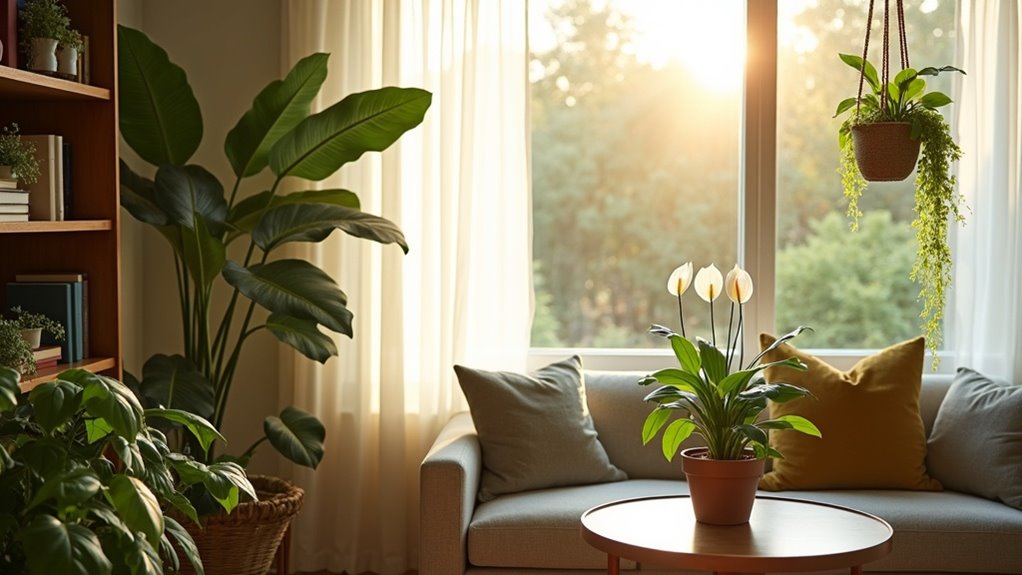
To optimize light for your indoor plants, place sun-loving varieties like succulents near south-facing windows for direct sunlight. For low-light plants, such as snake plants, choose north-facing windows. Medium-light species, like pothos, thrive in east-facing light. Pay attention to seasonal changes and the specific needs of each plant, ensuring they get the right exposure. Creative placements can also enhance light access. Continue exploring the nuances of maximizing your indoor garden’s health and ambiance.
Key Takeaways
- Place sun-loving plants like succulents near south-facing windows for maximum direct sunlight throughout the year.
- Position low-light plants such as snake plants in north-facing windows for optimal bright indirect light.
- Utilize east-facing windows for medium-light plants like philodendrons, benefiting from gentle morning light.
- Consider west-facing windows for plants that thrive in bright indirect light, as they receive intense afternoon sun.
- Regularly assess and adjust plant placement to adapt to seasonal changes in light intensity.
Understanding Indoor Light Conditions
When you’re choosing indoor plants, understanding light conditions is vital to their success. Indoor lighting can be direct sunlight, indirect light, or low light, each affecting plant health differently.
South-facing windows provide the most direct sunlight, perfect for sun-loving varieties, while north windows offer bright indirect light suitable for low-maintenance plants.
East-facing windows deliver cooler morning light, ideal for delicate-leaved species, whereas west-facing windows expose plants to harsher afternoon rays.
It’s important to assess light needs and requirements, as seasonal changes can impact intensity. Regular monitoring guarantees your plants thrive in their designated spaces throughout the year.
Assessing Window Orientation
How can you effectively assess window orientation to enhance your indoor gardening experience?
Understanding your window’s direction is vital for your plants’ success. Each orientation offers a unique light environment, impacting the amount of light your indoor plants receive.
Understanding your window’s orientation is crucial for your plants’ success, as each direction provides a distinct light environment.
- East-facing: About 5 hours of soft, indirect light; great for sensitive plants.
- South-facing: Most sunlight year-round; ideal for sun-loving plants like succulents.
- West-facing: Intense afternoon light; suitable for medium to bright indirect light plants.
- North-facing: Offers bright indirect and low light; perfect for low-light plants that thrive on neglect.
Assessing this helps you become a green thumb!
Selecting the Right Plants for Light Availability
Which plants thrive best in your home’s varying light conditions?
To find the perfect spot for your indoor plants, assess the light available. For direct light, consider succulents or cacti near south-facing windows, ensuring they get ample exposure.
In low-light areas, like north-facing windows, snake plants and ZZ plants excel, requiring minimal maintenance.
Medium-light plants, such as philodendrons and pothos, thrive in east-facing windows, enjoying about five hours of indirect light daily.
Creative Plant Placement Ideas
Understanding light availability is just the beginning of creating an inviting indoor space with plants.
To enhance your home’s aesthetics while meeting plants’ needs for light for photosynthesis, consider these creative placement ideas:
- Utilize old ladders as unique plant stands for varied heights.
- Position plants above cupboards for indirect light and added greenery.
- Hang planters to save floor space and create a layered effect.
- Use mobile bar carts for stylish displays that adapt to changing light conditions.
Remember to check moisture levels frequently in elevated spots, as they may dry out quicker due to rising heat from afternoon sun.
Maintaining Optimal Temperature and Humidity
While you may focus on light when placing indoor plants, maintaining ideal temperature and humidity is equally essential for their health. Most indoor plants thrive between 60-75°F, promoting healthy growth and preventing stress.
Avoid drafty windowsills in colder months, as fluctuations can harm your plants. In winter, use grow lights to maintain suitable temperatures for those that lack sufficient warmth.
Aim for humidity levels around 40-60%, since low humidity can cause leaf browning and drooping. To enhance humidity, consider employing a humidifier or regularly misting your plants, especially in dry indoor environments during winter months.





