
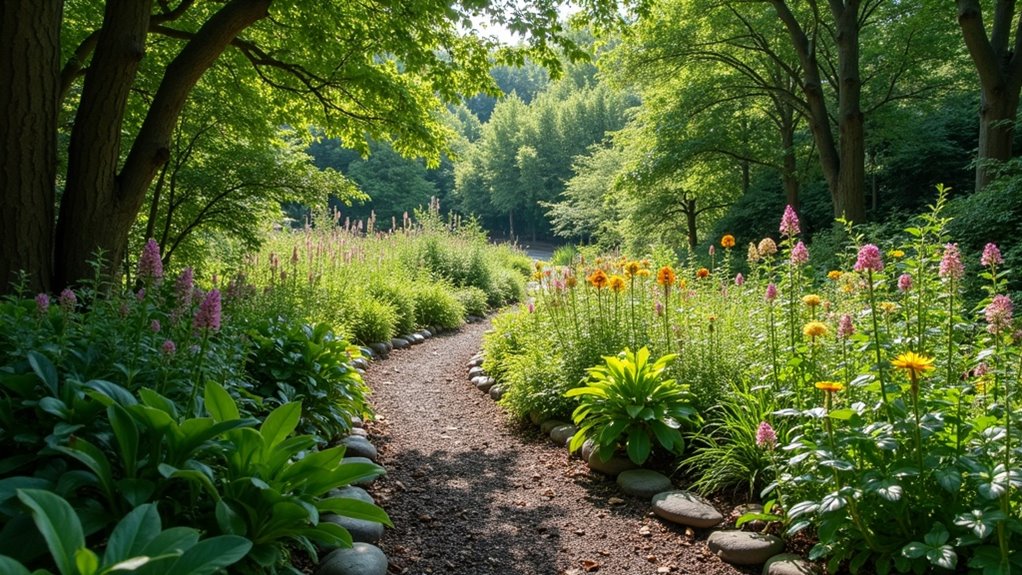
To locate rain garden plants on your property, position high water need species, like Echinacea purpurea, in the center where moisture levels peak. Place drought-tolerant varieties around the edges to prevent waterlogging. Group sun-loving plants centrally, ensuring they soak up maximum light while keeping shade-tolerant species near the perimeter. Arrange taller plants in the back for a striking visual, while medium and low plants fill in around them. There’s much more to explore for ideal placement.
Key Takeaways
- Position high water needs plants like Echinacea purpurea centrally, where moisture is highest, and drought-tolerant plants around the edges.
- Group sun-loving plants in the center and shade-tolerant varieties near the edges to optimize sunlight exposure.
- Arrange taller plants at the back or center, medium-height perennials in the middle, and shorter groundcovers at the perimeter.
- Consider seasonal changes and varying bloom times to enhance biodiversity and adjust plant placement based on water flow.
- Regularly monitor soil moisture and drainage, adapting care practices to maintain optimal conditions for plant health.
Understanding Moisture Levels in a Rain Garden
When designing a rain garden, understanding moisture levels is essential for selecting the right plants.
The center retains the most moisture, making it ideal for native plants with high water needs, like marsh marigold or blue flag iris. As you move toward the edges, the conditions become drier, so incorporate drought-tolerant plants such as lavender and ornamental grasses.
This placement should reflect the natural moisture gradient, ensuring plants thrive in their designated zones.
Regularly monitor soil moisture levels during the first growing season to adjust watering and support proper establishment, enhancing your garden’s biodiversity and resilience to fluctuating water conditions.
Sunlight Exposure and Plant Selection
How can sunlight exposure shape the success of your rain garden? When selecting plants, consider their sunlight requirements. Most native species thrive in full sun, needing at least six hours of direct sunlight daily for ideal growth and flowering.
Group sun-loving plants like Echinacea purpurea centrally, while shade-tolerant varieties should edge the garden. Monitor light conditions, as partial shade can hinder growth and necessitate choosing plants suited for lower light levels.
Seasonal sunlight changes, especially near deciduous trees, also influence plant selection. Properly placed sun-loving plants not only flourish but enhance your garden’s ability to absorb and filter rainwater effectively.
Arranging Plants by Height
When arranging plants by height, you’ll want to position taller varieties in the center or back of your rain garden to create a striking backdrop.
Medium-height perennials can fill the middle layer, ensuring they receive enough sunlight while adding balance.
Finally, place shorter groundcovers and low plants around the edges, allowing them to thrive without being overshadowed.
Center High Plants
In designing a rain garden, positioning high water needs plants in the center is essential for maximizing moisture absorption during heavy rainfall.
Native vegetation, like Echinacea purpurea and Amorpha fruticosa, should thrive in this drainage area, capturing and utilizing the moisture effectively.
Surrounding these center plants with medium-height species, such as Rudbeckia hirta and Clethra alnifolia, creates a smooth change while maintaining visibility.
This layered approach not only enhances aesthetic appeal but also guarantees ideal water retention.
Edge Low Plants
Positioning low-growing plants along the edges of your rain garden not only enhances its visual appeal but also plays a crucial role in water management. These low-edge plants stabilize the perimeter, reduce soil erosion, and support biodiversity. Choose varieties that can tolerate fluctuating moisture levels, such as sedges and groundcovers. Group them in clusters for visual interest and to attract pollinators. This arrangement allows taller plants to thrive in the center while providing essential habitat.
| Plant Type | Moisture Tolerance | Benefits |
|---|---|---|
| Sedges | Moderate | Stabilizes soil |
| Groundcovers | High | Reduces erosion |
| Native Grasses | Variable | Supports biodiversity |
| Perennials | Moderate | Attracts beneficial insects |
| Low Shrubs | High | Enhances moisture retention |
Layering for Aesthetics
To create a visually striking rain garden, arranging plants by height is vital, as it not only enhances aesthetics but also optimizes plant health and function.
Position taller plants, like shrubs and upright perennials, in the back or center to provide a visual backdrop. Medium-height plants should occupy the middle layer, complementing the taller species while remaining visible from the front.
Finally, place shorter plants and groundcovers at the edges to achieve a layered effect. Vary textures, foliage colors, and bloom times within each layer to promote dynamic interest throughout the seasons, creating an engaging and thriving rain garden.
Grouping Plants by Water Needs
When you design your rain garden, grouping plants by their water needs is essential for creating a thriving ecosystem.
Place high water needs plants, like Echinacea purpurea, at the center where moisture accumulates, while positioning drought-tolerant varieties, such as Rudbeckia hirta, around the edges for ideal drainage.
This strategic arrangement not only enhances biodiversity but also guarantees that each plant receives the conditions it requires to flourish.
High Water Needs Center
While designing a rain garden, you should place high water needs plants in the center of the basin, where moisture accumulates most effectively after rainfall. This central location guarantees these plants receive the moisture they crave, promoting healthy growth. Additionally, grouping them here allows for effective runoff filtration. Here are some common high water needs plants to reflect upon:
| Plant Name | Type | Benefits |
|---|---|---|
| Echinacea purpurea | Perennial | Attracts pollinators |
| Carex spp. | Grass/Sedge | Thrives in saturated conditions |
| Lobelia siphilitica | Perennial | Beautiful blue flowers |
| Iris versicolor | Perennial | Adds striking color and interest |
Drought-Tolerant Edges
Positioning drought-tolerant plants along the outer edges of a rain garden not only secures their roots stay above fluctuating water levels but also enhances the garden’s overall functionality.
By grouping these plants, you create a seamless shift to the moisture-loving species at the center. This strategic placement reduces competition for water and optimizes water absorption.
- Select plant species like Rudbeckia hirta (Black-eyed Susan) and Panicum virgatum (Switch Grass).
- Confirm outer edges withstand dry spells.
- Improve garden biodiversity.
- Promote effective stormwater management.
- Enhance aesthetic appeal with varied textures.
Plant Diversity Importance
To create a thriving rain garden, it’s essential to group plants according to their water needs, as this approach directly impacts their growth and survival.
By placing moisture-loving species at the center and drought-tolerant varieties on the edges, you promote healthy development and optimize moisture levels. This strategy enhances plant diversity and biodiversity, accommodating a wider range of native plants that are well-suited to local conditions.
Additionally, mixing plants with varying water requirements increases ecosystem resilience against fluctuating rainfall patterns, making your rain garden more effective in managing runoff while supporting local wildlife habitats.
Considerations for Seasonal Changes
As you plan your rain garden, understanding how seasonal changes impact plant behavior is essential for creating a thriving ecosystem.
Consider these key factors:
- Place high water needs plants in the center, where water collects.
- Position drought-tolerant species on the edges to avoid waterlogging.
- Choose plants with varying bloom times to enhance biodiversity.
- Monitor seasonal water flow and drainage patterns to adjust plant placement accordingly.
- Regularly check soil moisture levels to prevent drought stress or excess moisture.
Enhancing Aesthetics and Functionality
While crafting a rain garden, balancing aesthetics with functionality is essential for creating a visually appealing and ecologically beneficial space.
Position high water-loving plants, like Echinacea purpurea, at the center of the rain garden dimensions to optimize growth in water-accumulating areas. Surround them with drought-tolerant species, such as Rudbeckia hirta, to create a natural shift that enhances visual interest.
Incorporate a variety of heights and textures, placing taller plants centrally and shorter ones at the front. Utilizing native plants adapted to local conditions not only guarantees thriving growth but also attracts beneficial wildlife, enriching your garden’s ecological impact.
Maintenance Tips for Plant Health
Creating a rain garden not only enhances your landscape but also demands ongoing care to keep plants thriving.
To guarantee ideal plant health, focus on these maintenance tips:
- Water newly planted plants regularly for their first season, especially during dry spells.
- Apply a 2 to 3-inch layer of hardwood mulch to retain moisture and suppress weeds.
- Conduct seasonal weeding to eliminate invasives and debris for better air circulation.
- Prune dead or overgrown material in early spring to encourage healthy growth.
- Monitor soil drainage and adjust watering and amendments to maintain perfect conditions for all plants.





