
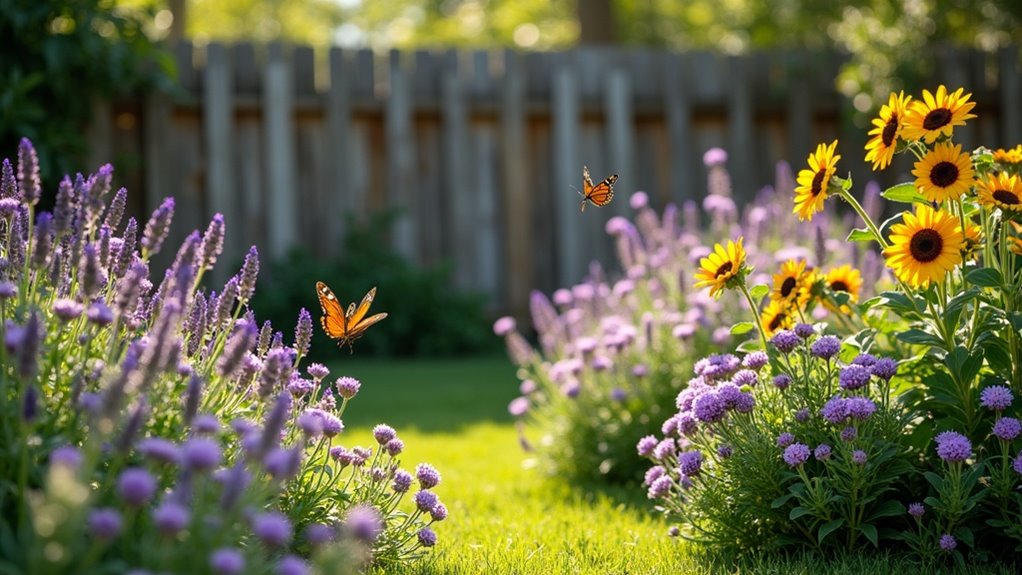
To plant pollinator-friendly plants in your yard, choose sunny spots that get at least 6 to 8 hours of direct sunlight daily. Confirm the soil is well-drained to prevent root rot and avoid areas with heavy pesticide use. Incorporate diverse native species for better attraction, and create flower patches that bloom at different times. Maintaining healthy, accessible areas will assist during monitoring and maintenance. Keep exploring for effective layout ideas and seasonal tips to further enhance your garden’s appeal.
Key Takeaways
- Select sunny locations with at least 6 to 8 hours of direct sunlight for optimal pollinator plant growth.
- Ensure soil is well-drained and free from standing water to prevent root rot.
- Plant near existing habitats like trees or shrubs to provide shelter for pollinators.
- Choose accessible areas for maintenance, avoiding shaded spots that may hinder blooming.
- Designate areas for diverse native species to create vibrant habitats and attract various pollinators.
Choosing the Right Location for Pollinator Plants
When you’re choosing a location for pollinator plants, what factors should you consider to guarantee a thriving habitat?
First, select sunny spots, as pollinator gardens thrive in full or partial sun, attracting essential species like butterflies and bees.
Choosing sunny locations is crucial for pollinator gardens, as they attract vital species like butterflies and bees.
Make sure the soil is well-drained, providing consistent moisture without standing water.
Arrange plant species that bloom in patches, creating vibrant color swathes, which are more effective at drawing in pollinators than scattered plants.
Plant near existing habitats like trees or shrubs for added shelter.
Finally, avoid areas with heavy pesticide use or high foot traffic to protect pollinator health.
Sunlight Requirements for Pollinator Gardens
To create a successful pollinator garden, you need to prioritize sunlight exposure, as these vibrant habitats thrive best in full sun, requiring at least 6 to 8 hours of direct sunlight daily.
Flowering plants like milkweed and bee balm flourish in bright conditions, producing more nectar that attracts bees and butterflies. Many pollinators prefer sunny areas for basking and foraging, so choosing sun-drenched spots is essential.
While some native plants, such as asters and ferns, can tolerate partial shade, careful planning guarantees each species receives the right light, maximizing the health and productivity of your pollinator garden.
Soil Preparation and Drainage
Soil preparation and drainage are essential for establishing a thriving pollinator garden, as healthy soil fosters robust plant growth and attracts beneficial insects.
Start by removing weeds and debris, then loosen the soil to a depth of no more than 4 inches to promote root growth. Conduct a soil test to assess pH levels and nutrient content, ensuring suitability for your chosen plants.
Remove weeds and debris, loosen the soil to 4 inches, and test pH and nutrients for optimal plant growth.
To improve drainage, mix in organic matter like compost or well-rotted manure. If your area tends to waterlog, consider raised beds.
Finally, maintain consistent soil moisture for the first 4 to 6 weeks to support root establishment.
Creating Flower Patches in Your Yard
Creating vibrant flower patches in your yard not only enhances its aesthetic appeal but also plays an essential role in supporting local pollinators.
Designate specific areas that receive full or partial sunlight, ideal for attracting bees and butterflies. Aim for diversity by planting at least three different native plant species, ensuring a continuous food source throughout the growing seasons.
Incorporate various colors and shapes; bees are particularly drawn to purple, blue, white, and yellow blooms. Maintain one square foot per plant for adequate growth, and consider leaving unmowed areas for native wildflowers, providing crucial foraging and nesting sites for pollinators.
Integrating Pollinator Plants With Existing Habitats
While enhancing your yard’s appeal, integrating pollinator plants with existing habitats can greatly boost local biodiversity.
Start by identifying areas that receive full or partial sun, ideal for native, pollinator-friendly plants like bee balm and purple coneflower.
Identify sunny spots in your yard to plant native, pollinator-friendly species like bee balm and purple coneflower.
Cluster these flowering plants among established trees and shrubs, as native woody plants provide early blooms and habitat for solitary bees.
Utilize unmowed margins to encourage weedy flowers, enriching food sources for pollinators.
Incorporate diverse native species that flower throughout the growing season, ensuring consistent nectar access.
Creating concentrated flower patches will attract more pollinators, enhancing your yard’s ecological health.
Planting in Borders, Island Beds, and Dedicated Corners
When you’re planting in borders, arrange taller plants at the back and shorter ones in front to guarantee all species receive adequate sunlight.
For island beds, consider grouping plants by height and bloom time to create a vibrant focal point that attracts a variety of pollinators throughout the season.
In dedicated corners, select native plants suited to specific light conditions to enhance biodiversity and support local pollinator populations.
Border Plant Arrangement
To maximize the impact of your pollinator-friendly garden, understanding the nuances of border plant arrangements is essential.
Position taller plants at the back and shorter ones in front, guaranteeing all flowers receive adequate sunlight and remain visible to pollinators.
Arrange your diverse set of plants by bloom time to provide continuous food sources throughout the season.
Incorporate color schemes to attract specific pollinator species; for instance, bees are drawn to purple, blue, white, and yellow flowers.
Finally, ensure sufficient spacing between plants based on their mature size to promote air circulation and reduce competition, enhancing overall plant health.
Island Bed Design
Creating an effective island bed design not only enhances the visual appeal of your garden but also serves as a thriving habitat for pollinators.
Position taller, pollinator-friendly plants in the center, surrounded by shorter species at the edges. Aim for at least three native plant species per season to guarantee continuous blooms and food throughout spring, summer, and fall.
Incorporate a variety of colors and blooming times to attract diverse pollinators, enriching your garden’s biodiversity. Dedicated corners can become vibrant habitats by clustering flowering plants, providing easy access and abundant resources for pollinators to thrive.
Seasonal Planting Considerations
Selecting the right plants for your garden isn’t just about aesthetics; it’s essential for supporting pollinators year-round.
To create a pollinator-friendly environment, consider these seasonal planting considerations:
- Choose a variety of native flowering plants that bloom in spring, summer, and fall.
- Group plants with similar bloom times for vibrant patches, attracting more pollinators.
- Plan your planting schedule to align with local flora’s natural blooming cycles.
Aim for at least three different species per season, totaling 27 plants.
This strategic approach maximizes pollen and nectar availability, fostering a thriving ecosystem for pollinators throughout the growing season.
Maintenance Tips for Pollinator-Friendly Areas
To maintain healthy pollinator-friendly areas, you need to implement a consistent watering schedule and monitor your plants regularly for signs of pests or disease.
Regular weeding practices are essential to keep your garden thriving while minimizing the need for herbicides.
Regular Weeding Practices
While maintaining a pollinator-friendly garden, regular weeding is essential for ensuring a healthy environment that supports native plants.
Prioritize weeding to prevent invasive species from competing for resources. Here are some effective practices:
- Aim to weed weekly during the growing season for ideal flowering.
- Prefer hand weeding over herbicides to protect pollinators and beneficial insects.
- Use mulch around plants to suppress weeds and conserve soil moisture.
Consistent Watering Schedule
Establishing a consistent watering schedule is essential for maintaining the health of pollinator-friendly plants, particularly during their critical early growth stages.
Water your plants early in the morning or late in the afternoon to minimize evaporation and avoid disrupting pollinator activity. Use a gentle watering method, like a hose with a rain setting, to prevent displacing seeds and harming young plants.
Regularly monitor soil moisture, adjusting your watering frequency based on rainfall and temperature. Aim to keep the top inch of soil consistently moist, and consider adding a mulch layer to retain moisture, suppress weeds, and create a stable environment for pollinators.
Seasonal Plant Monitoring
As the seasons change, keeping a close eye on your pollinator-friendly plants is essential for sustaining their health and ensuring a continuous supply of food for pollinators.
Conducting seasonal evaluations can help you address their needs effectively.
- Monitor blooming patterns for consistent food availability.
- Check for pests and diseases, using organic methods to protect pollinators.
- Assess soil moisture, providing necessary watering, especially during dry spells.





