
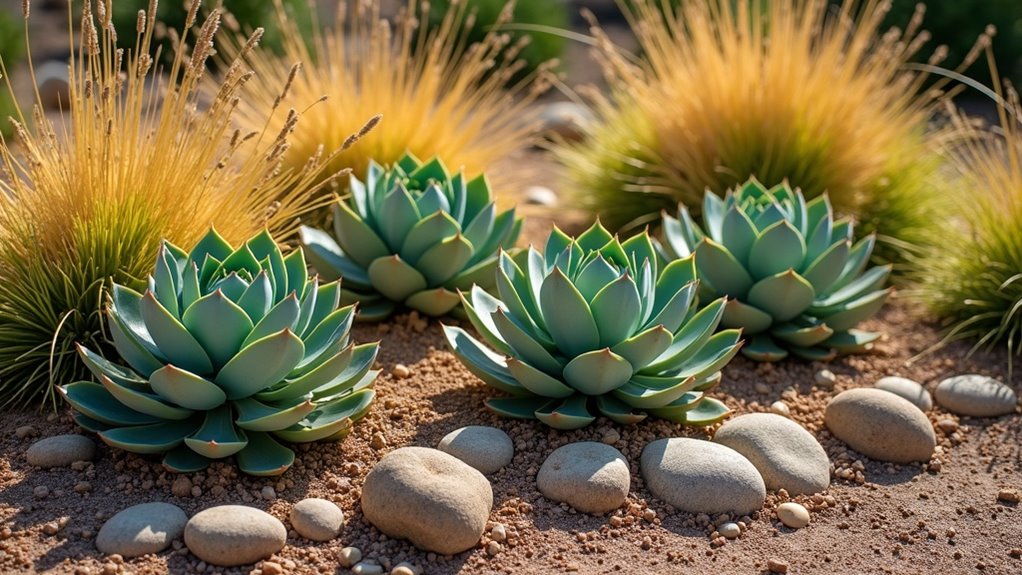
To plant drought-tolerant species in hot zones, select spots with full sun and excellent drainage. Position plants on elevated areas or slopes to prevent moisture retention. Group them based on similar sunlight and moisture needs, placing taller plants behind shorter ones. Utilize mulch to retain soil moisture and suppress weeds. Avoid low-lying areas to prevent excess water accumulation. By following these guidelines, you’ll create a thriving environment for your drought-tolerant plants, ensuring their success in challenging conditions.
Key Takeaways
- Choose elevated areas with good drainage to prevent root rot and excess moisture for drought-tolerant plants.
- Select locations with full sun exposure, ensuring 6-8 hours of direct sunlight daily for optimal growth.
- Group plants with similar sunlight and moisture requirements to create beneficial microclimates and promote health.
- Utilize south-facing areas for drought-tolerant species, as they receive more sunlight and heat.
- Apply a layer of mulch around plants to retain moisture and regulate soil temperature in hot zones.
Choosing the Right Location for Drought-Tolerant Plants
When it comes to selecting the right location for drought-tolerant plants, how do you guarantee they flourish despite harsh conditions?
Start by choosing spots with full sun exposure, as these plants thrive in bright light. Ascertain proper drainage by selecting slightly elevated areas or using sandy soil to prevent root rot.
Grouping these plants together creates beneficial microclimates, conserving moisture and reducing evaporation. Additionally, consider proximity to structures or natural windbreaks that offer shelter from harsh winds, which can exacerbate drying.
Finally, focus on well-draining, poor soil, where many drought-tolerant species naturally excel. Your careful planning will yield a resilient garden.
Elevation and Drainage Considerations
Selecting the right location for drought-tolerant plants sets the stage for success, but understanding elevation and drainage is where the real groundwork begins.
Choosing the ideal spot for drought-tolerant plants is crucial; elevation and drainage are essential for thriving gardens.
To optimize your garden’s performance, consider these key factors:
- Plant on elevated areas to enhance drainage and prevent root rot.
- Choose sloped sites to facilitate runoff and improve water management.
- Incorporate raised beds for better drainage and deep root systems.
- Assess the natural topography; sandy or rocky soil is ideal for drought-tolerant species.
Sunlight Exposure and Plant Grouping
Understanding sunlight exposure is essential for the success of drought-tolerant plants in your garden.
Place plants needing full sun, like Black-eyed Susans and Lantana, in areas with 6-8 hours of direct sunlight daily. Group plants with similar sunlight and moisture needs to enhance health and maintenance.
Position taller plants at the back or north side to shield shorter varieties, helping prevent overheating and conserving moisture.
Consider microclimates; south-facing areas suit more drought-tolerant species like succulents.
Incorporate ground covers like Creeping Thyme in sunny spots to reduce soil evaporation and maintain moisture levels for surrounding plants, fostering a thriving ecosystem.
Utilizing Mulch for Moisture Retention
Grouping plants according to their sunlight and moisture needs sets the stage for effective moisture management, and mulch plays a key role in sustaining hydration for drought-tolerant varieties.
Grouping plants by their sunlight and moisture requirements enhances moisture management, with mulch being essential for drought-tolerant varieties.
Here’s how you can maximize its benefits:
- Apply a 1- to 3-inch layer around plants to reduce moisture evaporation.
- Use organic mulches like wood chips to improve soil quality as they decompose.
- Regulate soil temperature, keeping it cooler during hot weather, protecting plant roots.
- Suppress weeds to reduce competition for water and nutrients, enhancing overall hydration levels.
Embrace mulch for resilient, thriving gardens!
Avoiding Low-Lying Areas for Optimal Growth
When planning your drought-tolerant garden, it’s vital to avoid low-lying areas that can trap excess moisture and create unfavorable conditions for your plants.
These spots often hinder the growth of drought-tolerant species that thrive in well-drained soil. Instead, opt for elevated spots or slopes, which promote proper drainage and reduce the risk of root rot and moisture-related issues.
Prioritizing areas with good air circulation and ample sunlight exposure will further help prevent excess moisture accumulation.
Additionally, low-lying areas can create frost pockets, damaging young plants. By choosing the right location, you guarantee ideal conditions for your garden’s success.





