
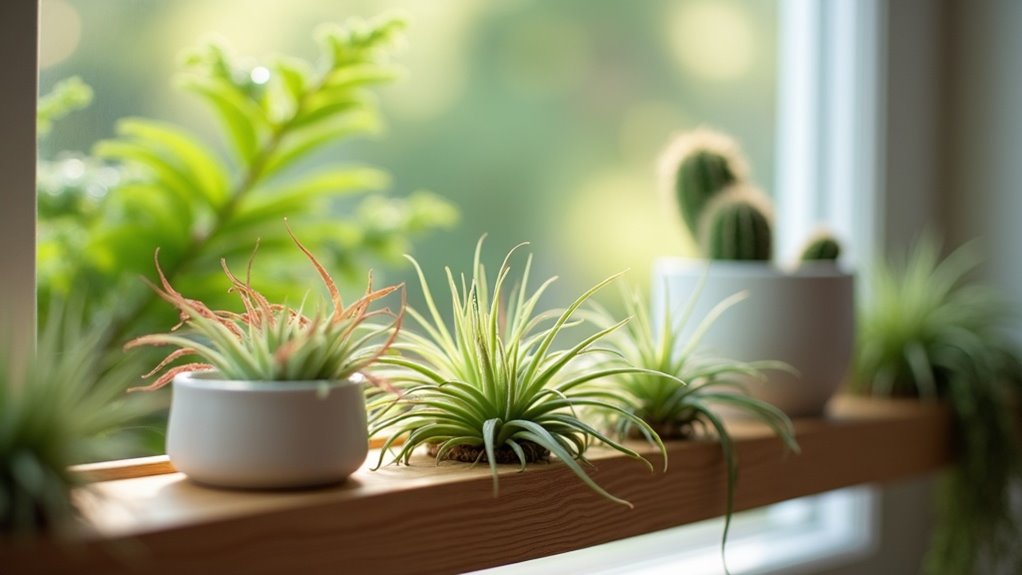
To keep your air plants thriving indoors, place them near windows where they’ll receive bright, indirect sunlight. Aim for high humidity areas like kitchens or bathrooms, and guarantee good airflow by using open shelves or hanging them up. Avoid direct sunlight that can scorch their leaves, and make certain they’ve got enough space between them. Regular misting or soaking is also important for their health. Explore more tips to create the perfect environment for your air plants.
Key Takeaways
- Place air plants near windows with filtered light to provide bright, indirect sunlight for optimal growth.
- Utilize open spaces or hang plants from hooks to ensure good air circulation.
- Position air plants in high humidity areas like bathrooms or kitchens for favorable conditions.
- Avoid placing air plants near heat sources to prevent dehydration and damage.
- Use decorative containers or unique hangers for easy misting and soaking access.
Ideal Locations for Air Plants
Where can you find the best spots for your air plants to thrive? Consider placing them near windows with filtered light, where they’ll bask in bright, indirect sunlight.
Good air circulation is essential, so opt for open spaces or hang them from hooks. High humidity areas like bathrooms and kitchens are ideal, as they provide the moisture air plants crave.
Avoid heat sources like radiators and vents to prevent dehydration.
For creative Air Plant Display Ideas, use decorative containers or unique hangers that allow easy access for misting and soaking, ensuring your plants stay healthy and vibrant.
Benefits of Bright, Indirect Sunlight
Finding the right spot for your air plants is just the beginning; understanding the benefits of bright, indirect sunlight is crucial for their health. Here’s why it matters:
Finding the ideal location for your air plants is essential, especially when it comes to bright, indirect sunlight for their well-being.
- Natural Mimicry: Bright, indirect sunlight replicates their natural habitat in trees, providing filtered light.
- Health Preservation: Avoids leaf burn from direct sunlight, which can cause discoloration and damage.
- Optimal Growth: Guarantees your plants receive about 12 hours of light daily, promoting healthy growth and preventing elongation.
Creative Display Options
How can you make your air plants stand out while ensuring they thrive? Start by selecting bright, indirect sunlight locations like windowsills or well-lit shelves.
Consider creative display options like decorative glass containers or terrariums that enhance visibility and airflow. You might also hang air plants in macramé holders or wall-mounted pockets to add a vertical flair to your décor.
For a touch of character, use repurposed items such as vintage teacups or wooden crates.
Finally, group your air plants in odd numbers and vary their heights to create a dynamic arrangement that truly showcases your air plants.
Tips for Maintaining Airflow
To keep your air plants thriving, place them in well-ventilated areas where airflow isn’t restricted.
Make sure to position them a few inches apart and avoid letting them touch solid surfaces, as this enhances air circulation.
Regularly mist or soak them, but remember to let them dry completely upside down to prevent humidity buildup that could harm their health.
Placement for Air Circulation
While air plants can thrive in various indoor settings, guaranteeing they’ve adequate airflow is essential for their health.
To promote ideal air circulation for your air plants, consider these tips:
- Choose open spaces: Place your air plants on open shelves or hang them to allow unobstructed airflow.
- Use decorative displays: Incorporate wire frames or mesh containers that showcase the plants while allowing air movement.
- Avoid overcrowding: Guarantee your air plants aren’t crowded together, as this can restrict airflow and increase humidity levels.
Regularly rotating your displays can also help expose all sides to light and airflow, enhancing their growth.
Avoiding Humidity Buildup
Humidity buildup can quickly become a problem for air plants if you don’t take steps to maintain airflow.
Place your air plants in well-ventilated spots to encourage proper circulation and prevent rot. Avoid overcrowding them in closed containers; instead, use open displays like hanging terrariums or wall mounts.
Regularly mist your air plants, ensuring they dry completely upside down to avoid moisture accumulation at the base. Position them in bright, indirect light to minimize evaporation and maintain ideal humidity.
Finally, incorporate decorative materials like pebbles or moss that don’t retain moisture, enhancing airflow around your air plants.
Avoiding Humidity Issues
Since air plants thrive in environments with good air circulation, it’s essential to avoid placing them in overly humid areas without proper ventilation, such as closed bathrooms.
High humidity can lead to rot in air plants. To maintain ideal conditions, follow these tips:
- Use a hygrometer to monitor humidity levels, aiming for 40% to 70%.
- Increase airflow with a fan if humidity rises.
- Be cautious with watering; only mist or soak if humidity is low to prevent exacerbating rot issues.
Seasonal Display Considerations
When displaying air plants, consider how seasonal color palettes can enhance your arrangements and reflect the mood of each time of year.
For instance, using pastel hues in spring or rich autumn tones can make your plants stand out beautifully.
Don’t forget to adjust your display methods and accessories to fit temperature and humidity needs, ensuring your air plants thrive all year round.
Seasonal Color Palettes
To create visually appealing displays of air plants throughout the year, consider how seasonal color palettes can enhance their natural beauty.
Here are some tips to display your air plants effectively:
- Spring: Use pastel colors like soft pinks and light greens to evoke freshness.
- Summer: Incorporate vibrant hues such as bright yellows and deep blues, highlighting larger Air Plants like Capit Maroon.
- Autumn: Opt for warm tones like oranges and browns, creating a cozy, rustic atmosphere.
Holiday-Themed Arrangements
Holiday-themed arrangements offer a fantastic way to showcase air plants while enhancing your seasonal decor.
For winter, use silver, gold, or deep red containers to create a striking contrast with your air plants. Nestle them in evergreen wreaths for a fresh twist on traditional decor.
In spring, pair air plants with pastel accessories or place them in decorative eggs for a lively touch.
Autumn calls for warm tones and natural elements like pumpkins, adding a cozy vibe.
Temperature and Humidity Needs
Although air plants are resilient, they do have specific temperature and humidity needs that you must consider for their thriving indoors.
To guarantee your air plants flourish, keep these factors in mind:
- Temperature: Maintain a range of 60 to 80°F for ideal growth.
- Humidity: Aim for 40-60% humidity. During dry winter months, use a humidifier or place them in bathrooms.
- Misting: Regularly mist or soak your air plants to prevent dehydration, especially in low humidity conditions.





