
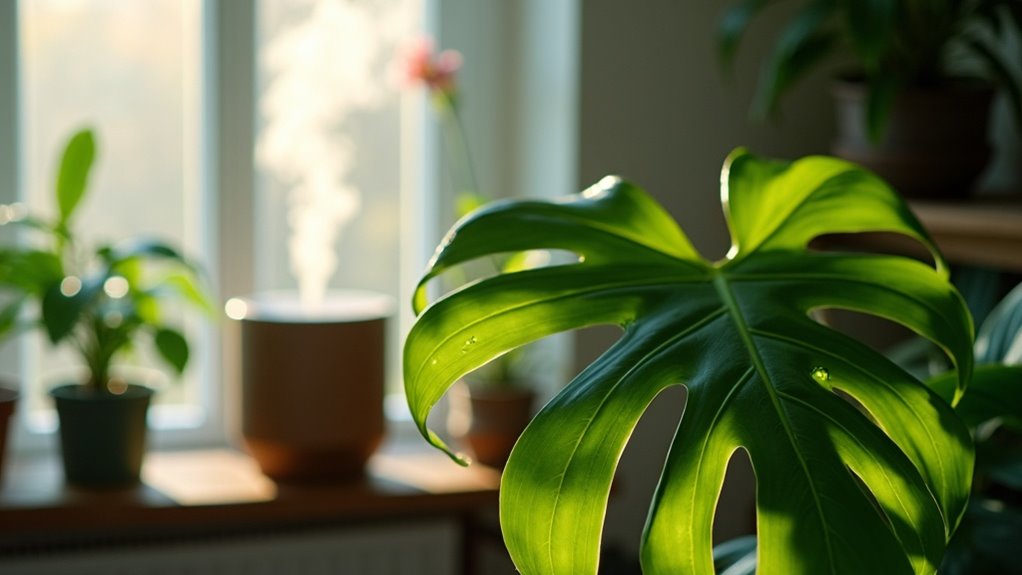
Indoor plants can boost humidity through several effective methods. Using pebble trays under pots helps create a localized moisture zone without risking root rot. Grouping plants together enhances transpiration, raising humidity levels naturally. Consider placing a humidifier in the room to effectively maintain moisture, especially in dry conditions. Regular misting adds temporary moisture but should be done with care to avoid over-saturation. To guarantee your plants thrive, it’s essential to monitor humidity levels closely for ideal health.
Key Takeaways
- Pebble Trays: Place shallow trays with pebbles and water under pots to enhance local humidity without overwatering.
- Grouping Plants: Cluster plants together to increase moisture through collective transpiration.
- Regular Misting: Lightly mist plants to temporarily elevate humidity, but avoid excessive moisture.
- Glass Enclosures: Use terrariums or glass containers to trap humidity for moisture-loving species.
- Humidifiers: Employ humidifiers in dry environments to consistently boost indoor humidity levels.
Benefits of Humidity for Indoor Plants
When you maintain indoor humidity levels between 30% and 50%, you greatly enhance the health and growth of your houseplants. Proper humidity encourages transpiration, allowing plants to release moisture to the air, creating a beneficial microclimate.
This is particularly essential for tropical plants, which thrive in higher humidity, ideally 60% to 80%. Adequate humidity prevents issues like browning leaf tips and leaf drop, common in dry environments.
In addition, it reduces the risk of pest infestations and fungal infections, promoting healthier plants and improving overall air quality. By managing humidity levels, you foster a thriving indoor garden.
Effective Methods to Increase Humidity
Maintaining ideal humidity levels is essential for the health of your indoor plants, and there are several effective methods to achieve this.
You can create Pebble Trays by placing shallow trays filled with pebbles and water under your pots; this allows evaporation to boost local humidity.
Grouping plants together is another strategy, as their collective transpiration enhances humidity.
Regularly misting your plants can temporarily add moisture, but be cautious to avoid over-saturation.
Finally, consider utilizing glass enclosures to trap moisture, which is especially beneficial for humidity-loving species, improving both plant health and indoor air quality.
The Role of Humidifiers
While indoor plants thrive in humidity-rich environments, humidifiers serve as an effective solution for boosting moisture levels, particularly in arid conditions or during colder months. They help increase the humidity, combating low moisture that can hurt your plants. Filterless models are ideal, minimizing mold growth and maintenance costs. Choose a size that fits your room for maximum performance. Regular cleaning prevents scale buildup, guaranteeing your humidifier adds moisture efficiently. Opt for quiet, low-light models to maintain comfort in your living spaces.
| Feature | Benefits |
|---|---|
| Filterless Design | Reduces mold risk |
| Size Matching | Guarantees proper distribution |
| Regular Cleaning | Maintains performance |
| Quiet Operation | Enhances comfort |
Utilizing Pebble Trays for Moisture
One effective method to enhance humidity for your indoor plants is using pebble trays.
These shallow trays filled with pebbles allow you to pour water over them, creating moisture without submerging your pots. To set up, make sure the water level stays below the pebbles’ top to prevent overwatering.
Regularly clean your pebble trays to avoid algae buildup, especially in dry air conditions.
Grouping Plants for Enhanced Humidity
To create a more humid environment for your indoor plants, grouping them together is an effective strategy that harnesses the natural process of transpiration.
When you cluster common houseplants like ferns and peace lilies, you can increase the relative humidity around them by 10-20%. This is especially beneficial for humidity-sensitive tropical evergreens, helping them cope with low humidity.
Grouping houseplants like ferns and peace lilies can boost humidity by 10-20%, aiding tropical evergreens in low conditions.
Arranging your plants on elevated surfaces improves air circulation while still allowing them to share the extra humidity generated.
For an additional boost, consider placing pebble trays filled with water beneath the pots to enhance evaporation and maintain moisture levels.
Misting Techniques for Optimal Conditions
To effectively boost humidity around your indoor plants, you’ll want to master the art of misting.
Timing is essential; mist in the morning or early afternoon to guarantee leaves dry before nightfall, reducing the risk of mold.
Aim for moderate misting 1-2 times a week, using lukewarm water to prevent any shock to your plants.
Best Misting Practices
How can you effectively mist your indoor plants to create the ideal humidity levels?
Start by using a fine spray to lightly coat the leaves, enhancing moisture without soaking them. Misting in the early morning or late afternoon allows moisture to evaporate before nightfall, reducing mold risks.
Always use room temperature or lukewarm water to prevent plant shock.
Consider grouping your plants; this creates a microclimate that boosts humidity levels more effectively than misting individual plants.
Timing and Frequency
While maintaining the right humidity levels for your indoor plants is essential, understanding the timing and frequency of misting can greatly enhance their well-being.
Misting in the morning allows leaves to dry by evening, minimizing fungal growth. Use a fine mist spray bottle to evenly distribute water, increasing humidity without saturating moist soil.
Generally, misting every few days is effective, especially for tropical plants that prefer relative humidity above 60%. Aim for a 10-20% increase in humidity after misting.
Always monitor plant responses, adjusting misting frequency based on signs of distress like browning leaf tips or wilting stems.
Ideal Locations for Humidity-Rich Environments
Finding the right locations for your humidity-loving plants can greatly enhance their growth and vigor.
Bathrooms are ideal due to the moisture generated from showers, making them perfect for tropical species. Kitchens also offer humidity boosts, especially when cooking releases steam.
Positioning your plants near windows that receive indirect sunlight helps maintain warmth and benefits from natural humidity. Additionally, grouping plants together creates a microclimate, increasing moisture levels through their transpiration.
Finally, consider utilizing sunrooms or well-ventilated areas that balance humidity while providing sufficient light, ensuring your plants thrive in the best possible conditions.
Monitoring Humidity Levels for Plant Health
Monitoring humidity levels is essential for keeping your houseplants healthy and thriving. Most houseplants flourish in 40-60% relative humidity, while tropical species require 70-80% for ideal conditions.
Using a digital hygrometer allows you to track these levels accurately. Watch for signs of low humidity, like brown leaf tips and stunted growth, which indicate that you should consider adding humidity.
However, high humidity can cause mold and fungal issues, so it’s vital to strike a balance. Maintaining humidity between 30-50% is recommended by the US EPA, promoting overall plant health while mitigating risks associated with dry air.





