
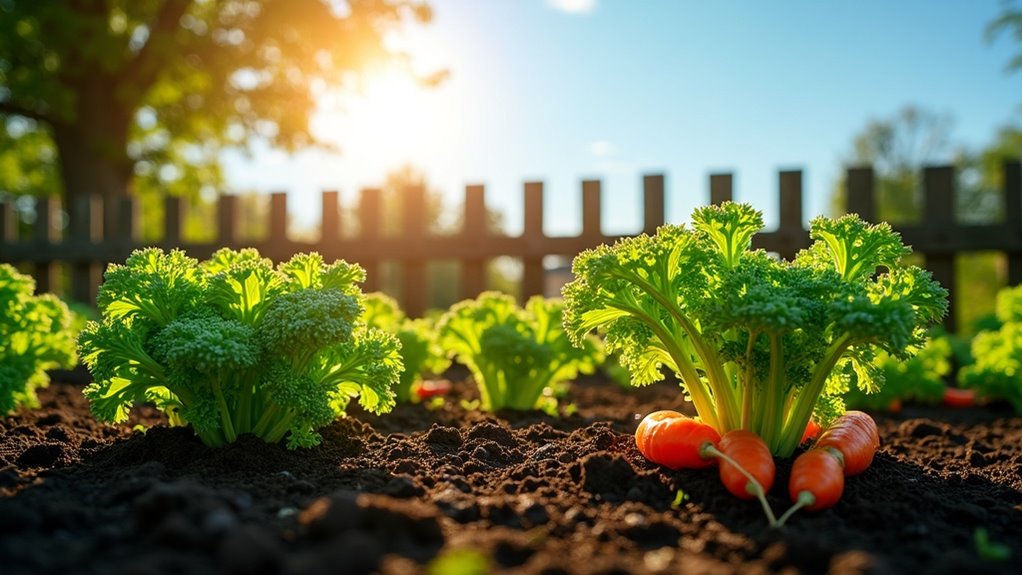
To guarantee your vegetable plants receive full sun, locate areas that get at least six hours of direct sunlight daily. South-facing spots are ideal, along with elevated spaces like patios or balconies. When planting, arrange taller plants behind shorter ones to avoid shading. Containers and raised beds can improve drainage and maximize light exposure. Regularly assess sunlight patterns and seasonal changes in your garden. Discover more strategies for successful growth conditions.
Key Takeaways
- South-facing garden areas provide optimal sunlight exposure for vegetable plants needing full sun.
- Elevated spaces like patios and balconies maximize sunlight access for container gardening.
- Arrange taller plants at the back to prevent shading shorter plants in garden beds.
- Regularly monitor sunlight patterns and seasonal changes to ensure ideal plant placement.
- Map out high-sun areas in your garden using sunlight measuring tools for effective planning.
Understanding Full Sun Requirements
When you’re planning your vegetable garden, understanding full sun requirements is vital for achieving ideal growth.
Full sun means your plants need a minimum of 6 hours of direct, unfiltered sunlight each day. This sunlight exposure is critical for vegetable plants like tomatoes, peppers, and cucumbers, as they thrive on the energy produced during photosynthesis.
To guarantee peak growth, charting sunlight exposure can help identify suitable areas and reveal how nearby structures cast shadows. Remember that seasonal changes can affect light conditions, so reassess frequently.
Consider container gardening to maximize sunlight access in sunny spots for your plants.
Ideal Locations for Full Sun Vegetable Plants
To maximize your full sun vegetable plants‘ growth, focus on south-facing garden areas that receive at least 6 hours of direct sunlight each day.
Elevated spaces, such as patios and balconies, can also offer excellent sunlight conditions if positioned correctly.
Be mindful of seasonal changes that may affect light availability in your chosen locations.
South-Facing Garden Areas
South-facing garden areas are ideal for growing full sun vegetable plants, as they capture the maximum amount of sunlight throughout the day, typically delivering 6-8 hours of direct exposure essential for robust plant growth.
For effective garden planning, arrange taller plants like tomatoes and corn at the back to prevent shading shorter vegetable plants. Observing sunlight exposure patterns in these areas allows you to identify best planting spots.
Additionally, using raised beds or containers can enhance drainage and maximize sun exposure, greatly improving the yield of your sun-dependent crops. Regular monitoring guarantees your garden thrives in these prime locations.
Elevated Sunlit Spaces
Elevated sunlit spaces, including balconies and rooftops, provide an excellent opportunity for growing full sun vegetable plants, as they typically receive 6-8 hours of unobstructed sunlight daily.
In these areas, container gardening allows you to position plants effectively for maximum sunlight exposure, benefiting sun-loving crops like tomatoes and peppers.
Raised garden beds in elevated locations capture more sunlight and heat, promoting faster growth and higher yields.
Incorporating vertical gardening techniques, such as trellises on sunny walls, expands your growing season by maximizing space and sunlight for climbing vegetables like cucumbers and beans.
Remove nearby obstructions to enhance sunlight exposure further.
Assessing Sunlight Exposure in Your Garden
To assess sunlight exposure in your garden, start by mapping the sunlight patterns over several days.
Identify areas that receive at least 6 hours of direct sunlight, while also noting seasonal changes that may affect these spots throughout the year.
This structured approach will help you maximize the growth potential of your full sun vegetable plants.
Mapping Sunlight Patterns
While evaluating sunlight exposure in your garden, it’s essential to track how different areas receive direct sunlight throughout the day.
Start by mapping your garden layout, marking high-sun and shaded spots. Use a sunlight measuring device or app to quantify how many hours each area receives, focusing on spots that meet the full sun requirement of at least 6 hours.
Keep a garden journal to monitor changes, noting how nearby structures or trees create shadows that affect light availability.
Also, consider microclimates, as certain areas may receive more sunlight than others, guiding you in choosing ideal locations for your plants.
Seasonal Sunlight Changes
Understanding seasonal sunlight changes is vital for enhancing your garden’s health and productivity. The sun’s angle shifts throughout the year, affecting the amount of sunlight your plants receive. To assess sun exposure, monitor your garden for several days, noting how shadows shift. Additionally, consider using devices or apps for precise sunlight readings to identify full sun areas. Here’s a visual representation to aid in your planning:
| Season | Sun Angle | Full Sun Duration |
|---|---|---|
| Spring | Moderate | 6+ hours |
| Summer | High | 6+ hours |
| Fall | Moderate | 6+ hours |
| Winter | Low | 4 hours |
Adjust your plant placements accordingly for ideal growth.
Popular Full Sun Vegetables to Grow
Full sun vegetables are the backbone of a thriving garden, offering both flavor and productivity. If you want to maximize your harvest, consider tomatoes, peppers, cucumbers, eggplants, and summer squash.
These popular full sun vegetables need full sun and thrive in full sunlight, requiring at least 6-8 hours of direct sunlight daily. Varieties like Super Sweet 100 tomatoes and Red Bell peppers excel in sunny conditions.
Cucumbers, such as Lemon Cucumber, are highly productive, while zucchinis are easy to grow and yield abundantly.
Plant Arrangement for Maximum Sunlight
To maximize the sunlight your vegetable plants receive, arrange taller crops strategically within your garden beds.
Position corn and tomatoes at the back, preventing them from shading shorter plants like lettuce and radishes that require full sun. In south-facing gardens, keep the tallest crops towards the rear to guarantee maximum sunlight exposure throughout the day.
Utilize trellises for climbing plants like peas and beans, saving ground space while allowing ample sunlight.
Remember to space plants adequately for airflow and light penetration, optimizing growth for all vegetables.
Rotate crops annually to promote even sunlight exposure across changing seasons.
Soil and Water Management for Full Sun Gardens
When managing soil and water in gardens that bask in sunlight, it’s important to focus on both quality and moisture retention. Improving soil moisture in full sun gardens involves incorporating organic matter to enhance drainage and retain moisture. Regularly test your soil to verify ideal pH and nutrient levels. Mulching is crucial, as it helps retain soil moisture and regulates temperature.
| Technique | Benefits |
|---|---|
| Organic Matter | Improves drainage, retains moisture |
| Mulching | Suppresses weeds, retains moisture |
| Drip Irrigation | Consistent moisture delivery |
| Soil Testing | Confirms nutrient balance |
Container Gardening Options for Limited Space
Although limited space can be a challenge for gardening enthusiasts, container gardening offers an effective solution that allows you to cultivate a variety of vegetables in sunny locations like balconies or patios.
By selecting lightweight containers, you can easily move your vegetable plants to the sunniest spots as sunlight patterns shift throughout the day.
Opt for compact or dwarf varieties, such as patio tomatoes or mini eggplants, to maximize yield in small spaces.
Additionally, using self-watering containers helps maintain consistent moisture, ensuring your full-sun vegetables thrive with at least six hours of direct sunlight each day.
Tips for Successful Full Sun Gardening
Successful full sun gardening hinges on selecting the right location and understanding the sunlight needs of your vegetable plants. Guarantee your garden receives at least 6-8 hours of direct sunlight daily. Track sun patterns to locate the sunniest spots.
| Plant Type | Sunlight Requirement |
|---|---|
| Tomatoes | Full sun |
| Corn | Full sun |
| Lettuce | Need at least 6 hours |
| Bell Peppers | Full sun |
| Carrots | Need at least 6 hours |
Utilize taller plants at the back to prevent shading. Monitor watering and soil quality to maintain healthy plants that thrive in robust sunlight.





