
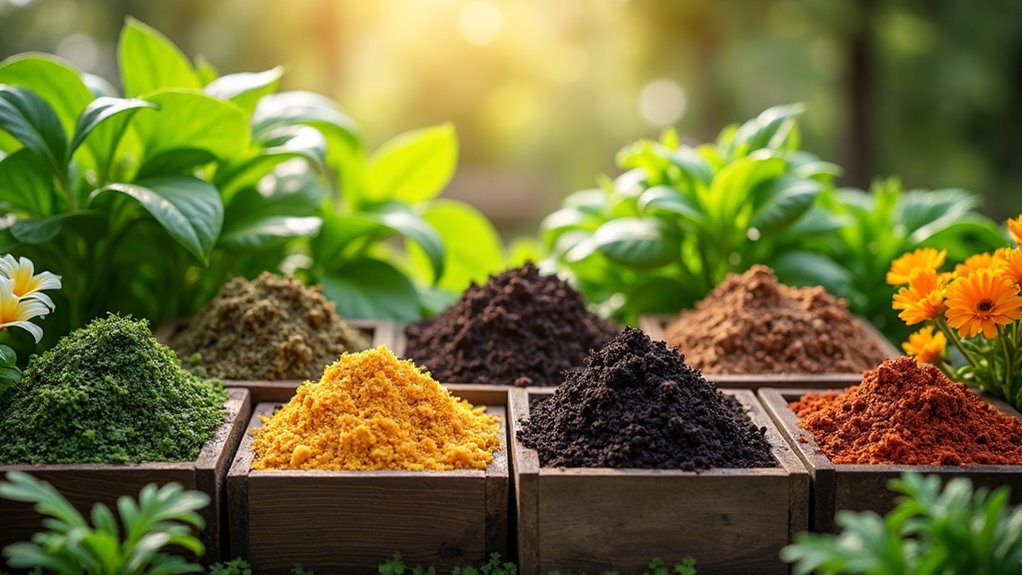
Looking for the best compost options to help your garden flourish in 2025? You’ve got great choices like Premium Organic Compost, Michigan Peat Compost Blend, and Jobes Organics Starter. Miracle-Gro’s Potting Mix is perfect for quick fertilization, while Farmer’s Secret Soil Revitalizer boosts microbial activity. Don’t forget about Organic Worm Castings for added nutrients and Organic Compost for a natural touch. Keep going to discover how these can transform your garden!
Premium Organic Compost Screened 2 lbs
Product not found or API error.
If you’re looking for a lightweight compost option that’s easy to handle, the Premium Organic Compost Screened in a 2 lbs bag is perfect for you, especially if you’re a senior gardener or anyone who prefers smaller, manageable quantities. Users rave about its effectiveness, claiming their plants, like desert roses and gardenias, thrive after using it. You’ll find it particularly beneficial for specific plants, such as fig trees and Carolina Reapers. For best results, mix it into your soil and consider reapplying every four months. Plus, with fast delivery, you’ll receive exactly what you ordered, ensuring satisfaction with your gardening needs.
Best For: Seniors and gardeners who prefer lightweight, manageable quantities of compost for their plants.
Pros:
- Effective for a variety of plants, including desert roses, gardenias, and fig trees.
- Easy to handle due to the small 2 lbs bag size, making it suitable for those with lifting limitations.
- Fast delivery ensures you receive your order promptly.
Cons:
- The small bag size may not be sufficient for larger gardening projects.
- Some users experienced delivery timing issues, resulting in late arrivals.
- Regular reapplication every four months may be necessary for optimal results.
Michigan Peat Compost and Manure Blend (40 Lbs)
Product not found or API error.
Michigan Peat Compost and Manure Blend (40 lbs) is an excellent choice for gardeners looking to boost soil quality and promote healthy plant growth. This nutrient-rich blend of organic reed sedge peat and composted animal manure enhances your soil’s nutrient content, ensuring vibrant blooms and robust vegetables. It’s ready-to-use and odor-free, making it perfect for potting soil in planters or raised beds. Plus, the peat helps with drainage, preventing waterlogging. With a 4.6-star rating from satisfied customers, you can trust its quality. Just scatter it across your garden, and watch your plants thrive!
Best For: Gardeners looking for a nutrient-rich blend to enhance soil quality and support healthy plant growth.
Pros:
- Provides essential nutrients for flowers, vegetables, and grass.
- Ready-to-use and odor-free, suitable for immediate application.
- Improves drainage and prevents waterlogged soil.
Cons:
- Limited to a coverage area of approximately 0.75 cubic feet per bag.
- May require reapplication to maintain soil nutrients during plant flowering stages.
- Some users might find it more suitable for specific gardening projects rather than all-purpose use.
Jobes Organics Fast Acting Granular Fertilizer Compost Starter (4 lbs Bag)
Product not found or API error.
Jobes Organics Fast Acting Granular Fertilizer Compost Starter is a top choice for gardeners looking to accelerate their composting process. This 4 lbs bag is formulated with a balanced 4-4-2 NPK, providing essential nutrients for your vegetables, plants, and flowers. It contains no synthetic chemicals and is OMRI listed, ensuring it’s safe for organic gardening. With Jobes Biozome, it enhances microbial activity, speeding up compost breakdown. Simply sprinkle 2 cups per cubic yard every 4-6 weeks, and you’ll see results in just 2-3 weeks. Customers rave about its effectiveness, even in cold weather, making it a reliable compost starter.
Best For: Gardeners seeking an effective and organic solution to accelerate their composting process.
Pros:
- Speedy composting: Enhances microbial activity for quick breakdown of organic matter.
- Organic and safe: Contains no synthetic chemicals and is OMRI listed for organic gardening.
- User-friendly application: Simple instructions with visible results in just 2-3 weeks.
Cons:
- Strong odor: Some users report an unpleasant smell due to chicken manure in the formula.
- Frequent application needed: Requires reapplication every 4-6 weeks for optimal results.
- Weight: The 4 lbs bag may be insufficient for larger composting needs.
Miracle-Gro Organic Outdoor Potting Mix (16 qt.)
Product not found or API error.
Miracle-Gro Organic Outdoor Potting Mix (16 qt.) is an excellent choice for gardeners looking to nurture their outdoor container plants, from vibrant flowers to fresh vegetables. This OMRI Listed mix contains a quick-release natural fertilizer that feeds your plants for up to two months. Made from responsibly sourced peat and upcycled green waste, it’s eco-friendly and effective. To use, fill your container partially with the mix, loosen the plant’s root ball, and cover the roots with more soil. With an impressive average rating of 4.6 stars, it’s highly regarded for promoting healthy plant growth.
Best For: Gardeners seeking an eco-friendly potting mix for outdoor container plants, including flowers, vegetables, and herbs.
Pros:
- Contains quick-release natural fertilizer that feeds plants for up to 2 months.
- Made from responsibly sourced peat and upcycled green waste, making it environmentally friendly.
- Highly rated by customers for enhancing plant growth and soil texture.
Cons:
- Some users have reported issues with fungus gnats.
- Occasional debris found in the mix may be a concern for some gardeners.
- Requires bi-annual repotting with fresh soil for optimal plant health.
Farmer’s Secret Soil Revitalizer (32oz) – Organic Liquid Compost Soil Amendment
Product not found or API error.
If you’re looking for a powerful way to enhance your garden’s soil health, Farmer’s Secret Soil Revitalizer is an excellent choice for both novice and experienced gardeners. This organic liquid compost soil amendment, featuring activated humic acid, boosts microbial activity and plant growth. Simply dilute 1 ounce in a gallon of water and apply monthly during the growing season for ideal results. Customers love the immediate benefits, noting vibrant plant health without altering soil pH. While some find it pricey for large applications, its effectiveness makes it a worthwhile investment for thriving plants and lush gardens.
Best For: Gardeners looking to improve soil health and enhance plant growth with an organic solution.
Pros:
- Boosts microbial activity in soil, leading to healthier plants.
- Easy to use with a simple dilution ratio, providing immediate benefits.
- OMRI Listed organic product that does not alter soil pH.
Cons:
- Can be expensive for large applications, potentially limiting accessibility for some users.
- Requires monthly applications, which may be seen as a commitment for casual gardeners.
- Lower concentration of humic acid compared to some alternatives may lead to higher costs for extensive use.
Back to the Roots Organic Worm Castings for Plants (5lb)
Product not found or API error.
Back to the Roots Organic Worm Castings (5lb) is the perfect choice for gardeners seeking a natural, effective way to enhance their soil. This pure USA vermicompost enriches indoor and outdoor plants, from vegetables to houseplants, without any burn or odor. It’s packed with beneficial microbes that improve soil health and protect seedlings. You’ll appreciate the sustainable aspect, as it reduces the need for chemical fertilizers. Just sprinkle it in, water, and watch your plants thrive. With a 4.7-star average from satisfied users, you can trust this high-quality compost to elevate your gardening success.
Best For: Gardeners looking for a natural, odor-free soil amendment to boost the health and growth of their indoor and outdoor plants.
Pros:
- Enhances soil health with beneficial microbes and vermicompost.
- Reduces reliance on chemical fertilizers, promoting sustainable gardening.
- Easy to use and blends well with various soil components.
Cons:
- Limited to a 5lb package, which may not be sufficient for larger gardens.
- May require regular application for best results, depending on plant needs.
- Some users may find the price higher compared to traditional fertilizers.
Organic Compost 1 Gallon
Product not found or API error.
For gardeners seeking a reliable organic option, the Organic Compost 1 Gallon stands out due to its 100% OMRI Listed certification, ensuring that it meets strict organic standards. Composted from natural wood products sourced locally in North Carolina, this compost delivers quality you can trust. Users consistently report satisfaction with its performance, especially when combined with worm castings to support mycorrhizae. While some may find the 1-gallon size small, the overall positive feedback underscores its effectiveness in enhancing soil health. You’ll appreciate how this compost nurtures your plants and promotes a thriving garden with ease.
Best For: Gardeners looking for a reliable, OMRI Listed organic compost to enhance soil health and support plant growth.
Pros:
- 100% OMRI Listed certification ensures adherence to organic standards.
- Users report high satisfaction with compost performance, especially when mixed with worm castings.
- Sourced from natural wood products local to North Carolina, providing quality you can trust.
Cons:
- The 1-gallon size may be considered small for larger gardening projects.
- Limited to a single size option, which may not suit all users’ needs.
- Some users may desire additional information on application rates or usage tips.
Factors to Consider When Choosing Plant Compost
When choosing plant compost, you’ll want to take into account several key factors. Look for organic certification to guarantee safety and quality, and analyze the nutrient composition to meet your plants’ needs. Additionally, contemplate how versatile the compost is for different applications and its overall impact on the environment.
Organic Certification Importance
Choosing the right plant compost is essential, especially if you want to guarantee your garden thrives sustainably. Organic certification, like OMRI Listing, assures your compost is free from synthetic chemicals and meets organic farming standards. This not only promotes environmental safety but also fosters healthier soil ecosystems. When you use certified organic compost, you’re enhancing beneficial microbial activity that boosts plant growth and resilience.
Moreover, organic compost improves soil structure, nutrient content, and water retention—key factors for ideal plant development. By opting for certified compost, you align with sustainable practices, positively impacting the environment. Plus, if you’re aiming for organic certification for your crops, using certified compost supports both marketability and consumer trust. Make the organic choice for a thriving garden!
Nutrient Composition Analysis
Understanding nutrient composition is essential for selecting the best plant compost for your garden. The key elements to take into account are nitrogen (N), phosphorus (P), and potassium (K), typically expressed in NPK ratios. These ratios reveal the nutrient percentages in your compost, directly impacting plant health. Organic compost usually harbors beneficial microorganisms that enhance nutrient availability and boost soil health. Additionally, organic matter improves soil structure, water retention, and aeration, leading to better nutrient uptake. If you choose compost from animal manure, make sure it’s well-composted to eliminate pathogens and odors. Be aware that the nutrient profiles can vary based on source materials; for instance, peat-based composts differ from those made from kitchen scraps or yard waste.
Application Versatility
Considering the diverse needs of your garden, application versatility plays an integral role in selecting the right plant compost. Some composts are ready-to-use, allowing you to apply them immediately, while others may need mixing with soil or additional amendments. Look for nutrient-rich organic blends that cater to various gardening projects, like potting soil or raised beds. Additionally, consider the water management properties of the compost; certain blends can improve drainage, preventing waterlogged soil for specific plants. Keep in mind that the effectiveness of compost can vary based on the plants you’re cultivating, so choose blends tailored for flowers, vegetables, or herbs. Regular reapplication is essential to refresh nutrients, especially during critical growth phases like flowering or fruiting.
Soil Improvement Benefits
When you select plant compost for your garden, it’s essential to recognize its soil improvement benefits. Organic compost enhances soil quality by boosting nutrient content, which supports healthy plant growth and increases yield. By adding compost, you foster microbial activity, creating a balanced ecosystem that benefits your plants. Compost also improves soil structure, promoting better aeration and drainage, while preventing waterlogging. Plus, it enhances moisture retention, allowing you to water less frequently and helping your plants become more resilient. Regularly using compost enriches the soil with essential nutrients over time, contributing to long-term soil fertility and supporting continuous plant growth. By choosing the right compost, you’re setting the stage for a thriving garden.
Environmental Impact Considerations
Choosing the right plant compost not only boosts your garden’s health but also impacts the environment positively. Opting for OMRI-listed compost guarantees it meets organic standards, promoting eco-friendly gardening practices. When you use compost made from local materials, you cut down on transportation emissions, lowering your carbon footprint. Organic compost enhances soil health by supporting beneficial microbes, reducing the need for synthetic fertilizers that can harm the environment. Additionally, selecting compost from sustainable sources helps recycle organic materials, minimizing landfill waste. Finally, compost that improves soil structure and water retention leads to more efficient water use, conserving this precious resource. By making informed choices, you can enjoy a thriving garden while protecting our planet.
Bag Size and Weight
Bag size and weight play an essential role in your gardening experience, influencing how easily you can handle and apply compost. Smaller bags, like 2 lbs, are perfect if you have limited strength, while larger 40 lb bags are ideal for extensive projects. Consider your ability to transport and apply the compost without straining; lighter options can be easier for frequent use. Coverage area matters too—while a 40 lb bag covers about 0.75 cubic feet, smaller bags might require multiple purchases for the same area. Assess your gardening needs carefully; smaller quantities work well for container gardens, but larger amounts are necessary for expansive beds. Ultimately, your satisfaction can hinge on finding the right bag size for your projects.
Odor and Debris Presence
While exploring your compost options, you’ll quickly notice that odor and debris presence can greatly impact your gardening experience. Some organic composts, especially those with chicken manure, can emit strong odors that may be off-putting, particularly indoors. High-quality compost, however, should be odor-free, allowing for immediate use in your garden without unpleasant smells. Additionally, you’ll want to pay attention to debris like twigs or rocks, as smooth compost is easier to mix into your soil and promotes better plant growth. Opting for OMRI Listed products can enhance your experience, as these composts are made from natural materials and adhere to strict quality standards, resulting in fewer odors and higher satisfaction from fellow gardeners.
Cost-Effectiveness Assessment
When it comes to evaluating cost-effectiveness in plant compost, several key factors can influence your decision. First, consider the weight and volume; a 40 lb bag covers about 0.75 cubic feet, so smaller bags may require more frequent purchases. Next, analyze nutrient content—organic blends with high nutrient density can cut down on additional fertilizers, saving you money over time. Also, evaluate application frequency; compost requiring reapplication every 4-6 weeks can lead to higher ongoing costs. Don’t forget to factor in potential plant growth and yield; higher-quality compost often results in more vigorous plants, which can offset initial expenses. Finally, look at customer reviews to find compost with a proven track record for long-term effectiveness.





