
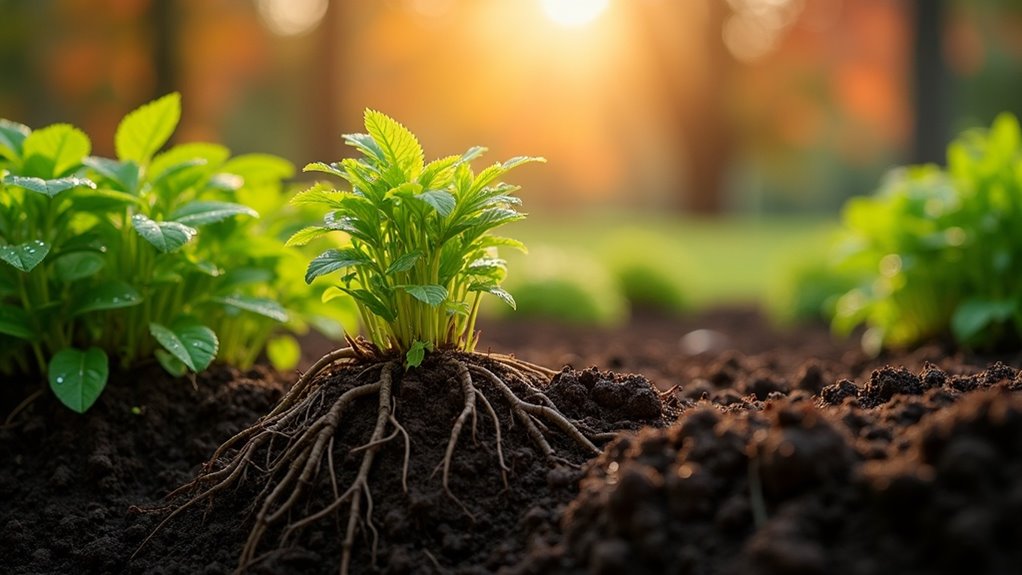
Yes, you can divide plants in fall to boost their vigor. This process prepares perennials for robust spring growth by minimizing stress during their dormant season, allowing roots to develop effectively. Choose suitable perennials like peonies or daylilies and divide them at least six weeks before the first frost. Verify the soil is moist and use the right tools to prevent damage. With proper care post-division, your plants will thrive next season. Discover more tips and techniques for successful division.
Key Takeaways
- Dividing perennials in fall enhances root development, preparing them for vigorous growth in spring.
- The dormant season reduces stress on plants, allowing energy to focus on strengthening roots.
- Fall division rejuvenates aging perennials, improving their vigor and flower production.
- Timing is crucial; divisions should be completed at least six weeks before the first frost.
- Proper division minimizes overcrowding, improving airflow and reducing disease risks in the garden.
Benefits of Dividing Perennials in Fall
When you divide perennials in the fall, you set the stage for robust growth come spring. This season offers the ideal conditions, as many plants enter dormancy, minimizing stress and enabling them to focus on developing their root systems.
Dividing at this time rejuvenates aging perennials, enhancing their vigor and leading to healthier plants with improved flower production. By ensuring division occurs before the first frost, you allow sufficient time for acclimation in new locations, improving airflow and reducing disease risks.
This practice is especially beneficial for perennials like peonies and daylilies, which thrive when divided every three to five years.
Ideal Perennials for Fall Division
Fall presents an excellent opportunity for gardeners to divide certain perennials that thrive under these conditions. Consider these ideal candidates:
| Plant | Division Frequency | Planting Depth |
|---|---|---|
| Peonies | Every 3-5 years | 1-2 inches below soil |
| Daylilies | Every 1-2 years | 1-2 inches below soil |
| Ornamental Grasses | As needed | Level with soil |
| Speedwell | Every 3-5 years | Level with soil |
| Sedum | Early fall | Level with soil |
Dividing these plants guarantees healthy roots and robust growth for future seasons.
Timing and Conditions for Successful Division
Timing for dividing perennials is essential to their success, especially for those you’ve chosen to split this fall. Aim to complete divisions at least six weeks before the first frost, allowing plants to establish roots before winter dormancy.
Verify that the conditions are right: the soil should be moist to minimize stress and facilitate easier digging. Avoid dividing during extreme heat or cold, as these conditions can hinder successful establishment.
Tools Needed for Dividing Plants
To successfully divide plants, you’ll need essential tools like a sharp spade for digging, a garden fork for loosening roots, and a knife for cutting through thick root systems.
Before you begin, make sure to prepare your tools by cleaning and disinfecting them to prevent disease spread.
Additionally, using a tarp or wheelbarrow can help you manage the root balls and keep your workspace organized during the division process.
Essential Division Tools
When dividing plants, having the right tools can make all the difference in ensuring a smooth and successful process. Essential tools include a spade for digging, a garden fork for loosening roots, a garden knife for cutting tough systems, and hand pruners for trimming damaged foliage. Remember to disinfect all tools to prevent disease. Use a tarp or wheelbarrow for transporting the root ball and divisions. It’s also wise to prepare your planting area with well-draining soil and moisture.
| Tool | Purpose | Importance |
|---|---|---|
| Spade | Digging | Extracting root ball |
| Garden Fork | Loosening roots | Reducing root damage |
| Garden Knife | Cutting root systems | Dividing plants effectively |
| Hand Pruners | Trimming foliage | Reducing stress on roots |
| Tarp/Wheelbarrow | Collecting and transporting | Efficient handling |
Preparing Your Tools
Preparing your tools for plant division is essential to guarantee a successful operation. Start with essential tools: a sharp spade or garden fork for digging, and a garden knife for cutting through roots.
Before use, disinfect your tools to prevent disease spread among your plants. Hand pruners can help you cleanly remove dead or damaged leaves, streamlining your process.
Consider cutting back excess foliage to about six inches, making handling easier and reducing stress on the plant.
Finally, use a tarp or wheelbarrow for transporting the root ball and soil efficiently during the division process. Clean tools lead to better results!
Safe Handling Techniques
Using the right tools and safe handling techniques is essential for successfully dividing plants. Start with a spade or garden fork to dig around the root ball, preserving the root system. A sharp garden knife helps achieve clean cuts, minimizing damage. Before division, use hand pruners to remove any dead or damaged leaves, which reduces stress on the plant. Prepare a tarp or wheelbarrow for transporting the root ball and divisions, preventing drying out. Always clean and disinfect your tools to minimize disease risk.
| Tool | Purpose |
|---|---|
| Sharp Garden Knife | Cutting through tough root systems |
| Hand Pruners | Removing dead or damaged leaves |
| Spade/Garden Fork | Digging and preserving the root system |
Step-by-Step Guide to Dividing Perennials
To successfully divide perennials, it’s essential to choose the right timing, preferably in the fall for spring and summer bloomers.
You’ll need sharp, clean tools to effectively cut the root ball, ensuring each section has sufficient roots and healthy foliage.
Employ proper division techniques by removing any old, woody parts to foster new growth and improve airflow.
Timing for Division
As fall approaches, it’s crucial to time the division of perennials correctly for ideal success. Aim to divide plants at least six weeks before the first frost, allowing them to establish roots before winter dormancy.
Look for signs like reduced flowering, overcrowding, or a dead center in the plant, indicating it’s time to divide. Use clean, sharp tools to dig up the entire clump and separate it into sections, ensuring each division has both roots and foliage.
After division, replant immediately at the same depth and water thoroughly to promote healthy root growth for the coming seasons.
Tools Needed
Essential tools are key to successfully dividing perennials in the fall. Start with a spade or garden fork to carefully dig around the root ball, preserving roots to minimize stress during division.
Before you begin, make certain to clean and disinfect all tools, including garden knives and hand pruners, to prevent disease. Prepare a tarp or wheelbarrow to transport divided sections, making handling easier.
Cut back excess foliage to about 6 inches from the ground for easier management. After division, verify each section has roots and foliage, then plant them at the same depth and water them thoroughly.
Division Techniques
Start by preparing your perennials for division, which is essential for promoting their health and vigor.
- Saturate the soil a few days prior to reduce stress.
- Use a spade or garden fork to dig around the root ball, preserving the roots.
- Inspect and remove any damaged roots before making divisions.
- Plant the divisions at the same depth as their original location.
Post-Division Care for Newly Planted Divisions
Once you’ve planted your new divisions, it’s essential to care for them properly to guarantee they establish strong roots and thrive.
Start by thoroughly watering the divisions to minimize transplant shock. Apply a layer of mulch around them to retain moisture and regulate soil temperature.
Regularly monitor the plants for any signs of stress or disease, pruning dead or damaged foliage as necessary. In spring, lightly fertilize to support new growth, but avoid fertilizing immediately after division to prevent root burn.
Finally, make sure the soil remains well-draining to avoid waterlogged conditions that could lead to root rot.
Common Mistakes to Avoid When Dividing Plants
Many gardeners unknowingly undermine their efforts by making common mistakes when dividing plants. To guarantee success, avoid these pitfalls:
Many gardeners sabotage their success by making frequent mistakes when dividing plants; avoid these common pitfalls for better results.
- Dividing during blooming, which stresses the plant
- Not thoroughly watering the plants before division
- Leaving old woody portions that inhibit growth
- Overlooking the specific division frequency for each species





