
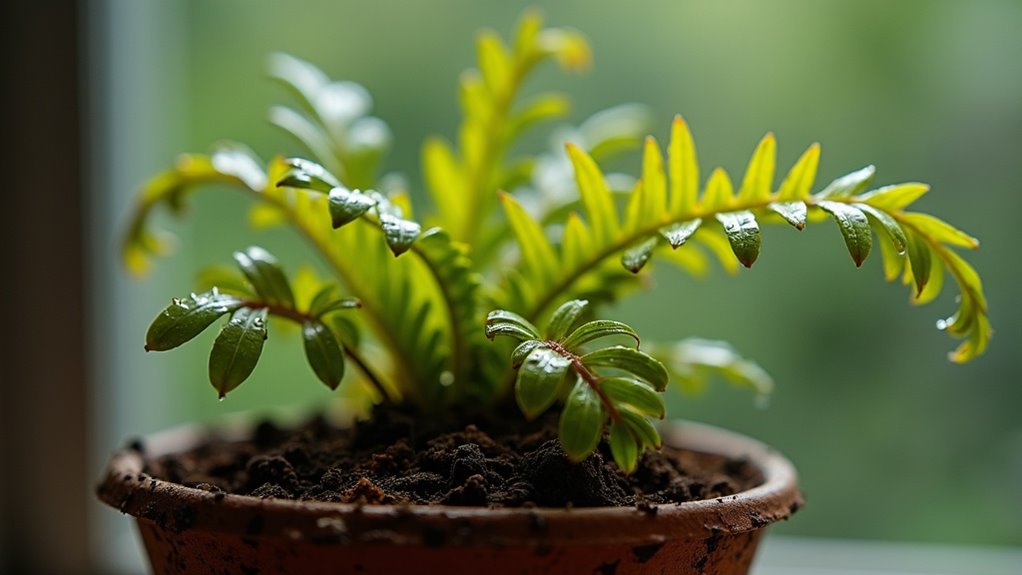
Yes, plants can recover from overwatering damage with prompt action. First, stop watering immediately and assess the soil conditions. Remove the plant from its pot to check the roots for rot and trim any damaged sections. Repot in well-draining soil and place the plant in a shaded area to reduce stress. Adjust your watering routine based on moisture levels to avoid future issues. Discover effective prevention techniques and proper watering strategies to keep your plants healthy.
Key Takeaways
- Yes, many plants can recover from overwatering if promptly treated and the roots are managed properly.
- Immediate steps include ceasing watering, removing excess water, and placing the plant in a shaded area.
- Inspect and trim any damaged roots before repotting in well-draining soil to encourage recovery.
- Adjust watering habits to ensure the soil dries adequately between waterings, promoting healthy growth.
- Monitor the plant for signs of new growth, which indicates successful recovery from overwatering.
Signs of Overwatering
Overwatering can severely impact plant health, and recognizing its signs early is crucial for recovery. You might notice symptoms like yellowing leaves, limp foliage, or even wilting plants despite wet soil. These indicators suggest your over-watered plants are struggling.
A damp root ball or muddy soil with puddles often leads to root rot, which manifests as brown, slimy roots. Additionally, foul odors or the presence of mold on the soil surface indicate excessive moisture.
Monitoring these signs helps guarantee your plants maintain healthy roots and avoid the detrimental effects of overwatering, allowing for timely intervention and recovery.
Immediate Steps to Save an Overwatered Plant
To save your overwatered plant, you need to stop watering it immediately to prevent further stress on the roots.
Next, assess the drainage conditions by removing the pot from its saucer to allow excess water to escape.
This quick action helps create a healthier environment for your plant to recover.
Stop Watering Immediately
As soon as you notice signs of overwatering, stopping further watering is crucial to prevent additional stress on your plant.
Follow these steps:
- Remove the planter from saucers or trays to avoid water stagnation.
- Place the plant in a shaded area to protect its delicate foliage.
- Allow the soil to dry by considering repotting if necessary.
- Check for drainage holes to guarantee proper water escape.
- Monitor closely for signs of recovery, like new growth.
Assess Drainage Conditions
After stopping watering, the next step is to assess drainage conditions, which plays a vital role in your plant’s recovery.
First, guarantee your pot has adequate drainage holes to prevent excess water from accumulating. If it’s in a planter, remove it to allow for better drainage.
You can tilt the pot or create air pockets around the root ball to enhance aeration and moisture evaporation.
Place the plant in a shaded area to reduce its water needs while it recovers.
Monitor the soil closely and only resume watering when the top 2-3 cm of soil is dry to the touch.
Intervention Strategies for Recovery
When a plant suffers from overwatering, implementing targeted intervention strategies is essential for its recovery. Follow these steps to help your plant bounce back:
- Remove the plant from its pot and inspect the roots, cutting away any brown, soft, or moldy sections.
- Air-dry the soil in a shaded area, using an openwork container or wrapping the root ball in newspaper.
- Repot the plant in a container with improved drainage materials and sufficient drainage holes.
- Water generously after repotting, but wait until the top 2-3 cm of soil is dry before watering again.
- Monitor for signs of new growth within a week.
Post-Rescue Care for Overwatered Plants
After rescuing your overwatered plant, place it in a shady area to reduce stress while it recovers.
Adjust your watering frequency by only moistening the soil when the top 2-3 cm is dry to the touch, ensuring the roots can breathe.
This careful management will promote healing and prevent further damage as your plant begins to show new growth.
Temporary Shade Placement
To guarantee your overwatered plant has the best chance of recovery, placing it in a shaded area is essential.
This temporary shade placement minimizes water loss and protects delicate foliage from leaf scorch. It also allows the root zone to dry out more quickly, reducing the risk of root rot.
While your plant is in the shade, consider these practices:
- Monitor for signs of new growth.
- Avoid direct sunlight to prevent stress.
- Maintain humidity without waterlogging.
- Gradually reintroduce to original lighting once stable.
- Ascertain airflow around the plant to promote recovery.
With care, your plant will rebound!
Watering Frequency Adjustment
Adjusting your watering frequency is essential for the recovery of an overwatered plant, since overwatering can lead to further stress and health issues.
Water only when the top 2-3 cm of soil feels dry, using appropriate watering techniques to guarantee moisture reaches the roots without causing standing water.
Monitor your plant closely for signs of recovery, like new growth, before gradually resuming a normal watering schedule.
Avoid fertilizing during this period, as it may exacerbate stress.
Additionally, make certain no stagnant water accumulates in the saucer, as this can reintroduce overwatering issues and hinder recovery efforts.
Prevention Techniques and Proper Water Management
While it’s easy to overlook the importance of proper water management, implementing effective prevention techniques can make a significant difference in keeping your plants healthy and thriving.
Here are key strategies to prevent excessive moisture accumulation:
- Use perforated pots and terracotta containers for plenty of drainage.
- Develop a watering schedule tailored to each plant’s moisture needs.
- Check soil moisture up to 2-3 cm deep, ensuring it’s dry to the touch before watering.
- Install drip irrigation systems or soil moisture sensors for optimized water use.
- Regularly empty saucers of stagnant water to avoid waterlogged conditions.
Proper Watering Techniques for Yellowing Plants
Proper watering techniques are essential for preventing yellowing in plants, as inadequate moisture management can lead to stress and decline.
To keep the soil healthy, check moisture regularly; dark, moist soil typically means no additional watering is needed. Water only when the top 2-3 cm of soil feels dry and light in color, ensuring the entire root zone gets moisture.
Research individual plant species to understand their unique needs, as this prevents yellowing from dying roots.
Avoid overhead watering to reduce excess moisture on leaves and minimize fungal disease risk, ensuring your plants thrive.
Timing for Watering
Timing is critical when it comes to watering your plants effectively. To guarantee ideal growth, consider these guidelines:
- Water in the early morning to reduce evaporation.
- Check the surface of the soil; if it’s dark and moist, skip watering.
- Avoid nighttime watering unless plants show wilting.
- Aim to moisten the entire root zone and let excess water drain out.
- Wait for the top 2-3 cm of soil to dry out to prevent over-watering.
Coping Strategies for Heat Zones
As temperatures soar in heat zones, implementing effective coping strategies becomes essential for maintaining plant health, especially after overwatering.
Providing shade for sensitive plants during peak heat reduces water loss and stress, aiding recovery. Utilizing row covers or shade cloth further protects against extreme temperatures, creating healthier conditions for your plants.
Implement windbreaks to minimize moisture evaporation and physical damage, enhancing root stability. Regularly monitoring soil moisture is vital to prevent additional stress from overwatering or under-watering.
Finally, mulching around plants retains soil moisture and regulates temperature, fostering a favorable environment for recovery from overwatering effects.





