
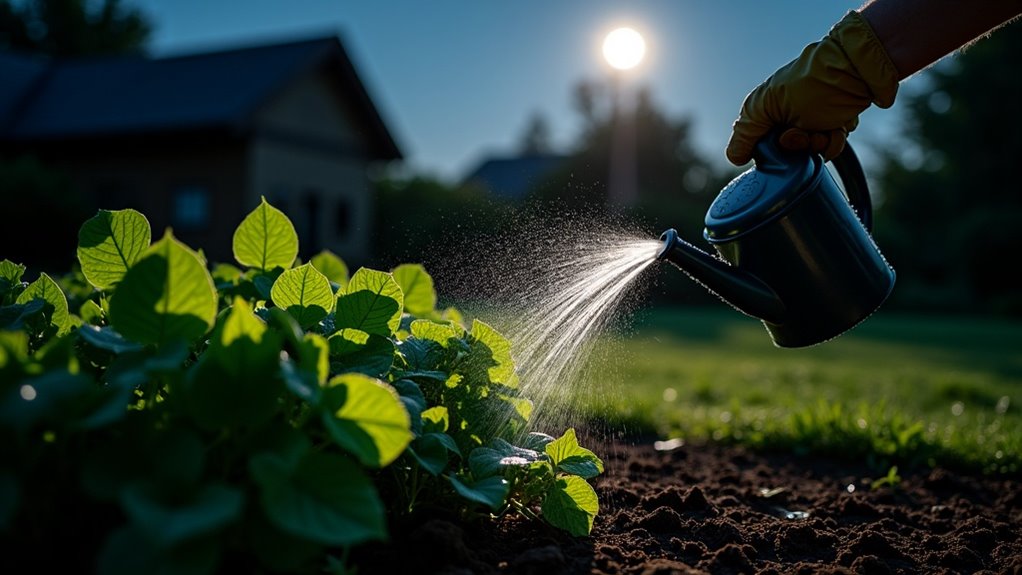
Watering plants at night can raise disease risks due to excess moisture and limited evaporation. Fungal growth may thrive in damp conditions, especially in cooler temperatures. However, if you’re in a cooler climate with well-draining soil, nighttime watering can be acceptable. Monitor soil moisture carefully to avoid root rot and overwatering signs. Adopting proper watering strategies can help mitigate these risks while promoting plant health. Explore further to find the best practices for effective watering.
Key Takeaways
- Night watering can lead to fungal growth and root rot due to excess moisture in cooler temperatures.
- Plants absorb moisture less effectively at night, increasing disease risks.
- Use well-draining soil and ensure adequate ventilation to minimize disease potential.
- Watering at the base of plants and using drip irrigation reduces leaf wetness, lowering disease risk.
- Monitor soil moisture levels to prevent overwatering, which can exacerbate plant diseases.
Understanding the Risks of Night Watering
When you water your plants at night, you may unknowingly introduce several risks that can harm their health.
Night watering can create a damp environment, leading to fungal growth on leaves due to poor airflow. In addition, excess moisture in the soil often results in root rot, as it remains saturated for longer periods.
Plants absorb moisture less effectively after dark, causing water to linger rather than be utilized. Moreover, high humidity levels at night exacerbate conditions that promote plant diseases, making it essential to monitor your watering practices to prevent these detrimental effects on your plants’ well-being.
Benefits of Morning Watering
Watering your plants in the morning offers numerous advantages that can greatly enhance their growth and health.
Ideally, you should water between 5 a.m. and 9 a.m., allowing plants to absorb moisture before daytime heat increases. This practice reduces evaporation loss, ensuring that more water reaches the roots.
Additionally, by enabling leaves to dry before evening, morning watering minimizes the risk of fungal diseases and mildew. Cooler temperatures make it easier for you to monitor irrigation amounts, promoting efficient water use.
Early watering also helps plants recover from heat stress, supporting stronger growth and resilience against pests and diseases.
When Night Watering Is Acceptable
Although morning watering is often recommended, there are scenarios where night watering can be an acceptable practice.
Morning watering is ideal, but night watering can also be beneficial in certain conditions.
Consider these factors:
- Cooler Climates: If temperatures remain stable, night watering minimizes fungal growth risks.
- Well-Draining Soil: Guarantee soil doesn’t become soggy, promoting soil moisture retention without overwatering.
- Proper Ventilation: Adequate airflow prevents mold and mildew, essential for nighttime watering.
- Monitoring Soil Moisture: Keep an eye on moisture levels to avoid root rot and guarantee your plants thrive.
Signs of Overwatering at Night
If you notice your plants’ leaves remain wet overnight, it’s a strong indicator of overwatering.
Additionally, yellowing or mushy stems can signal that your plants are struggling with excess moisture.
Recognizing these signs early can help prevent serious issues like root rot.
Wet Leaves Overnight
When you water your plants at night, wet leaves can linger into the early hours, increasing the risk of diseases like mildew and fungal infections.
To prevent plant diseases, consider these signs of overwatering:
- Powdery white or black spots on foliage indicate fungal growth.
- Increased gnat and pest activity suggests overly moist soil conditions.
- Wilting or stunted growth may emerge from prolonged leaf dampness.
- Monitor soil moisture levels to avoid excessive wetness.
Yellowing or Mushy Stems
Overwatering your plants at night can lead to yellowing or mushy stems, which are clear signs of distress. Excess moisture suffocates roots, causing root rot and inviting fungal growth. Monitor your plants closely for these symptoms.
| Signs | Causes | Consequences |
|---|---|---|
| Yellowing Stems | Overwatering | Reduced plant health |
| Mushy Stems | Lack of oxygen | Structural weakness |
| Fungal Growth | Damp conditions | Increased disease risk |
If you notice these signs, adjust your watering schedule to prevent severe health issues in your plants.
Soil Moisture Assessment Techniques
Evaluating soil moisture is essential for maintaining healthy plants and optimizing watering schedules. Here are four effective techniques to assess soil moisture:
Assessing soil moisture is crucial for plant health and efficient watering practices.
- Finger Test: Insert your finger into the soil up to the second knuckle; dry soil means it’s time to water your plants.
- Moisture Meter: Utilize a moisture meter for accurate readings tailored to specific plant needs.
- Surface Observation: Check for cracked or dry soil surfaces, indicating the need for watering.
- Weight Check: Lift the pot; a lighter container typically signifies dry soil in the root zone, requiring watering to avoid excess water and root rot.
Strategies to Minimize Disease Risk
To effectively minimize disease risk in your garden, it’s crucial to adopt strategic watering practices that prioritize plant health.
Focus on watering plants at night at the base rather than overhead to minimize leaf wetness, which reduces fungal growth and root issues.
Utilize soaker hoses or drip irrigation to deliver moisture directly to the soil while keeping foliage dry.
Apply mulch around plants to retain soil moisture levels longer, allowing for less frequent watering.
Finally, monitor soil moisture levels to prevent waterlogging, ensuring proper moisture management that avoids creating a conducive environment for disease.
Comparing Night and Morning Watering
When comparing night and morning watering, you’ll notice key differences in moisture retention and disease risk.
Nighttime watering can keep soil moist longer, but it also raises the chance of fungal issues due to lingering dampness.
In contrast, morning watering supports plant health by allowing quick absorption and drying, reducing disease development.
Moisture Retention Differences
Understanding moisture retention differences between night and morning watering can greatly impact your plant health. Here are key points to reflect upon:
- Night watering leads to longer soil moisture retention due to reduced evaporation.
- Dew provides minimal moisture, whereas night watering saturates the soil effectively.
- Soil type affects moisture retention; heavier soils hold more moisture than sandy ones.
- Morning watering promotes quicker evaporation, reducing excess moisture on foliage and minimizing disease risk.
Balancing these factors is vital for maintaining ideal soil moisture while mitigating potential disease threats associated with excessive dampness.
Choose your watering time wisely to support healthy plants.
Disease Risk Factors
While night watering might seem advantageous for moisture retention, it can markedly increase the risk of diseases in your plants. Wet leaves overnight create a perfect environment for fungal pathogens like mildew and root rot, exacerbating health issues. Additionally, higher humidity can attract pests such as slugs, further stressing your plants.
| Time of Watering | Disease Risk Factors |
|---|---|
| Night | Increased humidity, wet leaves, fungal growth |
| Morning | Quick evaporation, drier leaves, reduced diseases |
Choosing morning watering can effectively minimize these disease risks associated with excess moisture at night.
Plant Health Considerations
Choosing the right time to water your plants greatly impacts their overall health and resilience. When you consider watering at night, keep these factors in mind for ideal plant health:
- Moisture Retention: Night watering can lead to excessive soil moisture, increasing the risk of root rot.
- Foliage Diseases: Damp foliage overnight promotes conditions for diseases like powdery mildew.
- Nutrient Uptake: Plants absorb moisture less effectively after dark, hindering hydration.
- Soil Moisture Levels: Regular monitoring is essential to prevent overwatering and suffocating roots, which exacerbates disease risks.
Morning watering is generally more beneficial for maintaining plant health.
Best Practices for Healthy Plant Watering
To guarantee your plants thrive, it’s crucial to adopt best practices for watering that promote healthy growth and minimize disease risk.
The best time to water is early morning, allowing plants to absorb moisture before evening coolness. This practice guarantees leaves stay wet for less time, reducing fungal disease risk.
Watering in the early morning allows plants to absorb moisture efficiently, minimizing leaf wetness and reducing the risk of fungal diseases.
If you must water at night, focus on the base of the plants to minimize leaf wetness. Utilize drip irrigation or soaker hoses, and monitor soil moisture levels to avoid overwatering.
Mulch around plants helps retain soil moisture, making frequent nighttime watering less critical for plant health.





