
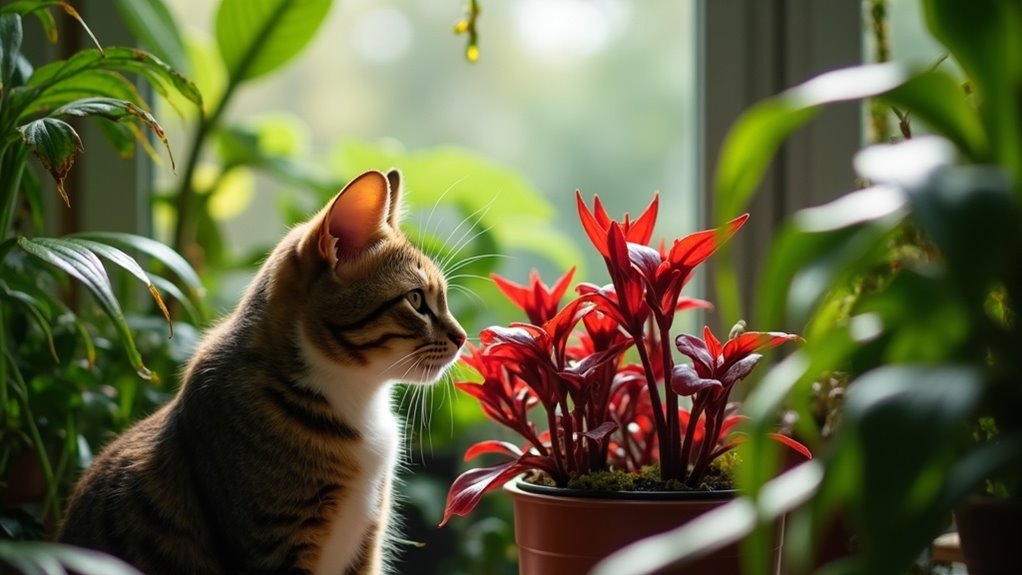
Yes, many common household plants can be toxic if ingested by pets. Plants like sago palms, azaleas, and lilies aren’t just decorative; they can cause serious health risks. Symptoms may include vomiting, diarrhea, and lethargy. Some plants can even lead to organ failure or be fatal in small amounts. It’s essential to know which plants are safe and how to respond if your pet ingests something harmful. Discover more about pet safety and plant toxicity.
Key Takeaways
- Many common plants, such as sago palms and lilies, are highly toxic to pets if ingested.
- Symptoms of plant poisoning in pets include vomiting, diarrhea, and excessive drooling.
- Severe poisoning can lead to organ failure and may be fatal, even in small amounts.
- Immediate veterinary contact is essential if a pet ingests a toxic plant.
- Preventive measures, like choosing non-toxic plants and securing toxic ones, are crucial for pet safety.
Understanding Plant Toxicity in Pets
Understanding plant toxicity in pets is essential for every pet owner, as many common plants can pose serious health risks.
Plants like sago palms, azaleas, and lilies are toxic and can cause gastrointestinal upset, including vomiting and diarrhea, or even more severe issues. The severity of poisoning varies; some plants lead to mild symptoms, while others can be fatal in small amounts.
To keep your pets safe, it’s important to research the plants in your home and garden. If you suspect your pet has ingested a poisonous plant, contact your veterinarian immediately for guidance and potential treatment.
Common Toxic Plants for Dogs and Cats
Pet owners should be aware that various common plants can be toxic to dogs and cats, posing significant health risks.
Sago palms, azaleas, and lilies are among the most poisonous plants, potentially causing severe issues like vomiting and organ failure. Just one sago palm seed can be fatal to pets.
Sago palms, azaleas, and lilies are highly toxic to pets, risking severe health issues and even death.
Other ornamental plants, such as cyclamen and hyacinths, also contain harmful compounds that may lead to moderate to high toxicity.
To protect your pets, educate yourself about this list of plants, monitor your home environment, and guarantee your furry friends don’t accidentally ingest any toxic plants.
Symptoms of Plant Poisoning in Pets
After identifying common toxic plants for dogs and cats, it’s important to recognize the symptoms of plant poisoning in your pets.
Watch for signs like vomiting, diarrhea, and excessive drooling, which indicate gastrointestinal distress. Difficulty breathing and an increased heart rate can signal serious issues, especially with more dangerous species.
Your pet may also display anxiety or restlessness due to discomfort. Coordination problems, tremors, or seizures are serious symptoms that require immediate attention.
Monitoring for changes in behavior, such as lethargy or unusual vocalizations, is vital. If you notice any symptoms, consult your veterinarian promptly.
Emergency Response to Plant Ingestion
When you suspect your pet has ingested a toxic plant, acting quickly is crucial to guarantee their safety and health.
Immediately contact a veterinarian or the ASPCA Animal Poison Control Center at (888) 426-4435 for guidance. Gather details about the plant, including its names, to help professionals provide effective treatment.
Avoid inducing vomiting or giving medications without veterinary advice, as this may worsen the situation.
Keep a close eye on your dog or cat, as symptoms of plant toxicity mightn’t appear right away. Quick responses improve recovery chances and minimize long-term effects from poisoning.
Preventive Measures for Pet Safety
To guarantee your furry companions stay safe from harmful plants, it’s essential to take proactive steps in your home and garden.
Choose non-toxic plants, like Aloe vera or Heuchera sanguinea, to reduce risks.
Opt for non-toxic plants such as Aloe vera and Heuchera sanguinea to help ensure your pets’ safety.
Regularly inspect your property for toxic plants, such as Azaleas and Lilies, and remove or secure them.
Educate yourself and your family about signs of toxicity, including vomiting, diarrhea, and lethargy.
Implement physical barriers like fencing to keep pets away from toxic areas.
Stay informed about plant toxicity updates from reliable sources, like the ASPCA or your local veterinarian, to enhance pet safety continuously.





