
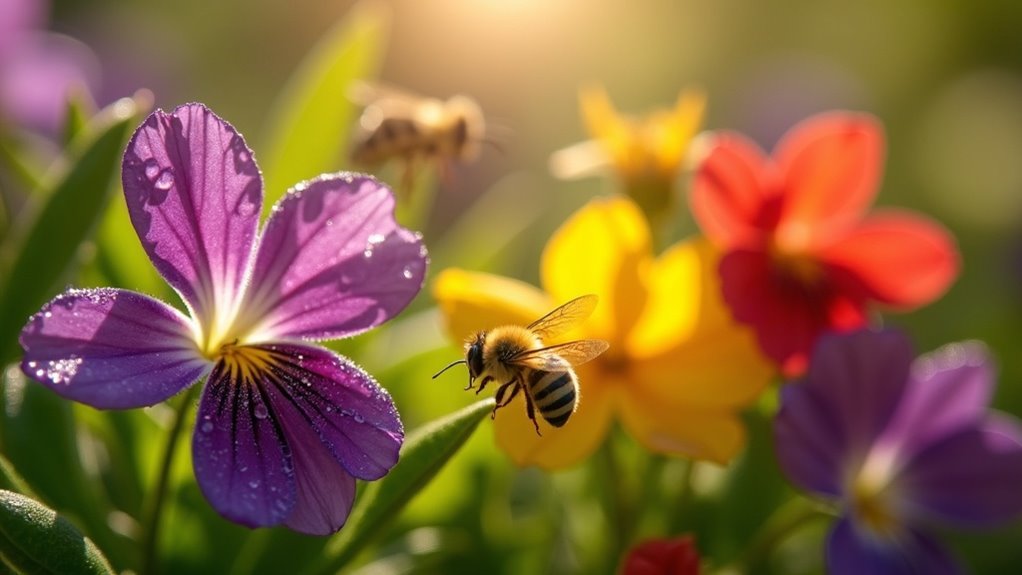
Yes, plants can cross-pollinate in small gardens due to their close proximity. Limited space increases the risk of genetic mixing, particularly among insect or wind-pollinated varieties requiring 100 yards for isolation. Even self-pollinating plants can hybridize if they’re within 10 feet of each other. To minimize these risks, consider planting one variety per species, maintaining proper distances, or using physical barriers. Understanding these principles can help you maintain plant integrity and yield successful crops. Explore further strategies to protect your garden’s diversity.
Key Takeaways
- Yes, plants can cross-pollinate in small gardens due to limited distances between different varieties.
- Insect or wind-pollinated plants require at least 100 yards apart to prevent hybridization.
- Self-pollinating plants should be spaced at least 10 feet apart to minimize cross-pollination risks.
- Utilizing physical barriers and staggered blooming times can help protect against unwanted pollen transfer.
- Engaging with local gardening communities can provide strategies for managing and preventing cross-pollination effectively.
Understanding Cross-Pollination Risks in Small Gardens
When you garden in a small space, the risk of cross-pollination becomes a significant concern, as limited distances between different plant varieties can lead to unintended genetic mixing.
To mitigate this risk, it’s advisable to grow only one variety of a species. For wind or insect-pollinated plants, maintaining a distance of at least 100 yards is ideal; however, this is often impractical in small gardens.
To minimize cross-pollination risks, consider planting only one variety of each species in your small garden.
Even self-pollinating plants, like beans and tomatoes, can hybridize if planted too close—at least 10 feet apart is recommended.
Be aware that while current fruit quality remains unaffected, hybrid seeds may yield unexpected traits later.
Strategies to Minimize Cross-Pollination
To effectively minimize cross-pollination in small gardens, you can implement several strategic measures that enhance control over your plant varieties. Start by planting only one variety of each species, which markedly reduces pollen transfer risks. Maintain at least 10 feet between self-pollinating plants and 100 yards for wind or insect-pollinated types. Use physical barriers, like tall plants or mesh bags, to shield flowers. Staggering blooming times keeps different varieties from flowering simultaneously. Finally, employ hand-pollination techniques to guarantee seed purity.
| Strategy | Description |
|---|---|
| Plant One Species | Reduces pollen transfer from other varieties |
| Maintain Distance | Prevents cross-pollination via spacing |
| Use Physical Barriers | Shields flowers from unwanted pollen |
| Stagger Bloom Times | Guarantees different varieties don’t bloom together |
| Hand-Pollination | Controls fertilization for seed purity |
The Role of Plant Varieties in Cross-Pollination
Understanding the role of plant varieties in cross-pollination is vital for gardeners aiming to maintain specific traits in their crops. Different varieties within the same species can cross-pollinate, resulting in hybrid offspring with mixed traits, particularly in crops like squash and sweet corn.
While self-pollinating plants like beans and tomatoes pose a lower risk, maintaining at least 10 feet between different varieties can further minimize this. For crops like cucurbits, proper isolation is essential, as they need pollen from the same species.
Implementing control techniques can help guarantee the integrity of your desired plant varieties in small gardens.
Techniques for Maintaining Seed Purity
Maintaining seed purity is essential for achieving consistent crop traits, especially in small gardens where space is limited.
To save seeds effectively, guarantee at least 100 yards between different varieties of insect or wind-pollinated plants, like cucurbits. For self-pollinating plants such as tomatoes, maintain a distance of 10 feet to minimize cross-pollination risk.
Utilize physical barriers, like mesh bags over flowers, to protect against insects. Employ hand-pollination techniques by transferring pollen with a paintbrush to preserve desired traits.
Finally, stagger planting dates to avoid overlapping flowering periods, further safeguarding your seed purity.
Community Practices for Successful Gardening
While you might think that gardening is a solitary pursuit, engaging with your local gardening community can greatly enhance your success, especially in small spaces where cross-pollination is a concern.
By participating in gardening clubs, you’ll gain strategies for managing fruit set and minimizing cross-pollination risks. Collaborating with neighbors allows for coordinated planting schedules and variety selections, further protecting your crops.
Attend community workshops to learn seed saving and isolation techniques, ensuring your heirloom seeds remain pure. Utilizing social media can also connect you with fellow gardeners, fostering a network that shares tips and resources tailored to your gardening challenges.





