
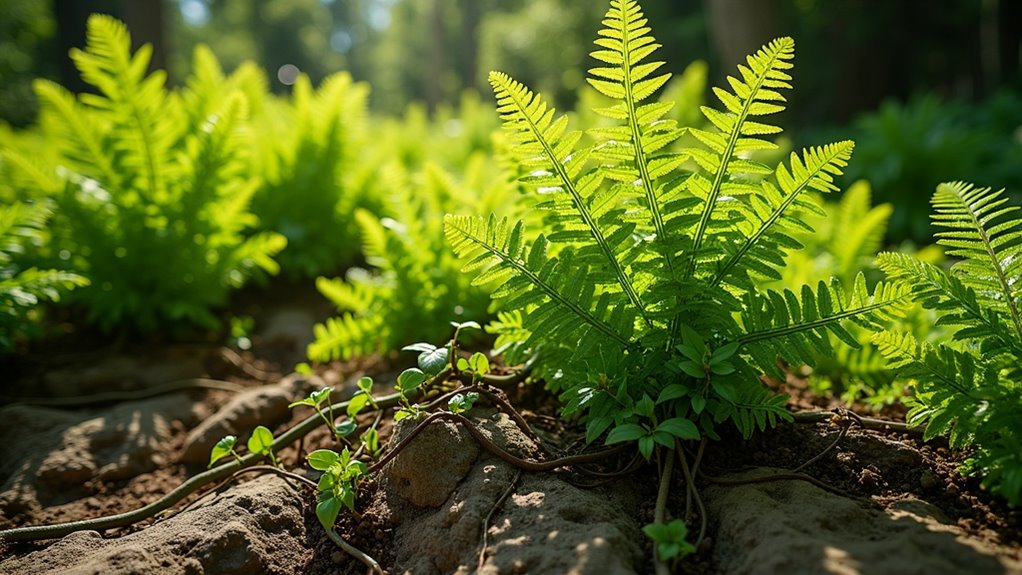
Yes, plants can spread aggressively in landscapes, particularly invasive species like Ligustrum spp., Chinese Tallow Tree, and Callery Pear. These non-native plants often outcompete local flora, leading to a reduction in biodiversity and altering ecosystems. Additionally, some native plants can also be aggressive, but they typically support biodiversity and ecosystem health if managed properly. Understanding these dynamics is key to maintaining a balanced garden. Explore the methods for managing both invasive and aggressive native plants effectively.
Key Takeaways
- Invasive plants like Ligustrum spp. and Chinese Tallow Tree aggressively outcompete native species, disrupting local ecosystems.
- Aggressive native plants, such as Turks Cap, can enhance biodiversity when managed properly.
- Non-native species often reproduce prolifically, leading to rapid spread in landscapes.
- Regular monitoring and pruning help control the spread of aggressive plants.
- Promoting a mix of native and aggressive native plants supports ecosystem resilience and stability.
Understanding Invasive Plants and Their Impact
While you might appreciate the beauty of diverse landscapes, invasive plants can drastically alter these environments by outcompeting native species.
These non-native species, such as Ligustrum spp., Chinese Tallow Tree, and Callery Pear, spread rapidly, displacing native vegetation and resulting in a loss of biodiversity.
Invasive plants disrupt local ecosystems by changing soil chemistry and reducing food and shelter for wildlife, including important pollinators like bees and butterflies.
Understanding the impact of these aggressive plants is vital for effective management.
Strategies like physical removal, barriers, and herbicides can help restore balance and protect your local environment.
The Role of Aggressive Native Plants
In contrast to invasive species that disrupt local ecosystems, aggressive native plants can play an essential role in maintaining biodiversity and enhancing landscape stability.
Plants like Turks Cap and Texas Rock Rose spread quickly but support local wildlife, including pollinators, without harming their environment. They contribute to soil health and promote ecosystem resilience, making them valuable components of native gardens.
However, understanding their growth habits is vital for managing their spread. Employing techniques like regular pruning and monitoring allows you to harness the benefits of aggressive native plants while maintaining ecological balance in your landscape.
Identifying Problematic Invasive Species
Identifying invasive species is essential for maintaining a healthy garden ecosystem, as these plants can quickly outcompete native flora and disrupt local biodiversity.
Non-native plants like Ligustrum spp., Chinese Tallow Tree, and Callery Pear can displace native species, severely affecting local habitats.
Additionally, aggressive invaders such as Japanese Honeysuckle and Nandina threaten survival by reproducing prolifically through seeds, roots, and rhizomes.
Awareness of these invasive species is vital for gardeners; understanding their characteristics helps prevent their unintentional introduction and spread, ultimately protecting the delicate balance of your garden and surrounding environment.
Stay vigilant to safeguard your landscape.
Strategies for Managing Aggressive Plants
Managing aggressive plants requires a proactive approach once you’ve identified them in your landscape.
Regularly cultivate and dig up these perennials, ideally dividing them in early spring to control their size. Actively monitor and cut their flower heads before they mature, minimizing seed dispersal.
Implement physical barriers like buried plastic pots or landscape edging to limit their underground spread. If necessary, use herbicides as a last resort, applying systemic types carefully to avoid harming other plants.
Educating yourself on the specific growth habits of aggressive plants in your region can help you develop effective management strategies for a balanced garden ecosystem.
Promoting Biodiversity in Your Garden
While many gardeners focus on aesthetics, promoting biodiversity in your garden plays an essential role in supporting local ecosystems. Incorporating a mix of native plants can enhance biodiversity by providing food and habitat for pollinators and beneficial insects. Aggressive native plants, like Turks Cap and Texas Rock Rose, can contribute positively without the drawbacks of invasives. Combine these with locally adapted species for greater resilience. Engage with community resources to refine your plant choices and management practices.
| Type of Plant | Benefits |
|---|---|
| Native Plants | Support local wildlife and ecosystems |
| Aggressive Natives | Enhance biodiversity with some management |
| Locally Adapted Species | Improve resilience against pests |





