
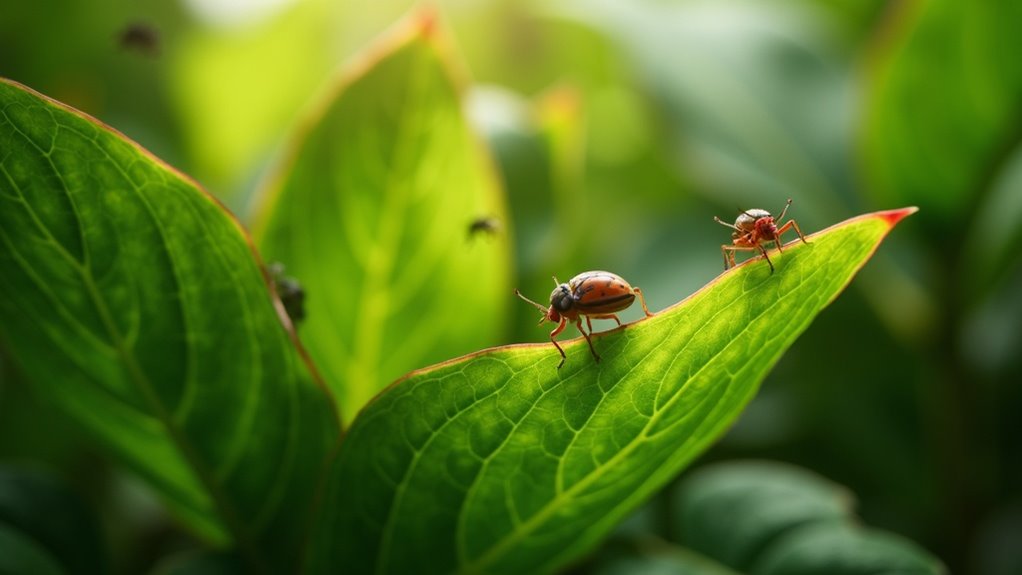
Indoor plants can attract pests like aphids, mealybugs, and spider mites due to their sugary leaves and cozy environments. Regular monitoring and maintenance are essential to catch infestations early. You can prevent bugs by ensuring proper watering, using organic pest control methods, and keeping plants clean. Implementing preventive strategies, like rotating plant locations and using repelling plants, can greatly reduce bug issues. Discover more effective treatments and tips to keep your indoor plants healthy and pest-free.
Key Takeaways
- Indoor plants can attract pests like aphids and spider mites due to their sugary leaves and lack of natural predators.
- Regularly inspect plants for early signs of infestation, such as yellowing leaves or sticky residues.
- Use effective treatments like soapy water spray or neem oil to manage and prevent pest infestations.
- Maintain proper plant care, including watering and cleanliness, to strengthen plants and deter bugs.
- Introduce beneficial insects or use natural repellents to reduce pest populations effectively.
Understanding Indoor Plant Pests
How can you keep your indoor plants healthy while managing the challenges posed by pests? Indoor plants attract common bugs like aphids and spider mites primarily due to their fragrant, sugary leaves.
Newly acquired plants often harbor unnoticed insect larvae or eggs, which can lead to infestations. These cozy indoor environments lack natural predators, allowing pests to thrive unchecked.
To prevent bugs on indoor plants, regularly monitor for early signs of infestation, as pests can weaken your plants before visible damage appears. Understanding these dynamics is essential for maintaining plant health and implementing effective pest management strategies.
Common Plant Pests
When caring for your indoor plants, it’s essential to recognize the common pests that can threaten their health.
Mealybugs, spider mites, and aphids are just a few examples of infestations you might encounter, each leaving distinct signs like yellowing leaves or cottony clusters.
Types of Common Pests
Numerous common pests can invade your indoor plants, posing significant threats to their health and liveliness.
Understanding these bugs is essential for effective management. Here are four prevalent types:
- Aphids – Small sap-sucking insects causing yellowing leaves.
- Mealybugs – Identifiable by their white, fluffy clusters on plants.
- Spider Mites – Tiny pests leaving fine webs and discoloration.
- Scale Insects – Small bumps that stunt growth and are hard to control.
Recognizing these pests early can help you take proactive measures to protect your plants from damage and maintain their vigor.
Signs of Infestation
Detecting signs of pest infestation early is essential for maintaining the health of your indoor plants.
Look for small, white cotton-like clumps, which indicate mealybugs, while yellowing leaves and sticky residues suggest aphid infestations.
Spider mites often leave fine webbing on leaves, leading to yellowing and distortion.
If you notice small, hard bumps on leaves or stems, you might’ve scale insects, which weaken plants by feeding on sap.
Additionally, tiny black flies hovering around the soil surface signal fungus gnats, whose larvae can damage young roots.
Stay vigilant to guarantee your plants thrive without pest interference.
Effective Treatment Methods
While managing common plant pests like aphids, mealybugs, and spider mites may seem intimidating, understanding effective treatment methods can greatly improve your indoor gardening experience.
Here are four effective control measures:
- Soapy Water: Mix vegetable oil with pure liquid soap to create a spray targeting aphids and mealybugs; apply weekly on all surfaces.
- Neem Oil: Use as a systemic pesticide for long-lasting protection, safe for edible plants when applied correctly.
- Regular Monitoring: Isolate infested plants immediately to prevent spread.
- Natural Predators: Introduce beneficial insects like ladybugs to naturally reduce pest populations.
How to Prevent Bugs on Indoor Plants
To effectively prevent bugs on your indoor plants, regular inspections are essential; catching early signs of pests can make all the difference in maintaining a healthy environment.
Look for discolored leaves or sticky residue, which may indicate infestations. Quarantine new or infested plants for 2-4 weeks to stop pest spread.
Guarantee good air circulation by adequately spacing plants and using fans to reduce humidity. Always use clean pots and potting soil to minimize pest introduction.
Finally, avoid overwatering, as soggy soil fosters conditions that attract bugs like fungus gnats, making it harder to rid of bugs effectively.
Home Remedies for Bugs on Plants
When dealing with pest infestations on your plants, effective insecticidal sprays, natural pest deterrents, and homemade traps can provide viable solutions.
For instance, a simple soapy water mix can disrupt the exoskeletons of soft-bodied insects, while neem oil targets various pests by interrupting their life cycles.
Additionally, creating traps using banana peels can effectively capture fungus gnats, reducing their populations without the use of harsh chemicals.
Effective Insecticidal Sprays
Effective insecticidal sprays can considerably enhance your plant care routine, providing a natural solution to common pest problems.
Here are four effective options you can try:
- Soapy Sprays: Mix 3 tablespoons of vegetable oil and pure liquid soap with 3 liters of water to target pests like aphids.
- Neem Oil: This systemic insecticide offers long-lasting protection when absorbed by the plant, safe for edibles.
- Garlic or Pepper Spray: Blend and ferment garlic or hot peppers with water for a potent repellent.
- Diluted Alcohol: Use a 5% solution on a cotton swab to eliminate mealybugs and scale insects effectively.
Natural Pest Deterrents
Natural pest deterrents play an essential role in maintaining healthy plants, especially when you want to avoid chemical pesticides. Neem oil, rich in azadirachtin, effectively repels and kills pests when applied to house plants.
You can create a simple insecticidal spray by mixing soap and water to combat common nuisances like aphids and spider mites. Additionally, garlic and pepper sprays offer potent natural solutions; fermenting garlic with water enhances its repellent properties.
Introducing beneficial insects like ladybugs also aids in controlling pest populations. Finally, regularly wiping leaves keeps them clean, improving photosynthesis while getting rid of dust and pests.
Homemade Traps Solutions
Homemade traps can greatly enhance your pest control efforts, complementing the use of natural deterrents.
These traps effectively capture pests, helping to isolate your plant from unwanted bugs. Here are four effective homemade solutions:
- Sticky traps: Use yellow paper coated with a sticky substance to catch flying pests.
- Banana peel trap: Place banana peels in a container with vinegar or soapy water to lure gnats.
- Soapy water solution: Mix mild dish soap with water and spray on affected plants to suffocate pests.
- Garlic spray: Blend garlic with water to create a repellent that deters insects.
Expert Tips to Prevent Bugs in Indoor Plants
While indoor plants can enhance your living space, they can also attract unwanted pests if not properly managed. To prevent infestations, always inspect new plants before introducing them into your home, quarantining them for 2-4 weeks.
Guarantee good drainage by checking for clogged pot holes, as stagnant water can attract pests like fungus gnats. Maintain a clean plant environment by regularly removing dead leaves and spent flowers, which harbor pests.
Water only when the top inch of soil is dry, and monitor plants frequently for early signs of infestation. Consider using sticky traps to catch flying insects effectively.
How to Get Rid of Aphids Indoors
Aphids are among the most common pests that can invade your indoor plants, posing a significant threat to their health.
Aphids are a frequent threat to indoor plants, significantly impacting their health and vitality.
To effectively get rid of aphids and keep your plants healthy, consider these strategies:
- Spray affected plants with a soapy water solution to suffocate aphids.
- Dunk individual plants in hot soapy water to thoroughly cleanse leaves and stems.
- Regularly prune infested leaves to limit food sources and spread.
- Apply neem oil to disrupt their life cycle and repel them.
Additionally, verify your potting mix is nutrient-rich and maintain proper watering to strengthen your plants’ defenses.





