
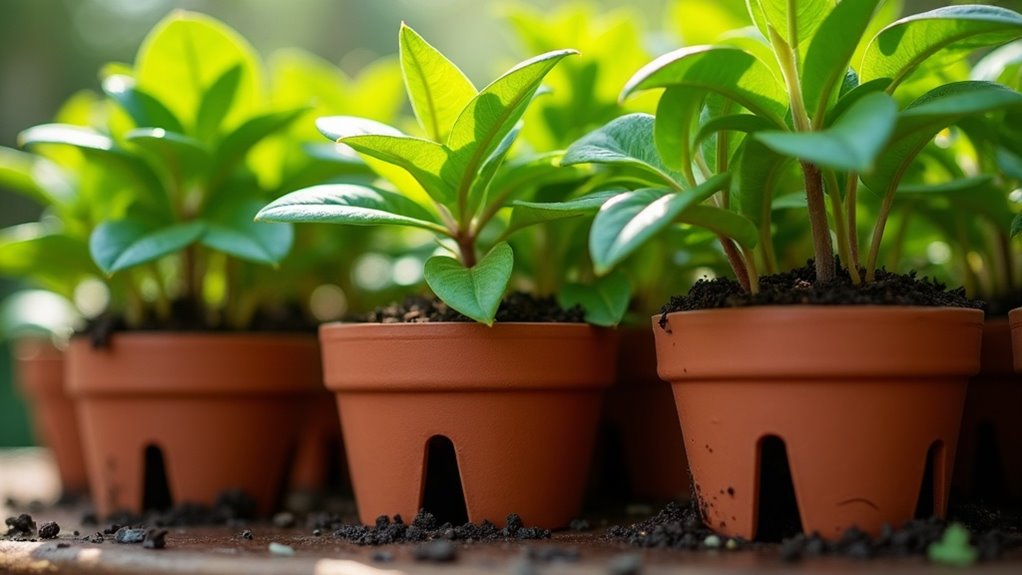
Yes, plants need drainage holes in containers to prevent excess moisture and root rot. Without them, roots struggle, leading to wilting, yellowing leaves, and stunted growth. Your plants thrive in well-drained soil that allows excess water to escape, maintaining ideal moisture levels. In non-draining pots, you’ll need to monitor moisture closely and consider using alternative methods like double potting or adding stones for better water management. You might discover more effective potting strategies and solutions for your plants.
Key Takeaways
- Drainage holes are essential to prevent excess water accumulation, reducing the risk of root rot.
- Healthy root systems require proper moisture levels, which drainage holes help maintain.
- Without drainage, plants risk overwatering, leading to symptoms like wilting and yellowing leaves.
- Non-draining pots necessitate careful moisture monitoring to avoid stagnant water and harmful pathogens.
- Selecting pots with drainage holes promotes overall plant health and simplifies care routines.
The Importance of Drainage Holes
When you choose a container for your plants, understanding the importance of drainage holes is essential, as they play a key role in maintaining healthy root systems.
Drainage holes prevent excess water accumulation, which is critical to avoid root rot. Without them, soil can become overly saturated, fostering harmful bacteria and pathogens like pythium and fusarium.
Many plant species thrive in pots with drainage holes, as these openings help maintain ideal moisture levels, promoting robust growth.
Additionally, using pots with drainage simplifies care, reducing the need for constant moisture monitoring and ultimately supporting healthier plants.
Consequences of No Drainage Holes
Without drainage holes, you risk severe root rot due to excess moisture accumulating at the bottom of the pot.
This stagnant water leads to challenges in moisture management, making it critical to monitor soil levels closely.
If left unchecked, the soggy conditions can promote harmful pathogens, threatening your plant’s overall health.
Root Rot Risks
Excess water in pots lacking drainage holes creates a perfect storm for root rot, a serious threat to plant health.
Without drainage holes, water accumulates, leading to excessively moist soil that encourages root rot and bacterial growth. Symptoms, including wilting, brown spots on leaves, and mushy roots, can ultimately result in plant death.
The absence of drainage holes fosters conditions for pathogenic fungi like pythium and fusarium, which thrive in wet environments.
Consequently, you must monitor moisture levels closely, as soggy soil can quickly cause severe consequences, including the die-off of entire leaves from root decay.
Moisture Management Challenges
While many gardeners may underestimate the importance of drainage, managing moisture in pots without drainage holes presents significant challenges.
Excess moisture accumulates, leading to overly saturated soil that fosters bacterial growth and promotes root rot. You might notice wilting and browning leaves, clear signs of distress due to root decay.
Mushy, darkened roots indicate severe moisture issues, which can be fatal if not addressed. To guarantee plant survival, you must closely monitor moisture levels, as overwatering can quickly lead to detrimental effects on root health.
Inconsistent watering practices become critical for effective moisture management in non-draining containers.
Benefits of Pots With Drainage Holes
Pots with drainage holes offer several advantages that greatly enhance plant health and care. They allow excess water to escape, preventing water accumulation that can lead to root rot and other issues.
This proper drainage helps maintain ideal moisture levels in the soil, essential for healthy plant roots and overall vitality. You’ll find that plants in pots with drainage holes require less frequent monitoring for moisture, simplifying your care routine.
Additionally, drainage holes improve air circulation within the soil, promoting beneficial microbial activity and markedly reducing the risk of diseases associated with overly moist conditions, such as fungal infections.
Alternative Potting Solutions
When considering alternative potting solutions, it’s essential to explore methods that effectively manage water drainage without compromising plant health.
One effective method is using non-draining pots with a layer of stones or pebbles at the bottom to manage excess water.
Double potting is another strategy; place an inner pot with drainage holes inside a decorative outer pot without holes for proper drainage.
If you opt for decorative pots, a saucer can catch excess water to prevent soil over-saturation.
Always monitor moisture levels closely, ensuring the soil remains adequately moist but not soggy to maintain healthy plants.
Common Practices Among Plant Owners
Understanding common practices among plant owners reveals a variety of approaches to guarantee ideal plant health. Many enthusiasts mix pot types, often placing nursery pots inside decorative ones to verify drainage. Some even drill holes in decorative pots for better moisture management. Light watering is common among those using non-draining pots, with an emphasis on monitoring moisture levels. Consistency in care plays a crucial role in maintaining potted plants across different pot types.
| Practice | Description | Benefits |
|---|---|---|
| Nursery pots | Used for drainage inside decorative pots | Confirms proper drainage |
| Drilling holes | Adapting decorative pots for drainage | Enhances plant health |
| Light watering | Minimizing water in non-draining pots | Prevents overwatering |
| Regular moisture checks | Consistent monitoring of soil moisture | Promotes plant vitality |
| Mixed pot types | Combining aesthetics with functionality | Balances visual appeal |
Recommendations for Potting
Choosing the right pot for your plants is key to promoting their health and growth. Always opt for pots with drainage holes to prevent excess water accumulation, which can lead to root rot.
Consider each plant’s specific needs regarding moisture preferences and root structure when selecting a pot. Regularly check moisture levels in pots without drainage holes, as they may create soggy soil conditions that harm your plants.
Use decorative pots solely as outer containers for nursery pots with drainage holes. Implement proper care techniques, adjusting watering frequency and monitoring soil moisture, particularly for plants in non-draining setups.
Community Insights and Tips
When selecting pots, consider your plant’s specific needs for drainage and water retention.
Many enthusiasts share effective watering techniques, such as adjusting frequency based on soil moisture levels, to prevent issues in non-draining pots.
Pot Selection Strategies
While selecting the right pot for your plants, it’s vital to take into account both aesthetics and functionality, especially regarding drainage.
Using a mix of pot types, such as nursery pots inside decorative containers, can improve drainage efficiency without sacrificing style.
If you prefer decorative pots without drainage holes, consider drilling your own to enhance moisture control. Light watering is important in these cases to prevent root rot.
Regularly check deeper soil levels, as community members emphasize this to assess moisture accurately.
Consistent care is key to ensuring your plant is ready for healthy growth, regardless of the pot type chosen.
Watering Techniques Shared
Understanding effective watering techniques is essential, especially for plants in pots without drainage holes.
Here are some community tips to enhance your approach:
- Use a moisture meter or soil probe to gauge moisture levels accurately.
- Water lightly to avoid excess buildup and root rot.
- Consider adding a layer of stones or pebbles at the bottom to improve drainage.
- Regularly check the top 2 inches of soil for dryness to inform your watering schedule.
Plant Care Experiences
How can you guarantee your plants thrive in pots without drainage holes?
Start by incorporating a layer of stones or pebbles at the bottom to enhance drainage and prevent root rot.
Regularly monitor moisture levels, as overwatering can lead to serious plant health issues.
Many enthusiasts find success using nursery pots inside decorative pots, allowing for improved drainage while maintaining aesthetics.
Adopt light watering practices to avoid soil saturation.
Ultimately, selecting the right pot type tailored to your plants’ specific needs is essential for effective plant care, ensuring their wellbeing and happiness in non-draining environments.





