
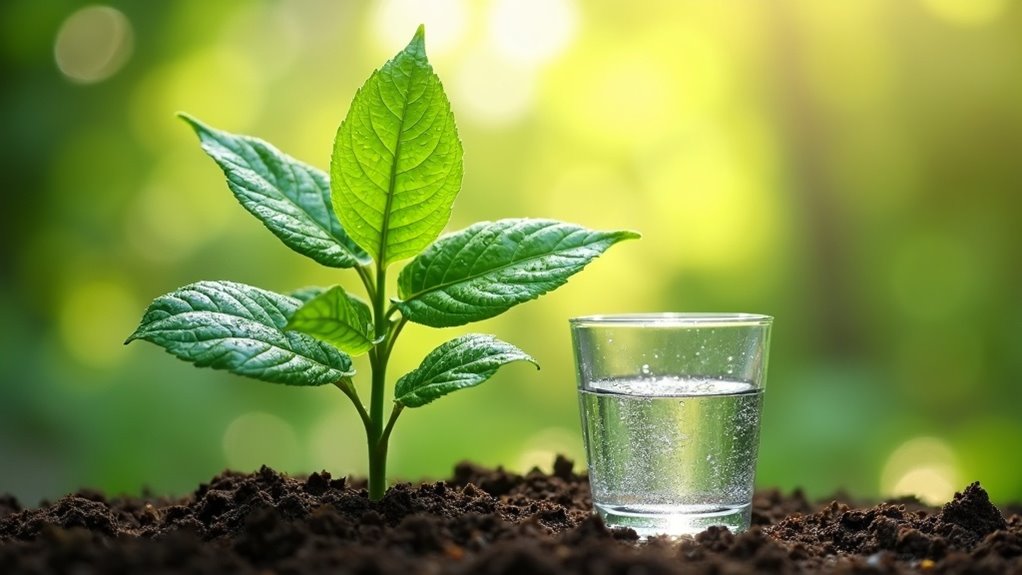
Plants do prefer rainwater over tap water due to its natural softness and slightly acidic pH, which enhances nutrient absorption. Rainwater contains higher nitrogen levels and fewer chemicals, promoting better growth and vibrant foliage. In contrast, tap water can lead to nutrient lockout and may stress sensitive plants due to its additives. By utilizing rainwater, you create a healthier growing environment that supports stronger roots and overall plant health—there’s so much more to discover about this practice.
Key Takeaways
- Rainwater is naturally soft and free from harmful chemicals, making it healthier for plants compared to alkaline tap water.
- The slightly acidic pH of rainwater enhances nutrient absorption, aiding robust plant growth and development.
- Rainwater’s higher nitrogen content promotes lush foliage and supports stronger root development in plants.
- Using rainwater helps flush out accumulated salts from the soil, improving its overall health and structure.
- Plants watered with rainwater often exhibit brighter foliage, more vibrant blooms, and greater resilience against diseases compared to those watered with tap water.
Benefits of Rainwater for Plants
When you consider the benefits of rainwater for your plants, it becomes clear that this natural resource offers several advantages over tap water.
Rainwater is naturally soft, free from the salts and chemicals often found in tap water, making it gentler on your plants. Its slightly acidic pH, typically between 5.5 and 6.5, enhances nutrient absorption, especially for organic plants.
Additionally, rainwater contains higher nitrogen levels in the form of nitrates and ammonium, essential for lush foliage. By collecting rainwater, you also help flush accumulated salts from the soil, improving overall soil health and creating a favorable growing environment.
Comparison With Tap Water
Although many gardeners rely on tap water for their plants, a closer examination reveals that rainwater often provides superior benefits. Plants love the slightly acidic nature of rainwater, which ranges from pH 5.5 to 6.5, unlike the alkaline tap water. Additionally, rainwater is rich in organic matter and beneficial nitrates, promoting healthier growth. Conversely, tap water may contain harmful chemicals that can damage sensitive species.
| Feature | Rainwater |
|---|---|
| pH Level | 5.5 – 6.5 |
| Chemical Additives | None |
| Oxygen Content | Higher |
Choosing rainwater can greatly enhance your plants’ health!
Nutrient Availability in Rainwater
When you compare rainwater to tap water, you’ll notice that rainwater offers a significant boost in nitrogen content, essential for healthy plant growth.
The slightly acidic pH of rainwater enhances the release of micronutrients like zinc and iron, which are often unavailable in alkaline soils.
This combination of factors creates a nutrient-rich environment that supports robust foliage development and efficient nutrient uptake.
Nitrogen Content Comparison
While both rainwater and tap water provide hydration for plants, the nitrogen content in rainwater greatly enhances its nutrient availability.
Rainwater typically contains higher levels of nitrogen in the form of nitrates and ammonium, which are essential for your plants’ foliage growth. This nitrogen is more bio-available, meaning your plants can absorb it more easily than the nitrogen in tap water.
Additionally, the slightly acidic pH of rainwater facilitates nutrient solubility, preventing harmful salt buildup that can occur with higher pH tap water. The organic matter in rainwater can further enrich nitrogen content, offering an ideal environment for thriving plants.
Micronutrient Release Dynamics
As rainwater falls, its naturally acidic pH of around 5.5 to 6.5 plays an essential role in dissolving and releasing important micronutrients from the soil.
This process enhances micronutrient release dynamics, allowing elements like zinc, manganese, and iron to become more bioavailable to your plants.
Additionally, rainwater contains nitrates, providing a readily available nitrogen source vital for growth.
It also leaches excess salts and minerals, reducing nutrient lockout risks.
The oxygen content in rainwater promotes root respiration, further supporting nutrient uptake.
Chemical Composition Differences
When you compare tap water to rainwater, the chemical composition reveals significant differences that affect plant health.
Tap water often includes harmful contaminants like chlorine and fluoride, which can stress sensitive plants, while rainwater provides essential nutrients like nitrogen in a more suitable pH range.
This distinction highlights why many plants thrive better with rainwater, as it fosters healthier soil and promotes ideal growth.
Tap Water Contaminants
Many gardeners overlook the significant impact that tap water contaminants can have on plant health.
Chlorine and fluoride, commonly found in tap water, can cause leaf burn and toxicity, while high pH levels, often exceeding 8.5, make it more alkaline than rainwater, which benefits most plants with its slightly acidic pH of 5.5 to 6.5.
Additionally, excessive calcium and magnesium contribute to hard water issues, negatively affecting soil structure. Sodium can further damage plant tissue and disrupt nutrient balance, reducing vigor.
In contrast, rainwater remains free from these harmful substances, making it a superior choice for irrigation.
Rainwater Nutrient Benefits
While tap water often carries a host of contaminants that can hinder plant growth, rainwater presents a natural solution rich in essential nutrients.
Rainwater’s low mineral concentration reduces soil salinity, promoting healthier growth. It’s high in nitrogen, available as nitrate and ammonium, essential for vibrant foliage.
The slightly acidic pH of rainwater enhances the release of micronutrients from the soil, making them more accessible for plants. Additionally, unlike tap water that may contain harmful chemicals like chlorine and fluoride, rainwater is pure, minimizing the risk of leaf damage.
Advantages of Rainwater for Houseplants
Rainwater offers several distinct advantages for houseplants that can greatly enhance their growth and health.
It’s naturally soft, free from salts and chemicals often found in tap water, making it gentler on your plants. The slightly acidic pH of rainwater, around 5.5 to 6.5, optimizes nutrient uptake, promoting healthier growth.
Rainwater is soft and slightly acidic, enhancing nutrient uptake and supporting healthier plant growth.
Additionally, rainwater contains higher nitrogen levels, which support vibrant foliage and overall health. By using rainwater, you can also flush out accumulated salts and chemicals in the soil, rejuvenating the growing medium.
Plus, collecting rainwater is a cost-effective solution, reducing your water bills while providing excellent hydration.
Disadvantages of Rainwater
Using rainwater for houseplants has its appeal, but it’s not without potential drawbacks. One significant concern is contamination; if your harvesting system isn’t well-maintained, harmful substances like zinc, copper, and lead can seep into the water.
Additionally, certain plastics used in storage can leach chemicals, compromising water safety. You also have to take into account salts that may accumulate in the soil, affecting plant health.
For leafy edible plants, using rainwater is discouraged due to health risks from contaminants.
Finally, in areas with inconsistent rainfall, relying solely on rainwater can lead to water shortages, impacting your plants’ growth.
Tips for Collecting Rainwater
To maximize the effectiveness of your rainwater collection, position your buckets in open areas that receive full exposure to rainfall, steering clear of shaded locations that could hinder collection efficiency.
Guarantee all containers are clean to maintain the water quality for your plants. Use lids or covers to prevent debris accumulation and minimize mosquito breeding in stagnant rainwater.
Monitor local rainfall patterns to determine ideal collection times, guaranteeing enough water is available for your plants between rain events.
Consider incorporating a first-flush diverter to discard initial runoff, which may contain harmful roof debris and pollutants, before collecting cleaner water.
Community Engagement and Experiences
As gardeners harness the benefits of collecting rainwater, many are enthusiastic to share their experiences and insights within their communities. They often highlight the love they’ve for their plants, noting distinctive improvements after switching from tap water.
Key observations include:
- Enhanced plant health and growth rates.
- Brighter foliage and more vibrant blooms.
- Increased community engagement in sustainable practices.
These shared testimonies spark curiosity and encourage knowledge exchange among gardening enthusiasts, fostering a collective understanding of the advantages of rainwater.
As conversations flourish on social media, more gardeners are inspired to embrace this natural resource for their plants.





