
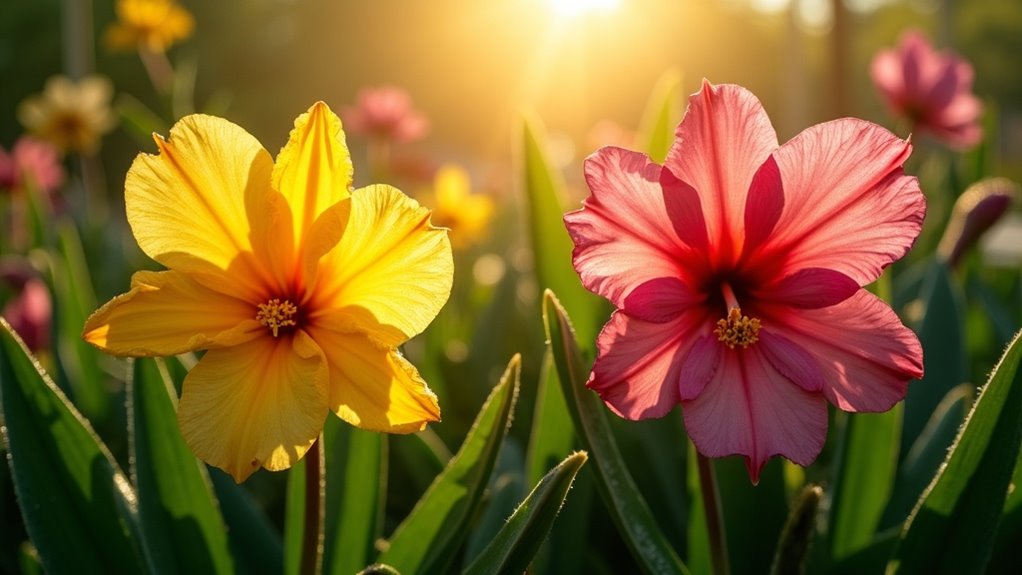
Yes, plant lighting duration greatly affects blooming cycles. Short-day plants need extended darkness, while long-day plants require longer light exposure to flower effectively. Ideally, flowering plants thrive with 12-16 hours of light daily, balanced with adequate darkness. Insufficient or excessive light can suppress blooming, causing leggy growth or poor flower development. Monitoring light duration and quality is essential for best results. Discovering the specific needs of your plants can greatly enhance your gardening success.
Key Takeaways
- Plant lighting duration directly affects blooming cycles, with most flowering plants needing 12-16 hours of light daily.
- Long-day plants require at least 8 hours of darkness to bloom effectively.
- Insufficient light can inhibit flowering in long-day plants, while excessive light can cause stress and impede growth.
- Adequate light intensity and quality are crucial for robust growth and vibrant blooms.
- Monitoring and adjusting light duration can significantly enhance plant health and blooming potential.
Understanding Photoperiodism and Its Importance
Understanding photoperiodism is essential for optimizing plant growth and blooming, especially since this physiological response to day length directly influences flowering cycles.
Plants need specific light durations to thrive; short-day plants (SDPs) require extended darkness periods to flower, while long-day plants (LDPs) bloom with increased light exposure.
The conversion of phytochromes plays a significant role in this process, affecting the timing of flowering.
By manipulating light duration in controlled environments, you can enhance the blooming cycle of various plants, ultimately boosting crop yields.
Awareness of these dynamics enables you to maximize both productivity and the health of your plants.
Ideal Light Duration for Blooming Plants
How can you guarantee your blooming plants thrive? Understanding their light duration is vital. Most flowering plants need 12-16 hours of light per day to flourish.
Long-day plants like tomatoes and basil require shorter periods of darkness—at least 8 hours—to encourage blooming. In contrast, short-day plants such as strawberries benefit from extended darkness, making the balance of light and dark essential for their flowering cycle.
Be mindful, though, as excessive light beyond 16 hours can stress plants and impede growth. Tailoring light duration to meet specific light needs enhances overall health and blooming potential, ensuring your plants thrive.
Effects of Insufficient and Excessive Light Exposure
Balancing light exposure is key to ensuring your blooming plants thrive. Insufficient light can inhibit flowering in long-day plants, stunting their growth and delaying blooms. These plants need over 11 hours of light to flourish.
Conversely, excessive light exposure, particularly beyond 14-16 hours daily, stresses plants, causing pale leaves and leggy growth. Continuous light disrupts essential dark periods, as at least 8 hours of darkness is fundamental for promoting healthy bloom cycles.
Properly monitoring light duration and intensity is critical; both insufficient and excessive exposure can adversely affect your plants’ flowering, productivity, and overall aesthetic quality.
The Role of Light Intensity and Quality
While many gardeners focus on the amount of light their blooming plants receive, the intensity and quality of that light are just as important for successful flowering.
Light intensity greatly influences the flowering process; higher intensity fosters robust growth and vibrant colors, while insufficient intensity can result in spindly plants and reduced blooms.
Adequate red light is essential for triggering flowering responses, and it’s imperative to balance this with blue light. Full-spectrum lights are recommended to provide both wavelengths.
Careful management of light intensity prevents issues like light burn, ensuring ideal conditions for healthy blooming plants throughout their cycle.
Practical Applications for Indoor Gardening Success
Understanding the interplay between light intensity and quality sets the stage for optimizing your indoor gardening practices.
For successful flowering and fruiting, make certain your indoor plants receive 12-16 hours of light per day, complemented by at least 8 hours of darkness. Long-day plants, like basil and tomatoes, thrive with shorter darkness periods.
Utilize smart timers to automate and maintain consistent lighting schedules that mimic natural photoperiods throughout the year. Regularly monitor the amount of sunlight your plants receive, adjusting the hours as necessary.
This balance will prevent leggy growth and enhance blooming, ultimately promoting healthier yields in your indoor garden.





