
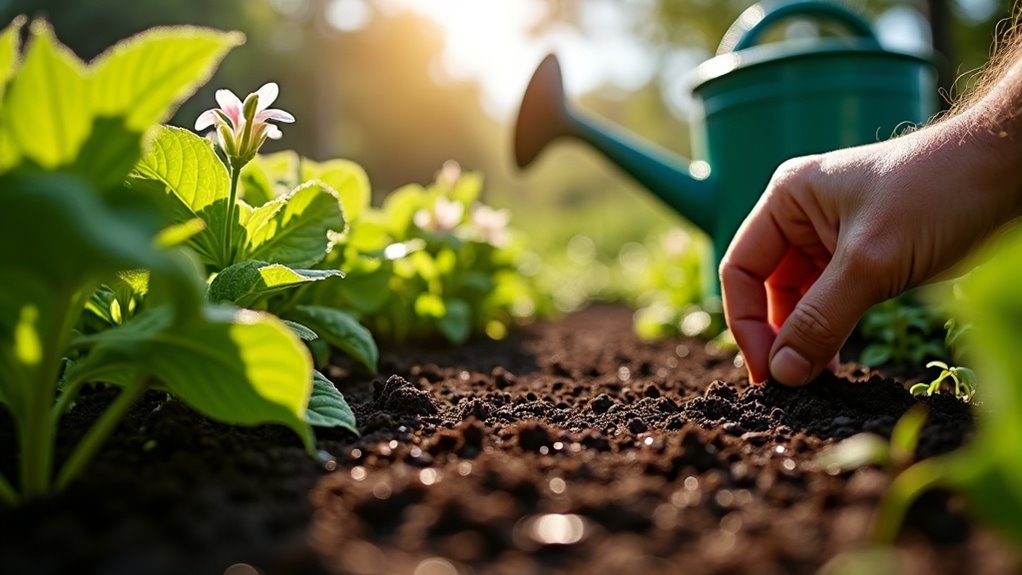
Yes, plant mulching can greatly reduce your watering needs by up to two-thirds. It creates a barrier that minimizes evaporation, retaining moisture in the soil. With organic mulch, you’ll find that your soil can lose about 58.8% less moisture compared to bare soil. This means you’ll water less frequently, saving both water and money. You can discover more about the types of mulch and effective techniques to maximize these benefits.
Key Takeaways
- Mulching can reduce watering needs by up to two-thirds during peak growing seasons.
- Mulched soil loses 58.8% less moisture compared to bare soil, enhancing moisture retention.
- Applying a mulch layer of 2-4 inches minimizes evaporation and supports healthy plant growth.
- Regularly refreshing organic mulch annually ensures continued effectiveness in moisture conservation.
- Properly mulched gardens can shift watering frequency from daily to every 3-4 days, saving water.
Understanding the Benefits of Mulching for Water Conservation
When you mulch your garden, you greatly enhance water conservation efforts. Proper mulching can reduce your watering needs by up to two-thirds, especially during peak growing seasons.
By applying organic mulch at a depth of 2-4 inches, you create a barrier that minimizes evaporation, allowing your soil moisture levels to remain consistent. Studies show that mulched soil can lose up to 58.8% less moisture, markedly improving water conservation.
Additionally, as organic mulches break down, they enhance soil structure, further supporting healthier plants while maintaining adequate soil moisture.
Types of Mulch That Enhance Moisture Retention
Selecting the right type of mulch is essential for enhancing moisture retention in your garden. Here are three effective organic mulches that can help reduce your watering needs:
- Straw: Applied in layers of at least 2 inches, it minimizes soil splash and disease risk while breaking down to improve soil health.
- Compost: This enriches the soil with nutrients and aids moisture retention, perfect for growing plants.
- Bark Chippings: Lasting up to two years, they consistently support moisture retention for perennials.
Using these organic mulches can greatly reduce soil moisture evaporation and guarantee your plants thrive.
Application Techniques for Effective Mulching
To achieve effective mulching, it’s crucial to apply the right techniques that maximize moisture retention and support plant health.
Start by laying a mulch layer of 2-4 inches, keeping it away from plant stems to prevent rot and pests. Use organic materials like straw or wood chips, which enrich the soil as they decompose, enhancing moisture retention.
Before applying mulch, water the soil thoroughly to lock in moisture. Refresh organic mulches annually, typically in spring, to maintain their effectiveness.
Avoid exceeding 4 inches to prevent drainage issues, ensuring water penetrates the soil below efficiently.
Common Mistakes to Avoid When Mulching
Applying effective mulching techniques can greatly enhance plant health, but it’s just as important to recognize common mistakes that can undermine those benefits.
Here are three essential errors to avoid:
- Over-mulching: Apply no more than 2-4 inches of mulch, as excess can suffocate roots and cause moisture loss.
- Ignoring gaps: Maintain a 1-2 inch space between mulch and plant stems to prevent rot and pests.
- Using grass clippings improperly: Avoid thick layers without mixing; they can mat down and repel water.
Real-World Impact of Mulching on Water Usage
While many gardeners focus on aesthetics and soil health when mulching, the real-world impact on water usage is equally significant. Mulches can reduce watering needs by up to two-thirds, leading to fewer irrigation sessions. In fact, mulched soil can lose 58.8% less moisture compared to bare soil. This translates to watering every 3 to 4 days instead of daily, resulting in substantial water savings and lower bills.
| Benefit | Impact |
|---|---|
| Water Loss | Up to 58.8% reduction |
| Evaporation | 33% less from soil |
| Watering Frequency | Every 3-4 days |
| Monthly Savings | $30 to $200 |
| Efficiency | Significant moisture retention |





