
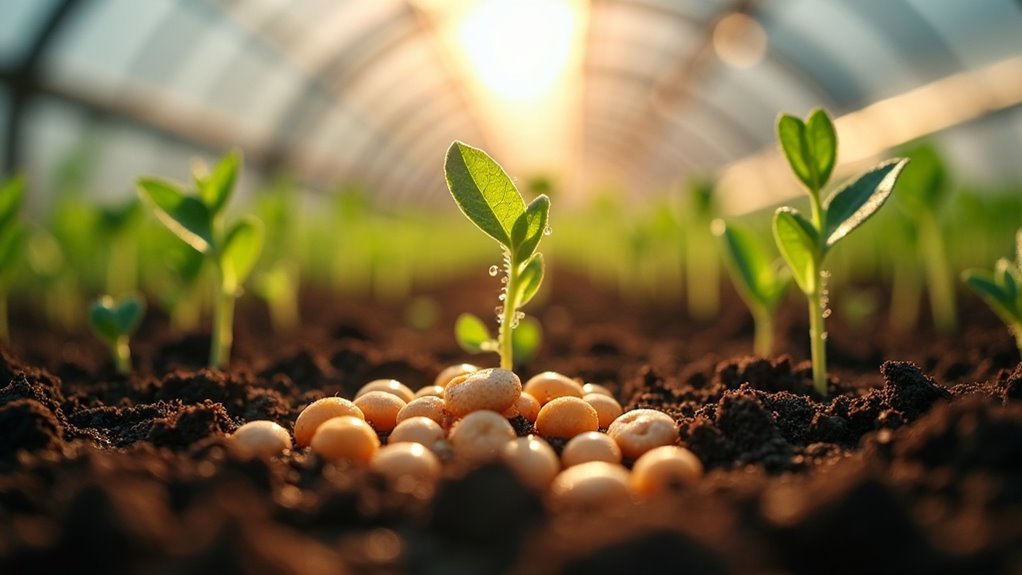
Yes, plant temperature greatly affects seed germination rates. Ideal soil temperatures encourage biochemical and physiological processes necessary for germination. Warm-season crops thrive at 70-80°F, while cool-season varieties prefer lower temperatures. When temperatures drop below perfect ranges, germination slows, increasing the risk of damping off and depleting seed carbohydrates. Using techniques like heating mats and plastic mulching can help maintain perfect temperatures. Exploring specific temperature needs for various crops can enhance your germination success.
Key Takeaways
- Temperature significantly influences biochemical and physiological seed processes, directly affecting germination rates.
- Warm-season crops germinate best at 70-80 °F, while cool-season crops prefer lower temperatures.
- Suboptimal temperatures can slow germination, increase damping off risks, and deplete stored carbohydrates.
- Ideal soil temperatures for maximum germination range from 29–36 °C, with slight cooling for emergence.
- Monitoring and managing soil temperature with techniques like heating mats can optimize germination conditions.
The Role of Temperature in Seed Germination
When you consider the factors influencing seed germination, temperature emerges as a critical component that directly affects the biochemical and physiological processes involved.
Each seed species has a preferred germination temperature; for warm-season vegetable crops, this typically ranges from 70-80 °F, while cool-season crops germinate at lower temperatures.
Maximum germination rates occur at soil temperatures between 29–36 °C, with ideal emergence slightly cooler at 25–31 °C.
Suboptimal temperatures can lead to slower germination, increasing susceptibility to damping off and depleting stored carbohydrates.
Utilizing heating mats or monitoring soil temperature can greatly enhance germination rates and seedling viability.
Impact of Suboptimal Temperatures on Germination Rates
Suboptimal temperatures can considerably hinder seed germination rates, leading to a cascade of negative effects on plant development. When temperatures deviate from the ideal range, seeds may experience slower emergence, risking seedling failure and increasing vulnerability to damping off diseases. Prolonged exposure to these suboptimal temperatures can deplete stored carbohydrates, restricting growth potential.
| Temperature Range | Germination Rate | Risks |
|---|---|---|
| Below Ideal | Decreased | Damping off |
| Ideal | Highest | Strong seedlings |
| Above Ideal | Variable | Reduced viability |
| Prolonged Cold | Very Low | Seed rot |
| Fluctuating | Unpredictable | Weak growth |
Soil Temperature Management Techniques
Maintaining ideal soil temperatures is essential for enhancing seed germination rates, especially after understanding the detrimental effects less-than-ideal temperatures can have on plant development.
Ideal soil temperatures are crucial for boosting seed germination and preventing negative impacts on plant growth.
To achieve optimal temperature conditions, consider these techniques:
- Utilize heat mats to raise soil temperature in seed starting setups, promoting quicker germination.
- Implement plastic mulching to retain heat and moisture, creating favorable germination conditions.
- Regularly monitor soil temperature using thermometers or thermocouples, ensuring consistent and favorable conditions for seed germination.
Specific Temperature Requirements for Different Crops
Understanding the specific temperature requirements for different crops is essential for maximizing seed germination and ensuring healthy plant development.
Different varieties have unique ideal temperatures; warm season vegetables like watermelon thrive at 30°C (86°F) for full germination, while cool season crops, such as onions, can germinate successfully at temperatures as low as 32°F.
Cole crops like cabbage and broccoli prefer warmer germination temperatures but benefit from cooler growth conditions to avoid bolting.
Importance of Monitoring Temperature for Successful Germination
Monitoring soil temperature is vital for ensuring successful seed germination, as it directly influences germination rates and seedling health. Each seed species thrives within a specific ideal temperature range, making awareness essential.
Monitoring soil temperature is crucial for seed germination success, as it affects germination rates and the health of seedlings.
Here’s why you should monitor soil temperature:
- Use a soil thermometer for accurate readings to plan sowing times effectively.
- Understand that cooler temperatures can delay germination and increase seedling failure risk.
- Leverage heating mats to maintain ideal temperature for indoor or controlled environments.





