
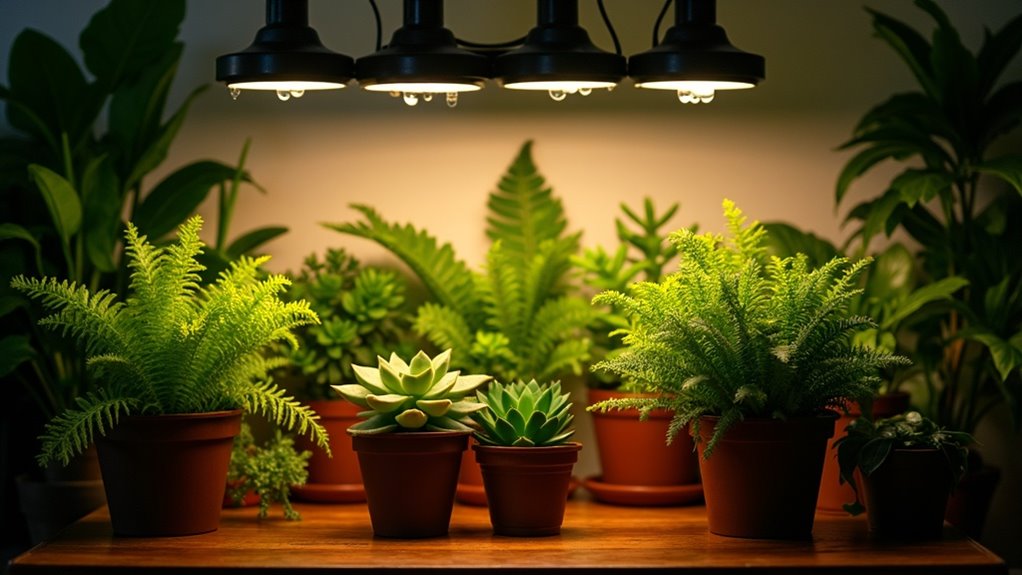
To use grow lights effectively for your indoor plants, first choose the right type—LEDs are energy-efficient and offer a full spectrum. Position the lights above your plants, maintaining specific heights based on the light type to avoid burning. Aim for 12-16 hours of light daily with a timer, ensuring 8 hours of darkness. Monitor your plants for signs of over or under-lighting and adjust accordingly. There’s more to know about optimizing light conditions and placement.
Key Takeaways
- Choose LED grow lights for energy efficiency, minimal heat, and full-spectrum support for various plant needs.
- Position grow lights 12-36 inches above plants, adjusting height as they grow to prevent leaf burn.
- Set a timer for 12-16 hours of light daily, ensuring 8 hours of darkness for optimal plant growth.
- Regularly clean light fixtures and replace bulbs to maintain brightness and effectiveness.
- Monitor plant responses to light, adjusting exposure based on signs of deficiency or excess, like yellowing or scorched leaves.
Understanding Grow Lights and Their Importance
When you grow indoor plants, understanding grow lights is vital for their health and vigor. These artificial light sources mimic natural sunlight, providing the necessary light spectrum for photosynthesis.
LED grow lights, especially full-spectrum ones, are the most efficient choice, offering ideal light intensity for various plants. Indoor plants typically need about 12-16 hours of light daily, making grow lights essential in low-light environments.
Proper placement, 12-36 inches above plants, guarantees even distribution and prevents leaf burn. By integrating grow lights into your routine, you can maintain a thriving indoor garden year-round, compensating for insufficient natural sunlight.
Types of Grow Lights Available
Selecting the right type of grow light can greatly impact your indoor gardening success. Here are the four main types available, each catering to specific plant light requirements:
Choosing the right grow light is crucial for thriving indoor gardens, tailored to meet your plants’ unique light needs.
- LED: Energy-efficient, full spectrum, minimal heat.
- Fluorescent: Budget-friendly, effective for seedlings, higher heat output.
- Incandescent: Cheapest option, primarily red light, least efficient.
- High-Intensity Discharge (HID): High light output, suited for larger setups, generates significant heat.
Understanding these types will help you choose the best option for your plants, ensuring they receive the proper light spectrum for healthy growth.
Evaluating the Best Grow Light for Your Needs
How can you determine the best grow light for your indoor plants? Start by prioritizing LED lights for their energy efficiency and long lifespan. Assess the light spectrum needs; blue promotes growth, while red aids flowering. Full-spectrum lights provide a balanced option. Evaluate light intensity through photosynthetic photon flux, ensuring it matches your plant types.
| Light Type | Recommended Distance | Light Output |
|---|---|---|
| LED | 6 inches | High |
| Fluorescent | 12 inches | Moderate |
| Incandescent | 24 inches | Low |
Automate light schedules for ideal growth.
Proper Placement of Grow Lights
To enhance your plants’ growth, position your grow lights directly above them for even light distribution.
Follow specific height recommendations—24 inches for incandescent, 12 inches for fluorescent, and 6 inches for LED—to prevent heat stress and guarantee effective light intensity.
As your plants grow, adjust the height of the lights accordingly to maintain ideal conditions and prevent burning.
Light Height Recommendations
Proper placement of grow lights is crucial for the health of your indoor plants, and different types of lights require specific heights for best performance.
Here are the light height recommendations:
- Incandescent grow lights: Position 24 inches above to prevent burning.
- Fluorescent lights: Place 12 inches above for ideal exposure.
- LED grow lights: Keep about 6 inches away for intense light with minimal heat.
Regularly adjust the height as plants grow for ideal light coverage.
Monitor plants for signs of burning or insufficient light to avoid light stress.
Stay proactive to guarantee your indoor garden thrives!
Even Light Distribution
Achieving even light distribution is essential for the healthy growth of your indoor plants. Position grow lights directly above the plants to mimic natural sunlight, ensuring all foliage receives adequate light exposure.
For best results, maintain a distance of 24 inches for incandescent lights, 12 inches for fluorescent, and as close as 6 inches for LED lights. As your plants grow taller, adjust the height of the lights to sustain consistent coverage.
Monitor plant responses, such as leaf curling or stretching, and use reflective materials around your setup to enhance light distribution, ensuring every part of your plants thrives.
Adjusting for Growth
How do you guarantee your grow lights keep up with your plants’ growth? Adjusting for growth is essential for maintaining ideal light conditions. Keep these points in mind:
- Position lights directly above your plants for even coverage.
- Maintain distances: incandescent bulbs 24 inches, fluorescent 12 inches, LED as close as 6 inches.
- Rotate plants regularly to prevent leggy growth.
- Monitor for signs of stress like yellowing leaves.
- Ascertain 12-16 hours of light daily, based on the types of light your plants require.
Determining Light Duration for Optimal Growth
To guarantee ideal growth, most indoor plants need 12 to 16 hours of light each day, while some flowering plants may require even more.
It’s essential to adjust light duration based on the specific needs of your plants, keeping in mind that they also need at least 8 hours of darkness for recovery.
Recommended Light Hours
While many houseplants thrive with 12 to 16 hours of light daily, understanding the specific light requirements for your plants is vital for their growth.
Here are key points to reflect on for recommended light hours:
- Most flowering plants and vegetables need 12 to 16 hours of light exposure.
- Seedlings should ideally receive 16 hours daily to prevent leggy growth.
- A minimum of 8 hours of darkness for energy breakdown is essential.
- Long-day plants flourish with extended light periods.
- Automate light schedules using timers to guarantee consistent exposure and avoid forgetting.
Adjusting light duration may be necessary based on your plants’ specific needs.
Adjusting Based on Plants
Understanding the specific light requirements of your plants is essential for their ideal growth, as different species have varying needs. Most houseplants thrive with 12-16 hours of light per day, while low-light plants need less. Use automated timers to maintain consistent light duration, ensuring at least 8 hours of darkness to prevent light stress. Regularly monitor your plants’ responses, adjusting as necessary to avoid leggy growth.
| Plant Type | Light Duration |
|---|---|
| Low-Light Plants | 8-10 hours |
| Medium-Light Plants | 10-12 hours |
| High-Light Plants | 12-16 hours |
Tips for Effective Use of Grow Lights
Effective use of grow lights can greatly enhance your indoor gardening experience. To maximize light energy for vegetative growth, consider these tips:
Maximize your indoor gardening success with effective grow light techniques for optimal vegetative growth.
- Position grow lights 12-36 inches above plants, adjusting for growth stages.
- Use timers for 12-16 hours of light daily, ensuring 8 hours of darkness.
- Monitor plant responses; look for leggy growth or yellowing leaves as signs of insufficient light.
- Rotate plants regularly for even light exposure.
- Clean light bulbs frequently to maintain brightness and efficiency.
Monitoring Plant Health and Adjusting Light Conditions
Monitoring your plants’ health is essential for adjusting light conditions effectively. Regularly check leaves for stress signs like browning or yellowing, indicating light exposure issues.
Maintain incandescent lights 24 inches above plants, while LEDs can be positioned just 6 inches away for peak efficiency. Aim for light duration of 12-16 hours daily, ensuring at least 8 hours of darkness for energy breakdown.
Use a timer to enforce consistent light schedules, preventing disruptions in plant growth. Observe growth patterns: leggy plants may need more light, while scorched leaves signal excessive exposure.
Adjust light conditions based on these observations for healthier plants.





