
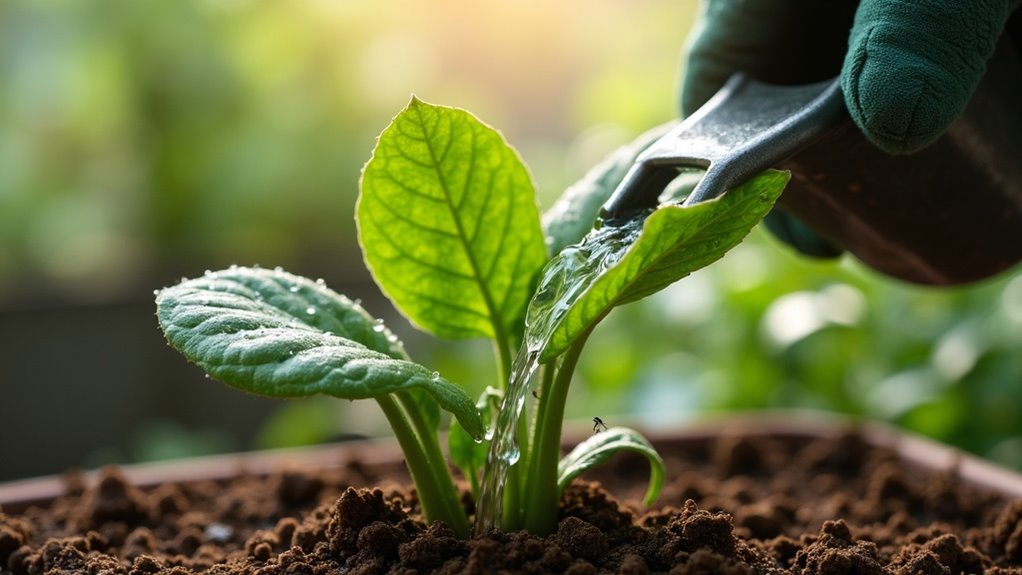
To water plants affected by fungus gnats safely, let the top 1.5 inches of soil dry out between waterings. Use bottom watering methods to keep the surface dry, preventing further infestations. You can also mix hydrogen peroxide with water to eliminate larvae in the soil. Regularly check for standing water in trays and maintain a consistent watering routine to reduce excess moisture. For more practical tips on managing these pests, continue exploring effective treatments and prevention methods.
Key Takeaways
- Allow the top 1.5 inches of soil to dry out completely between waterings to prevent overwatering.
- Use bottom watering techniques to keep the surface layer dry and discourage gnats.
- Regularly check soil moisture to maintain a consistent watering schedule.
- Apply a hydrogen peroxide and water mixture to eliminate larvae while watering.
- Remove standing water from trays under pots to eliminate potential breeding grounds.
Understanding Fungus Gnats and Their Impact on Plants
Although you may not notice them at first, fungus gnats can considerably impact your plants’ health.
These tiny black flies thrive in moist conditions created by overwatering, allowing their larvae to damage roots and stunt growth in seedlings.
The adult gnats, resembling small mosquitoes, are often a nuisance indoors, drawn to carbon dioxide from your breath.
Their larvae, white and translucent with black heads, focus on the top few centimeters of soil.
Infestations can linger, as gnat eggs remain dormant in the soil.
Early detection and treatment are essential to protect your plants from these detrimental pests.
Best Practices for Watering Affected Plants
To effectively care for plants affected by fungus gnats, it’s essential to adopt a watering strategy that minimizes moisture at the soil surface.
Allow the top 1.5 inches of soil to dry out between waterings, and use bottom watering techniques to keep the top layer dry. This helps control fungus gnats by disrupting their lifecycle.
Allowing the top 1.5 inches of soil to dry out disrupts fungus gnats’ lifecycle and helps manage their population.
When you water as usual, consider a mixture of hydrogen peroxide and water to eliminate larvae and eggs.
Regularly monitor your watering schedule to prevent overwatering, which can lead to root rot and further attract gnats.
Consistency is key in managing infestations.
Effective Treatments to Manage Fungus Gnats
Managing fungus gnats requires a multifaceted approach that targets both their larvae and adult populations.
To effectively tackle your gnat problem, consider these treatments:
- Use sticky traps to catch adult gnats.
- Apply Bacillus thuringiensis israelensis (BTI) or mosquito bits to the soil to disrupt larvae.
- Set up apple cider vinegar traps to reduce the breeding population.
- Sprinkle diatomaceous earth (DE) on the soil surface to damage larvae while keeping the soil dry.
Consistently monitor and treat for one to two months to break the lifecycle, ensuring your plants thrive without the nuisance of these pests.
Preventing Future Infestations
After you’ve tackled the immediate issue of fungus gnats, it’s important to implement preventive measures to keep them from returning.
Allow the top 1.5 inches of soil to dry out between waterings; this reduces moisture that attracts gnats. Use bottom watering techniques to hydrate your plants without wetting the surface.
Regularly remove any standing water from trays under your pots to eliminate breeding grounds. Additionally, add a layer of food-grade diatomaceous earth on top of the soil, creating a barrier against adult gnats.
Finally, isolate new plants for at least two weeks before introducing them to your collection.
Monitoring and Maintenance for Long-Term Control
While you’ve taken steps to eliminate fungus gnats, ongoing monitoring and maintenance are essential for long-term control.
Follow these practical steps to keep your plants healthy:
- Regularly check soil moisture; let it dry out 1.5 inches deep between waterings.
- Use potato slices to monitor larvae presence, replacing them every 4-8 hours.
- Maintain a consistent watering schedule to prevent excess moisture.
- Implement a combination of treatments, adjusting based on effectiveness.
Stay vigilant for new signs of gnats or larvae.





