
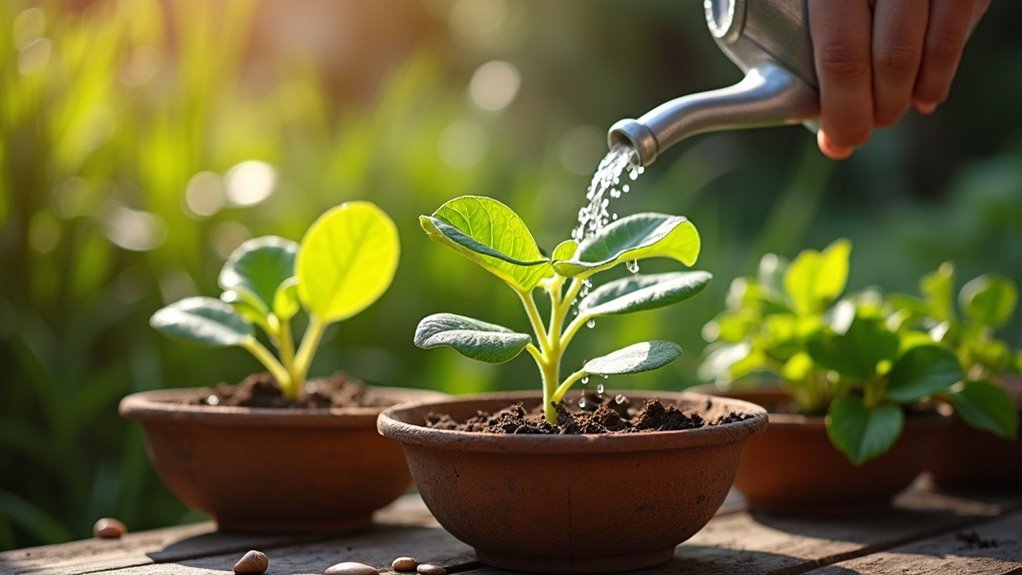
After repotting, water your plants immediately to help settle the soil around the roots and prevent transplant shock. Use room temperature water, ensuring it drains from the bottom without waterlogging the soil. Monitor the top inch of soil; water again only when it feels dry. Watch for signs of overwatering or underwatering, like yellowing or wilting leaves. Consistent moisture is key to recovery, and there’s more to explore on fine-tuning your watering routine.
Key Takeaways
- Water thoroughly immediately after repotting to settle the soil around the roots and ensure moisture retention.
- Use room temperature water to prevent shocking the plant during the initial watering.
- Ensure excess water drains from the bottom to avoid creating a waterlogged environment.
- Monitor the top inch of soil and only water again once it feels dry to maintain consistent moisture.
- Consider using diluted liquid fertilizer after a week to support the plant’s recovery and growth.
Importance of Watering After Repotting
When you repot a plant, watering it immediately becomes essential, as this action helps settle the soil around the roots and guarantees they receive the moisture necessary for healing and adaptation.
Thoroughly watering plants post-repotting hydrates the entire root ball, preventing dehydration and minimizing transplant shock. However, be cautious of overwatering; the soil should remain moist but not waterlogged to avoid root rot.
Consistent moisture levels are critical for root establishment and recovery, so wait until the top inch of soil dries out before your next watering, typically allowing for once-a-week intervals to promote healthy growth.
Best Practices for Initial Watering
To guarantee successful recovery after repotting, it’s essential to water your plant thoroughly right away. This initial watering helps settle the soil around the roots and provides necessary hydration.
Thoroughly water your plant immediately after repotting to ensure proper soil settling and hydration.
Follow these best practices:
- Use room temperature water to avoid shocking your plant.
- Ascertain water drains from the bottom to prevent waterlogging.
- Only water again when the top inch of soil feels dry.
- Consider a diluted liquid fertilizer after a week to supply additional water and nutrients.
- Monitor your plant’s recovery to minimize transplant shock and promote actively growing conditions.
Monitoring Soil Moisture Levels
How can you guarantee your plant remains adequately hydrated after repotting? Start by monitoring soil moisture levels closely. Check the top inch of soil; if it feels dry, it’s time to water.
To assure accurate readings, make certain to use a moisture meter. When you water plants, do so thoroughly until it drains from the bottom, allowing moisture to reach all exposed roots.
For the first couple of weeks post-repotting, monitor daily since the risk of shock is highest. Adjust your watering schedule based on environmental factors like humidity and temperature, as these greatly influence soil drying rates.
Signs of Overwatering and Underwatering
Monitoring soil moisture levels closely is essential, but recognizing the signs of overwatering and underwatering is equally important for your plant’s health after repotting.
Look out for these symptoms:
- Yellowing or browning leaves (leaf scorch) from overwatering
- Wilting, dry, crispy leaves indicating underwatering
- Soil pulling away from pot edges, a sign of underwatering
- Dropping leaves, common in both conditions
- Darkened, mushy roots from overwatering
Long-term Watering Strategies for Recovery
As your plant begins to recover from repotting, implementing effective long-term watering strategies is essential for its ongoing health. Water thoroughly to guarantee even moisture, but allow the top inch of soil to dry before rewatering. This prevents root disturbance and root rot. Monitor hydration closely, adjusting your schedule based on the moisture level specific to your plant species. Use room temperature water to avoid shocking the roots. Once you see new growth, gradually taper off the watering frequency.
| Action | Timing | Purpose |
|---|---|---|
| Water thoroughly | Immediately after | Settle soil around roots |
| Allow to dry | 1 inch dry | Prevent root rot |
| Monitor hydration | Weekly | Adjust based on plant needs |
| Use room temperature | Always | Avoid root shock |
| Taper off watering | Upon new growth | Support adaptation |





