
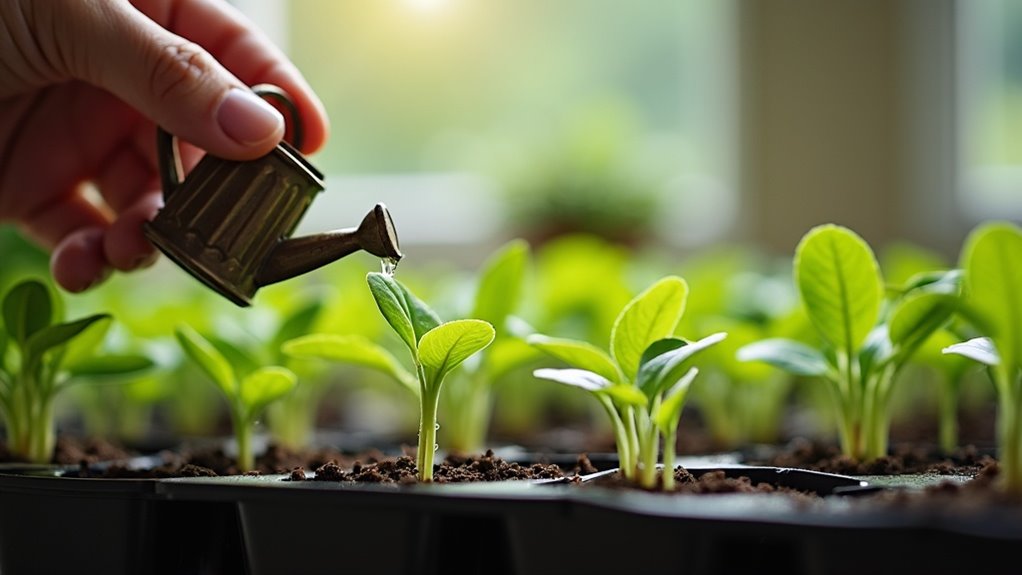
To water seedlings effectively, use gentle methods to avoid disturbing roots. You can water from above with a mister or below by placing trays in water to allow capillary action. Monitor moisture daily, ensuring the top layer dries slightly to prevent mold. Judging moisture levels by the weight of the trays can help. Fertilize seedlings after 10-14 days with diluted solutions. This balance promotes healthy growth, and there’s more to discover about nurturing your plants.
Key Takeaways
- Water seedlings gently from above using a mister or spray bottle to avoid disturbing fragile plants and roots.
- Utilize bottom watering by placing trays in shallow water to draw moisture up through the soil without disturbing roots.
- Monitor water levels daily; keep about 1/2 inch of water in the bottom tray to ensure optimal hydration without stagnation.
- Allow the top layer of soil to dry slightly to prevent mold growth and encourage deeper root development.
- Wait 10-14 days post-germination to fertilize seedlings, using diluted water-soluble fertilizer every second or third watering for balanced growth.
Watering Seedlings From Above
When you water seedlings from above, it’s essential to do so gently to avoid disturbing the fragile plants and their roots. Use a mister or a gentle spray bottle, especially for smaller seeds in your seed starting mix.
Before germination, mist the surface to provide moisture without causing over-watering or displacing seeds. Once seedlings sprout, continue this gentle approach to protect their delicate structure.
Check your seedlings twice daily during germination, and consider a humidity dome for moisture retention. Avoid using watering cans or hoses, as their force can disrupt your seedlings’ placement and create uneven moisture levels.
Watering Seedlings From Below
Watering seedlings from below takes advantage of capillary action, allowing moisture to be drawn up through the soil without disturbing fragile roots.
Using a seed starter kit with a pre-moistened mix enhances this process, ensuring your seedlings get the hydration they need.
Remember to monitor water levels daily to prevent overfilling, which can lead to stagnant conditions harmful to your plants.
Capillary Action Explained
Understanding capillary action is essential for effectively watering seedlings from below, as it allows moisture to naturally wick up from the soil’s base to maintain even hydration.
By placing a seedling tray in a larger tray filled with water, you enable the soil to absorb moisture through its drainage holes. Starting with pre-moistened seed starting mix enhances capillary action, ensuring your seeds are well-hydrated.
Monitor water levels daily, keeping about 1/2 inch of water in the bottom tray. This method helps develop strong root systems while preventing the risks of overwatering or drying out, promoting healthier seedlings.
Seed Starter Kit Benefits
Using a seed starter kit offers a range of benefits, especially when it comes to watering seedlings from below. This method uses capillary action to deliver moisture directly to the roots, preventing seed displacement and overwatering.
Many kits include humidity domes that maintain moisture levels, creating ideal germination conditions without constant watering. Pre-moistened growing mediums guarantee seeds are placed correctly and retain moisture effectively.
The design of 1020 trays simplifies monitoring water levels, helping you avoid stagnant water. Overall, incorporating a seed starter kit enhances growth while reducing the risk of mold and fungus, highlighting the significant seed starter kit benefits.
Daily Water Level Monitoring
How can you guarantee your seedlings thrive without drowning them? Daily water level monitoring is essential for achieving the right moisture balance. Here’s how to manage it effectively:
- Start with pre-moistened growing medium for capillary action.
- Fill your 1020 tray with about 1/2 inch of water each morning.
- Check moisture levels in the mid-afternoon to ascertain adequate hydration.
- Regularly assess the weight of your trays; heavier means sufficient moisture, lighter means it’s time to water.
Avoid overfilling to prevent stagnant water, which fosters harmful bacteria.
Your seedlings will thank you for the proper care!
Bottom Water With 1020 Trays
Bottom watering with 1020 trays is an efficient method to keep your seedlings hydrated while preventing over-saturation.
You’ll want to monitor water levels regularly, checking both the moisture in the trays and their weight to guarantee the growing medium stays consistently moist.
It’s important to avoid stagnant water, so be ready to drain any excess if you notice the bottom tray is overfilled.
Efficient Watering Method
For efficient watering during the seedling stage, placing your cell tray in a 1020 tray without holes offers a practical solution.
Follow these steps for best results:
- Fill the bottom tray with about 1/2 inch of water to encourage capillary action.
- Check moisture levels in the afternoon, adjusting as necessary to keep your seedlings hydrated.
- If the bottom tray overfills, drain excess water to prevent stagnant conditions.
- Use a humidity dome for the first few days to enhance moisture retention.
This method guarantees your seedlings get the right amount of water for healthy growth.
Monitoring Water Levels
When should you check the moisture levels of your seedlings? For ideal growth, observe your 1020 trays mid-afternoon. This timing helps you assess if your seedlings are adequately hydrated.
Start by filling the bottom tray with about 1/2 inch of water for efficient bottom watering. Regularly monitor water levels daily to maintain consistent hydration without overwatering.
If you notice the bottom tray is overfilled, remove the top tray and drain any excess water immediately. Using a cover or humidity dome for the first few days also aids in maintaining moisture levels, setting your seedlings up for success.
Preventing Stagnant Water
Stagnant water can spell disaster for your seedlings, promoting the growth of harmful bacteria and mold.
To effectively prevent stagnant water while bottom watering, follow these steps:
- Place cell trays in a 1020 tray without holes and fill it with about 1/2 inch of water.
- Check water levels in the bottom tray mid-afternoon to guarantee adequate moisture.
- If overfilling occurs, remove the top tray and drain excess water promptly.
- Use a humidity dome for the first few days to retain moisture while bottom watering.
Dangers of Overfilling the Bottom Tray
While it might seem convenient to fill the bottom tray with water, doing so can create serious issues for your seedlings. Overfilling leads to stagnant water, which promotes harmful water-borne bacteria.
These anaerobic bacteria thrive in low-oxygen conditions, damaging your plants and hindering their growth. It’s crucial to monitor water levels closely and guarantee proper drainage for healthy root development.
Regularly check for standing water, and drain any excess from the top tray if needed. By maintaining ideal moisture levels, you not only support seedling growth but also reduce the risk of diseases associated with waterlogged conditions.
Judging Moisture Levels by Weight
Maintaining proper moisture levels is essential for your seedlings’ health, and one effective way to gauge this is by judging the weight of your growing medium.
Here’s how to do it:
- Saturate the medium: Water thoroughly and note its weight.
- Assess weight regularly: A heavier mix indicates sufficient moisture levels.
- Combine methods: Use weight assessment with bottom-watering techniques for ideal hydration.
- Adjust schedule: Modify your watering frequency based on weight to keep the soil moist, avoiding sogginess.
How Much Water Do Seedlings Need
Seedlings need a consistent supply of moisture to thrive, requiring you to keep the growing medium as damp as a sponge.
To determine how much water they need, check the seed starting mix regularly. Water when it appears dark brown and saturated, allowing the top layer to dry to a light brown before the next watering.
Be cautious of overwatering, which can cause mold and root rot. Bottom watering helps seedlings absorb moisture without disturbing the soil.
Keep an eye out for wilting signs, as they indicate a need for water, ensuring you maintain a consistent watering schedule.
Fertilization Guidelines for Seedlings
Fertilization plays an essential role in the healthy development of young plants, especially during their early stages.
Follow these fertilization guidelines for seedlings to guarantee ideal growth:
- Wait 10-14 days post-germination before fertilizing, as seedlings utilize nutrients from their seed coats.
- Use a water-soluble fertilizer at a diluted strength of 1/4 to 1/10 to avoid overwhelming them.
- Apply fertilizer every second or third watering to maintain balanced nutrient levels.
- Monitor seedlings closely for signs of deficiency or excess, adjusting your approach as needed.
Importance of Drying the Top Layer
While it might seem counterintuitive, allowing the top layer of your seed starting mix to dry out slightly can be essential for the health of your young plants.
Drying this layer helps prevent mold and fungus growth, which can harm seedlings. It also reduces the risk of attracting fungus gnats, pests that thrive in wet conditions.
Allowing the top layer to dry prevents harmful mold and fungus, while also deterring pesky fungus gnats.
When moisture is concentrated at the bottom, roots are encouraged to grow deeper, promoting healthier development.
The light brown color of the top layer serves as a visual cue for when to water, helping you maintain a balance of moisture and cultivate resilient seedlings ready for transplanting.





