
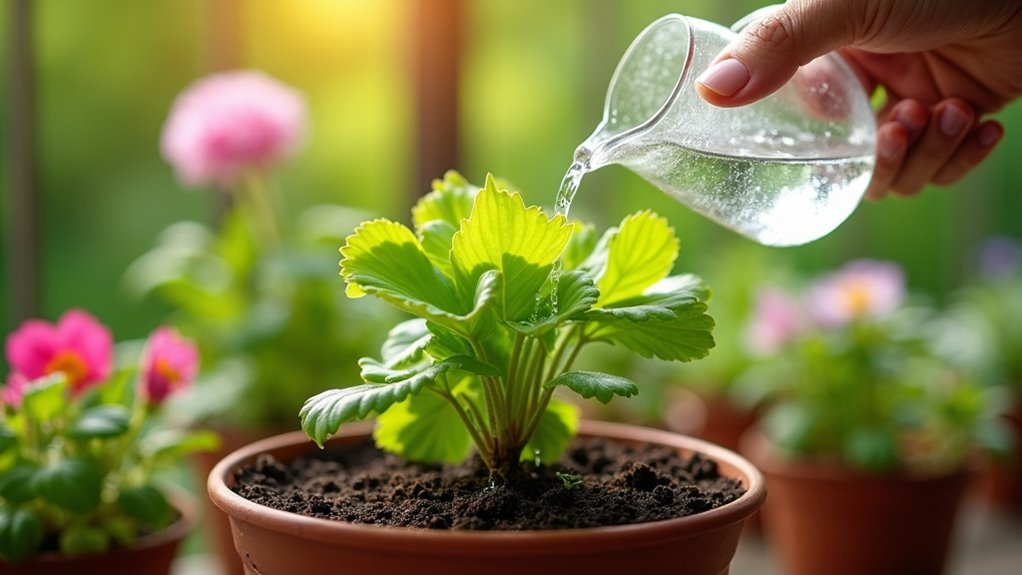
To water plants in containers without overwatering, check soil moisture regularly by inserting a finger or bamboo skewer into the soil. Only water when the top two inches are dry. Use pots with proper drainage, avoiding rocks at the bottom, and choose a planter size that accommodates roots without retaining excess moisture. Adjust your watering frequency with seasonal changes, ensuring you monitor your plants for signs of underwatering or overwatering. Learn more about maintaining healthy watering practices.
Key Takeaways
- Check soil moisture regularly using the finger test or moisture meter to avoid guessing when to water.
- Water only when the top two inches of soil are dry to prevent overwatering.
- Ensure containers have proper drainage holes to allow excess water to escape easily.
- Use lightweight, high-quality potting mixes that promote drainage and prevent soil compaction.
- Adjust watering frequency based on seasonal changes and environmental conditions affecting moisture levels.
Understanding Your Plants’ Watering Needs
Understanding your plants’ watering needs is essential for their health and growth. Instead of sticking to a fixed schedule, observe your plants for signs like drooping or shriveled leaves, which indicate they need water.
Conduct the finger test: if the soil is dry up to the second knuckle, it’s time to water your plants. Different plants have unique moisture requirements, so adjust accordingly.
Environmental factors such as wind and heat can increase watering needs, especially in container gardens where soil dries quicker. For accuracy, consider using moisture meters to monitor soil moisture and prevent overwatering.
Seasonal Adjustments for Optimal Watering
As the seasons change, so do your plants’ watering needs, requiring you to adjust your routine for ideal health.
In winter, water your plant less often due to reduced sunlight and slower growth. Check soil moisture regularly; water only when the top inch feels dry.
During winter, water less frequently, checking soil moisture regularly and only hydrating when the top inch is dry.
In spring and summer, increase your watering frequency as soil moisture evaporates faster in warmer temperatures. Larger containers retain moisture longer, so adapt your schedule accordingly.
Pay attention to plant cues, like drooping leaves, as they may signal a need for more water during temperature fluctuations.
Adjusting your routine will help maintain healthy plants year-round.
The Importance of Drainage in Containers
Without proper drainage, your container plants are at risk of serious health issues, including root rot and fungal diseases. Guarantee your pots have at least one drainage hole to allow excess water to escape, preventing soil saturation.
Avoid placing rocks or gravel at the bottom, as this can create a false sense of drainage and lead to water accumulation. Proper airflow within the container is essential; stagnant water can suffocate roots and promote disease.
Using lightweight, high-quality potting mixes enhances drainage and prevents soil compaction, allowing roots to access both oxygen and moisture effectively.
Prioritize drainage for healthy plants.
Selecting the Right Planter Size for Your Plants
Selecting the right planter size is essential for the health of your plants.
A container that’s too large can lead to overwatering, as it retains excess moisture that your plant can’t utilize.
Make certain the planter allows roots to access water evenly, promoting ideal growth and preventing stress.
Importance of Proper Size
Choosing the right planter size is crucial for maintaining healthy plants in containers, as it directly impacts their watering needs and overall growth.
- A properly sized planter prevents excess root space that can cause overwatering.
- Large planters may retain too much moisture, risking root rot.
- Small planters can dry out quickly, leading to stressed plants.
- Make sure the planter allows roots to access water throughout its depth.
- Always use pots with drainage holes to prevent harmful water pooling.
Understanding the relationship between planter size and watering needs is essential for keeping your watered plants thriving.
Effects of Overwatering
When a planter is too large for your plants, it can lead to significant overwatering issues that jeopardize their health. Excessively large containers retain moisture at the bottom, causing prolonged saturation of soil and increasing the risk of root rot.
This imbalance often results in dry tops and wet bottoms, depriving roots of necessary oxygen. To prevent overwatering, choose pots with drainage holes and avoid adding rocks, which can trap water.
Using a fresh, lightweight potting mix enhances drainage and moisture retention, ensuring uniform water access for roots and maintaining a healthier environment for your plants.
Ensuring Root Access
To guarantee your plants thrive, the size of the planter plays a significant role in their overall health. Choosing the right size guarantees your plants’ roots access water every time you water.
Consider the following:
- Select planters that fit the root system.
- Avoid excessively large planters to prevent moisture retention.
- Verify roots can access water throughout the planter.
- Regularly check drainage capabilities to avoid water accumulation.
- Match planter size to the plant’s growth stage for peak health.
Techniques for Checking Soil Moisture
How do you know when it’s time to water your container plants? To check soil moisture, start with the finger test; insert your finger into the soil up to the second knuckle. If it feels dry, it’s time to water.
Alternatively, use a bamboo skewer or knitting needle; insert it into the soil and check for moisture on its surface. You can also visually assess moisture levels—wet soil appears dark while dry soil looks lighter.
For accuracy, consider moisture meters. Always confirm plant cues like drooping leaves with a moisture check before watering to avoid overwatering.
Best Practices for Watering Frequency and Timing
Understanding the best practices for watering frequency and timing is essential for maintaining the health of your container plants. Here are key points to follow:
- Increase watering frequency during warm weather; check daily or twice daily in heat waves.
- Water in the morning to prevent fungal diseases and allow moisture to evaporate.
- Always check the top inch of soil for dryness before watering.
- Use moisture-retaining additives cautiously to prevent overwatering.
- Consider using soaker hoses or drip irrigation for consistent moisture management.
Reviving Overwatered or Underwatered Plants
When you notice signs of overwatering or underwatering, it’s vital to identify the issue promptly.
Effective rehydration techniques, such as soaking pots or watering in small amounts, can help restore plant health.
Implementing prevention strategies will guarantee your plants thrive and avoid future watering problems.
Identifying Watering Issues
Have you noticed your container plants struggling to thrive? Identifying watering issues is essential. Look for these signs:
- Yellowing leaves and foul smell indicate overwatering.
- Wilting despite moist soil suggests root rot.
- Drooping leaves and dry soil signal underwatering.
- Stunted growth means your plants need immediate attention.
Regularly check moisture with the finger test or meter.
When water comes, make sure you monitor the soil’s condition. Knowing when you need to water can revive your plants.
Adjust your watering practices based on these indicators, and your plants will flourish once again.
Effective Rehydration Techniques
Reviving container plants that are either overwatered or underwatered requires specific techniques to restore their health effectively.
For underwatered plants, soak the pot in water for about 30 minutes to rehydrate the soil evenly.
In contrast, if you’ve overwatered, allow the soil to dry completely before watering again, as excess moisture can suffocate roots.
If the potting mix becomes water-repellent, gently soak it multiple times to restore moisture retention.
Gradually adjust your watering practices afterward to keep the soil slightly drier between waterings, promoting healthy root growth and improving overall plant resilience during recovery.
Prevention Strategies for Future
After addressing issues of overwatering and underwatering, implementing effective prevention strategies is essential for maintaining healthy container plants.
To guarantee your plants thrive, follow these guidelines:
- Check soil moisture with the finger test or bamboo skewer.
- Water only when the top two inches of soil are dry.
- Gradually rehydrate underwatered plants by soaking pots for an hour.
- Repot overwatered plants in lightweight mix for better drainage.
- Maintain a consistent watering routine based on seasonal changes to water plants appropriately.





