
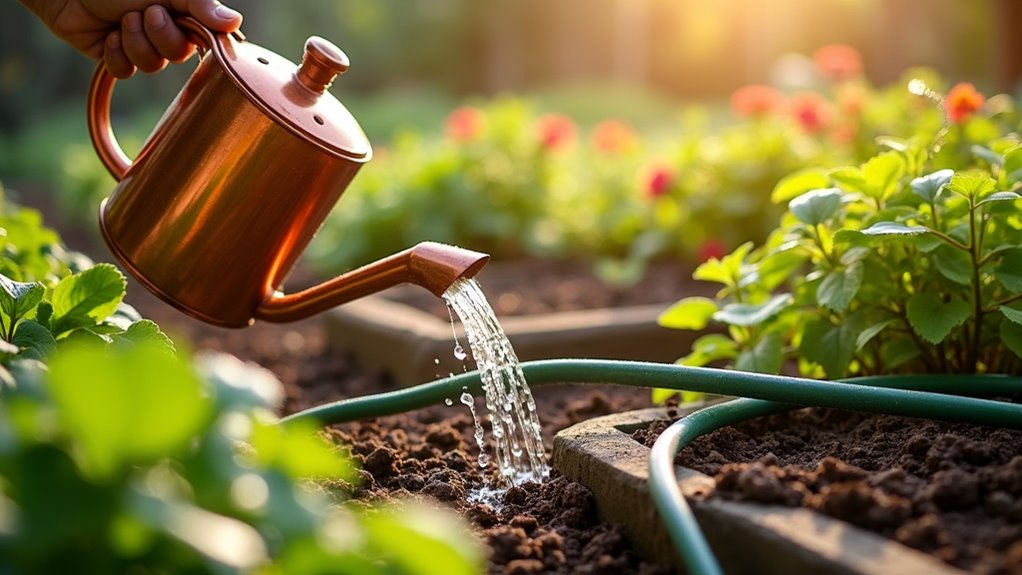
To water your raised-bed plants efficiently, aim for 1 to 2 inches of water weekly, checking the top 2 inches of soil for dryness first. Water early in the morning to reduce evaporation, and consider using automated drip irrigation systems for consistent moisture. Group plants with similar water needs and use mulch to retain moisture. Avoid over or under watering by adjusting your schedule based on rainfall and temperature. Discover more tips to optimize your watering strategy.
Key Takeaways
- Establish a consistent watering routine, aiming for 1 to 2 inches of water weekly based on plant needs and weather conditions.
- Utilize automated irrigation systems like drip irrigation for targeted watering and to maintain consistent soil moisture levels.
- Water early in the morning to enhance absorption and minimize evaporation losses during the day.
- Regularly check the top 2 inches of soil for dryness before watering to avoid overwatering and root issues.
- Employ mulching to retain soil moisture and group plants with similar water needs for more efficient watering.
The Importance of Consistent Watering for Plant Health
When you consistently water your plants, you help them thrive and reduce their vulnerability to pests and diseases. Aim for about 1 to 2 inches of water weekly to maintain ideal soil moisture.
Irregular watering can stress plants, leading to poor growth and reduced resistance to issues. By promoting even moisture levels, you encourage deeper root systems, enhancing overall health and resilience.
Regularly check soil moisture and adjust your watering schedules based on weather conditions to guarantee your plants receive the hydration they need.
Consider using drip irrigation or soaker hoses for efficient, targeted watering that minimizes foliage wetness.
Methods of Watering Raised-Bed Gardens
When it comes to watering your raised-bed gardens, you have a couple of effective methods to choose from.
Hand watering with a hose or watering can gives you control over moisture placement, but it can lead to uneven watering.
Alternatively, automated irrigation systems can save you time and guarantee consistent moisture, especially during those hot summer days when your plants need it most.
Hand Watering Techniques
Hand watering your raised beds can be an effective way to guarantee your plants receive just the right amount of moisture. This method allows you to observe plant health, identifying issues like wilting or pests easily.
Use a gentle shower attachment to distribute water evenly, minimizing soil erosion and ensuring moisture reaches the root zone. Check the top 2 inches of soil moisture before watering to prevent overwatering. Aim for 1 to 2 inches of water weekly, adjusting your watering schedule with a rain gauge.
Early morning is the best time to water, maximizing absorption and reducing evaporation.
Automated Irrigation Systems
For those looking to streamline their watering routine, automated irrigation systems offer a practical solution for raised-bed gardens.
With options like drip irrigation and soaker hoses, you can deliver targeted watering directly to the soil, minimizing waste while ensuring consistent moisture for your plants.
Systems like the Garden Grid make it easy to customize watering based on your garden’s layout.
By incorporating timers, you can set precise schedules that adjust with seasonal changes.
Regular maintenance, such as checking for clogs and optimizing flow rates, will keep your automated watering system performing at its best, saving you time and effort.
Best Practices for Watering Efficiency
To maximize the efficiency of watering your raised bed plants, start by establishing a consistent routine that aligns with their specific needs.
Water early in the morning, ideally between 4 and 5 a.m., to enhance absorption and minimize evaporation. Implementing drip irrigation systems can deliver water directly to the roots, reducing waste.
Regularly check the top 2 inches of soil for dryness; most plants need 1 to 2 inches of water weekly. Mulching helps retain moisture, while grouping plants with similar water needs optimizes your watering schedule, ensuring each plant gets the moisture it requires without over- or under-watering.
Benefits of Automatic Watering Systems
Automatic watering systems offer you the advantage of consistent soil moisture, ensuring your plants stay hydrated without the guesswork.
By automating the watering process, you’ll save time and energy, allowing you to focus on other gardening tasks.
Plus, these systems can be customized to meet the needs of different plants, maximizing growth potential while minimizing water waste.
Consistent Soil Moisture
While maintaining consistent soil moisture may seem challenging, using an automatic watering system can simplify the process considerably.
These systems guarantee your plants receive 1 to 2 inches of water weekly, reducing stress and promoting healthy growth. By utilizing a drip irrigation system, like the Garden Grid, you’ll deliver water directly to plant roots, minimizing evaporation.
It’s crucial to monitor soil moisture regularly, adjusting your watering schedule as needed based on weather conditions. Programming your system to water early in the morning enhances absorption and prevents leaf diseases, guaranteeing your garden thrives with consistent soil moisture.
Time-Saving Automation
Investing in an automatic watering system can transform your gardening experience by saving you time and effort.
With options like drip irrigation or soaker hoses, you’ll spend less time manually watering while guaranteeing your plants’ watering needs are met consistently.
By scheduling watering during early morning hours with a timer, you optimize water absorption and minimize evaporation.
Automatic systems maintain consistent soil moisture, promoting healthier roots and better growth.
The Garden Grid simplifies installation, providing even water distribution without hassle.
Plus, regularly adjusting the system based on weather guarantees your plants receive just the right amount of water, preventing overwatering issues.
Choosing the Right Watering System
When you’re selecting a watering system for your raised beds, consider how efficiently it delivers water directly to your plants’ roots. Drip irrigation systems are the most effective, minimizing evaporation and runoff. Soaker hoses are easier to install but may clog, requiring monitoring. Automated watering systems with timers maintain consistent moisture levels, watering during cooler times to reduce evaporation. Olla pots offer a low-maintenance option for targeted watering. Grouping plants by water needs enhances efficiency.
| System Type | Efficiency | Maintenance |
|---|---|---|
| Drip Irrigation | High | Moderate |
| Soaker Hoses | Moderate | High |
| Automated Systems | High | Low |
Common Watering Mistakes to Avoid
Many gardeners make several common watering mistakes that can hinder plant health and growth.
Here are some pitfalls to avoid:
- Overwatering leads to root rot and disease.
- Neglecting to adjust your watering schedule during hot spells stresses plants.
- Ignoring soil moisture levels results in wilting and poor growth.
- Using low-quality soil mixes exacerbates moisture retention issues.
- Watering in the heat of the day causes evaporation and leaf scorch.
To keep your plants thriving, always check soil moisture before watering, and adapt your schedule based on weather conditions.
Proper watering practices can transform your garden’s success!
Maintaining Your Watering System
To guarantee your watering system operates efficiently, it’s essential to conduct regular inspections of all components, including drip lines and soaker hoses. Look for clogs or damage to verify even water distribution. Employ a cycle/soak method to enhance water absorption, running your system in short bursts. Monitor the water absorption depth, targeting around 12 inches. Regularly clean emitters and hoses to prevent mineral buildup. Adjust your watering schedule based on temperature and humidity, providing 1-2 inches of water weekly.
| Action | Frequency | Purpose |
|---|---|---|
| Inspect system | Weekly | Prevent clogs/damage |
| Clean emitters | Monthly | Maintain efficiency |
| Adjust schedule | Seasonally | Match plant needs |
| Monitor absorption | Weekly | Verify root moisture |
| Implement cycle/soak | Each session | Enhance water retention |





