
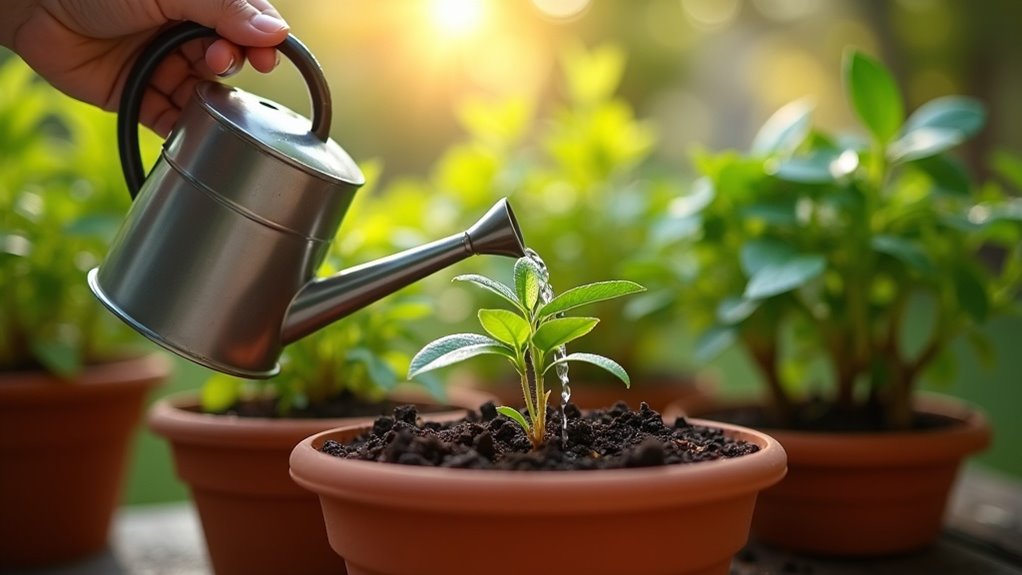
To water plants in terracotta pots properly, check the soil moisture by observing its color or using the finger test. Water when the top inch is dry, using room-temperature water until it drains. Avoid over-watering and let pots dry between waterings to prevent root rot. Water in the morning to minimize disease risk, and adjust frequency based on pot size. If your plants are wilting, soaking the pot can help revive them. You might find more techniques beneficial.
Key Takeaways
- Check the top inch of soil; if dry, it’s time to water your plants in terracotta pots.
- Use room temperature water and pour until you see drainage from the bottom.
- Water in the morning to allow for evaporation and minimize disease risk.
- Avoid letting pots sit in standing water to prevent root rot.
- Monitor soil moisture regularly, adjusting frequency based on plant type and pot size.
Importance of Proper Watering
Proper watering is critical for maintaining the health of plants in terracotta pots, as the unique characteristics of these containers can markedly influence moisture levels.
Terracotta’s porous nature means it can absorb water, leading to dry soil more quickly than other pots. To prevent root rot, you must avoid over-watering; understanding each plant’s specific needs is essential.
Techniques like bottom watering allow moisture to reach deeper roots, promoting healthier growth. Always check soil moisture before watering, and verify excess water drains from the drainage hole, adjusting your watering habits based on your plant’s environment and pot size for best results.
Checking Soil Moisture
How can you guarantee your plants get the right amount of water in terracotta pots?
Start by checking the soil moisture. Here are some effective methods:
- Observe soil color: Wet soil appears dark, while dry soil looks lighter.
- Use your finger: Stick it into the soil up to the first knuckle. If it feels dry, it’s time to water.
- Regularly monitor: Different pot sizes and plant types dry out at varying rates, so stay vigilant for signs of moisture needs.
Watering Technique
When you water plants in terracotta pots, it’s essential to guarantee that the moisture reaches the roots effectively.
Start by checking if the top inch of soil is dry; if it is, it’s time to water your plants. Use room temperature water and pour thoroughly until it drains from the bottom. This method works well to promote deep moisture penetration, fostering healthy root growth.
Be cautious, as terracotta absorbs moisture quickly, so your soil can dry out between waterings. Never let your pots sit in standing water, as this can lead to root rot and harm your plants.
Best Practices for Timing and Frequency
To guarantee your plants thrive in terracotta pots, it’s crucial to pay attention to the timing and frequency of watering.
For thriving plants in terracotta pots, timing and watering frequency are essential.
Here are some best practices to follow:
- Water in the morning to allow excess water to evaporate and reduce disease risk.
- Adjust your watering frequency based on pot size, as larger pots retain moisture longer.
- Monitor soil moisture regularly, especially in warmer weather, as terracotta can dry out more quickly.
Reviving Wilting Plants
If you notice your plants wilting, it often signals underwatering and may indicate that the potting mix has become so dry that it’s now water-repellent.
To revive wilting plants, soak the entire terra cotta pot in water for an extended period, allowing the soil to fully rehydrate.
If soaking isn’t practical, water your plants in small increments, letting each application soak in before adding more.
Once the soil’s adequately moist, return to your regular watering routine, ensuring the top of the soil is dry before the next watering.
This helps your plants stay wet without becoming oversaturated.





