
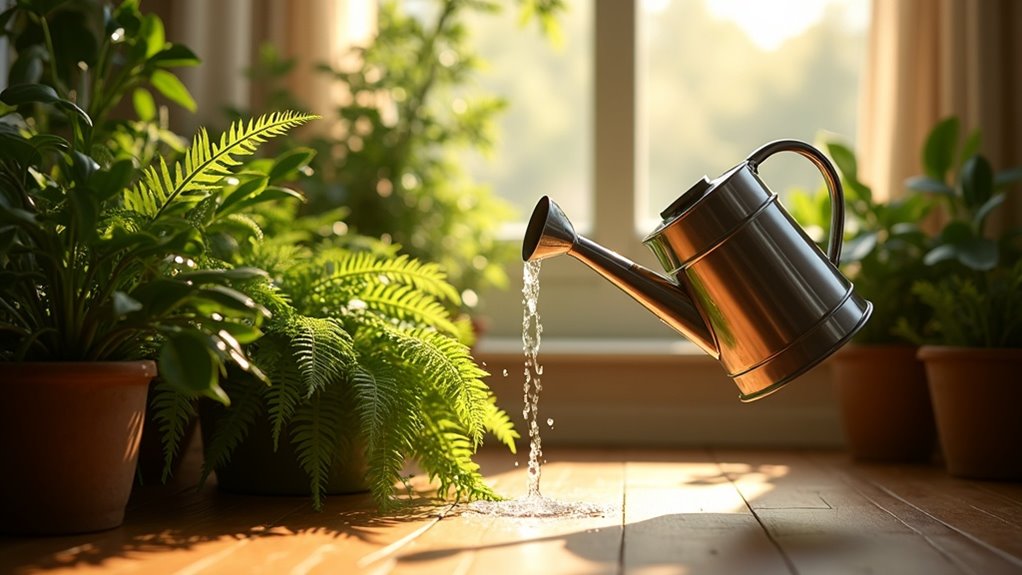
To water your indoor plants effectively, check the soil moisture regularly using a moisture meter or your finger. Water thoroughly until it drains from the bottom, ensuring pots have drainage holes to avoid root rot. Consider bottom watering by soaking the pot in a bowl of water for about 15 minutes. Keep in mind that factors like temperature, humidity, and light will influence your plants’ needs. Understanding these factors can help you maintain a healthy indoor garden.
Key Takeaways
- Assess each plant’s specific watering needs, considering factors like type, size, and environmental conditions such as temperature and humidity.
- Use a moisture meter or check soil moisture by touch to avoid overwatering or underwatering.
- Water plants thoroughly, ensuring excess water drains out through the pot’s drainage holes to prevent root rot.
- Consider bottom-watering by soaking pots in water for 15 minutes to encourage deep root growth and moisture absorption.
- Monitor for signs of overwatering or underwatering, adjusting your watering schedule as necessary for optimal plant health.
Understanding Plant Watering Needs
When you start caring for indoor plants, understanding their unique watering needs is vital to keeping them healthy. Different plants require varying amounts of water; for instance, tropical plants need more frequent watering than drought-resistant succulents.
Environmental factors like temperature and humidity can also impact moisture requirements. Check the soil type, as heavier mixes retain moisture longer. Use a moisture meter or feel the soil to avoid underwatering or overwatering, both of which harm roots.
Ascertain your pots have drainage holes to promote healthy plant care, allowing excess water to escape and preventing soggy soil conditions.
Tools and Techniques for Effective Watering
To water your indoor plants effectively, having the right tools and techniques is crucial. Use a watering can with a long spout for precise control, making sure water reaches the roots without a mess. Consider a moisture meter to accurately gauge soil moisture and prevent root rot. Employ bottom watering by placing pots in a bowl of water for 15 minutes, promoting healthy absorption. Always check for drainage holes to avoid water accumulation. For larger plants, use a turkey baster or small watering can for targeted watering.
| Tool/Technique | Purpose | Benefits |
|---|---|---|
| Long-spout watering can | Precise watering | Minimizes mess |
| Moisture meter | Gauges soil moisture | Prevents over/underwatering |
| Bottom watering | Allows soil absorption | Ideal for sensitive plants |
| Drainage holes | Prevents root rot | Guarantees proper drainage |
| Turkey baster | Targeted watering for large plants | Prevents overwatering |
Signs of Overwatering and Underwatering
Identifying the signs of overwatering and underwatering is essential for maintaining the health of your indoor plants.
Overwatering often leads to soft, mushy textures and brown spots on leaves, indicating root rot. In contrast, underwatering shows as pale or wrinkled leaves, with dry soil pulling away from the pot edges.
Regularly monitoring moisture levels helps you catch these issues early. Remember, underwatered plants typically recover faster than those suffering from overwatering.
Environmental Factors Influencing Watering Frequency
Understanding how environmental factors influence watering frequency is essential to keeping your indoor plants thriving.
Temperature affects evaporation rates; warmer rooms often mean you’ll need to water more frequently. Humidity plays a role too—lower levels quickly dry out the soil, demanding diligent watering practices.
Light exposure is vital; brighter conditions generally require more water to sustain growth. Seasonal changes impact your plants’ needs as well; many go dormant in winter, needing less water.
Finally, consider your soil mix: heavier mixes retain more moisture, while lighter ones may need more frequent watering to keep your plants hydrated and healthy.
Exploring Bottom-Watering Methods
Many indoor gardeners find that bottom-watering can be an effective method for nourishing their plants. This technique encourages deeper root growth and helps prevent common issues.
Here’s how to bottom-water effectively:
- Fill a bowl or saucer with room-temperature water.
- Place your pot in the water, allowing moisture to soak through drainage holes for about 15 minutes.
- Remove the pot and avoid leaving it in water to prevent root rot.
- Occasionally top-water to flush out excess salts and maintain a balanced moisture level for healthier plants.





