
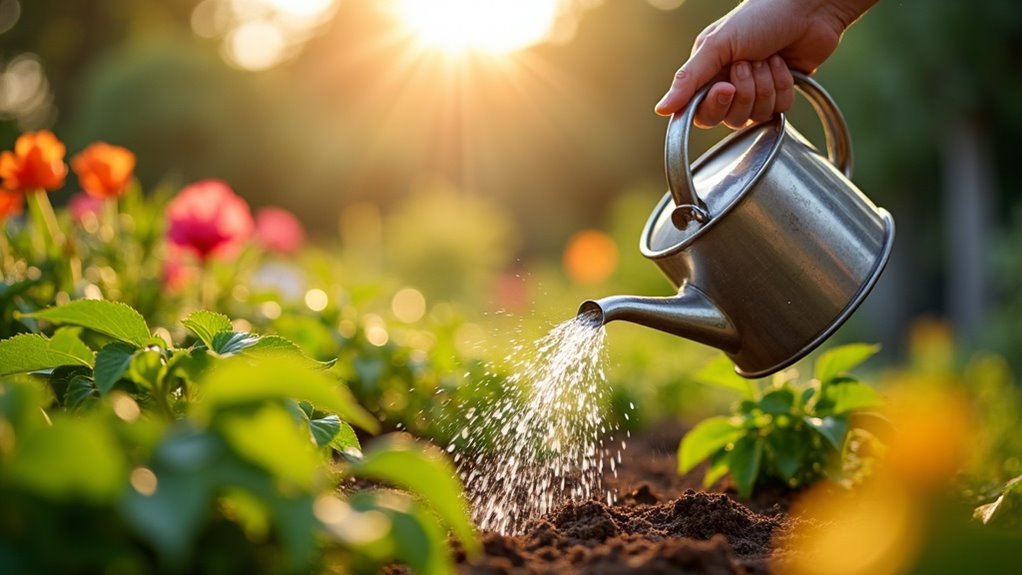
To keep your outdoor plants thriving in summer, water them early in the morning to guarantee better absorption before the heat kicks in. Aim for deep watering, reaching the root zones, and apply about an inch of water weekly. Mulch around your plants to reduce evaporation and maintain soil moisture. If you’re away, consider setting up DIY watering methods to guarantee consistent hydration. There’s more to explore about techniques and plant care that can maximize your garden’s health.
Key Takeaways
- Water plants early in the morning to maximize absorption and minimize evaporation loss.
- Aim for deep watering, providing about one inch of water weekly to reach root zones.
- Avoid watering during peak heat hours (10 AM – 4 PM) to reduce water loss.
- Use mulch to retain soil moisture, lower temperature, and reduce the need for frequent watering.
- Consider DIY watering methods like using a bottle or wick system for consistent moisture delivery.
Best Times to Water Your Plants
When’s the best time to water your plants? Early morning is ideal, as it allows for better absorption before the sun’s heat causes rapid evaporation.
Late afternoon watering is also acceptable, but guarantee the foliage dries before nightfall to prevent disease.
Avoid watering during peak heat hours, typically between 10 AM and 4 PM, to minimize water loss through evaporation and prevent leaf burn.
Nighttime watering is generally discouraged, as it can promote fungal diseases.
Aim for soil-level watering to target root zones effectively, and monitor soil moisture; the surface may look dry while deeper layers remain hydrated.
Effective Watering Techniques
To guarantee your plants thrive, water them early in the morning when temperatures are cooler and evaporation is minimal.
Focus on deep watering techniques, allowing moisture to reach the roots instead of just wetting the surface.
If you’re caring for container plants, remember they may need more frequent watering due to faster drying soil, so keep an eye on their moisture levels.
Morning Watering Benefits
There’s something rewarding about watering your plants in the morning. This practice guarantees your plants absorb water effectively before the sun’s heat causes rapid evaporation.
Cooler temperatures reduce stress, preventing leaf burn and allowing your plants to thrive. Morning watering promotes healthy growth by letting foliage dry out during the day, which minimizes the risk of fungal diseases.
Additionally, it helps your soil retain moisture longer, meaning you won’t need to water as frequently. By giving your plants the hydration they need early on, you prepare them to withstand the summer heat, guaranteeing they stay vibrant and resilient.
Deep vs. Shallow Watering
Watering techniques play a significant role in plant health, especially when considering how deeply or shallowly you hydrate them.
Deep watering encourages robust root systems, making plants more resilient to drought and heat stress. Aim to provide about one inch of water weekly, ensuring moisture penetrates 6 to 12 inches into the soil.
In contrast, shallow watering only moistens the top layer, leading to weak roots and increased vulnerability during dry spells.
Use slow methods like soaker hoses for consistent water distribution and regularly check soil moisture at a depth of 3 to 4 inches to determine when deep watering is necessary.
Container Plant Care
Effective care for container plants hinges on understanding their unique watering needs. Unlike ground plants, container plants often need to be watered daily, especially in hot summer conditions.
Use a slow and deep watering technique, applying water at the base to guarantee it reaches the soil and roots effectively. Incorporate a 2- to 3-inch layer of organic mulch to help retain moisture and reduce evaporation.
Keep a close eye on your plants for signs of drying out, as they can become parched quickly. Consider self-watering pots or DIY methods like burying plastic bottles for consistent moisture levels.
Importance of Mulching
While you might focus on watering your plants regularly, incorporating mulch into your garden can profoundly impact their health and hydration. Mulching helps retain soil moisture by reducing evaporation, making water access more efficient. A 2- to 3-inch layer of organic mulch can lower soil temperature and prevent weed growth, which competes for resources. Additionally, as it breaks down, mulch improves soil health and supports beneficial insects. By using mulch, you can reduce the need for frequent watering by up to 50%.
| Benefits | Mulching Type | Impact |
|---|---|---|
| Retains moisture | Shredded bark | Reduces evaporation |
| Improves soil health | Leaf compost | Adds nutrients |
| Supports biodiversity | Straw | Attracts beneficial insects |
DIY Watering Methods
Incorporating mulch into your gardening routine sets the stage for healthier plants, but to further enhance their hydration, consider DIY watering methods that can save time and effort.
Incorporating mulch into your gardening routine can lead to healthier plants and improved hydration with DIY watering methods.
Here are three effective techniques:
- DIY Plant Watering Bottle: Drill holes in a plastic bottle cap, bury it near your plants, and let it slowly release water.
- DIY Water Wick System: Use old cotton fabric to draw water from a jar into dry soil, keeping plants hydrated.
- DIY Glass Bottle Waterer: Insert a wine bottle neck-first into the soil for controlled watering as air enters, preventing over-saturation.
Caring for Different Plant Types
Understanding the specific watering needs of your plants is essential for their health and growth. Young plants need watering more frequently since their roots are still developing.
Drought-tolerant plants, like coneflowers, thrive in full sun and require less water, making them ideal for low-maintenance gardens.
Container plants dry out quickly, so make certain to check their moisture daily during peak heat.
Shade-loving plants, such as ferns, generally need less water, while fruits and vegetables require consistent moisture—about an inch of water weekly—to prevent issues like blossom end rot.
Pay attention to each plant type to guarantee they’re getting enough water.
Preparing for Your Absence
Before you head out for a trip, it’s essential to guarantee your plants stay hydrated and healthy in your absence.
Here are some effective methods to secure moisture retention:
- Deep water your garden thoroughly, especially if no rainfall is expected.
- Set up automatic timers on your sprinklers or drip irrigation systems for consistent watering.
- Use self-watering pots for container plants or consider DIY watering methods like burying plastic bottles for a slow-release watering system.
Grouping plants together can also create a microclimate, helping to retain humidity and minimize the impact of your absence on their health.





