
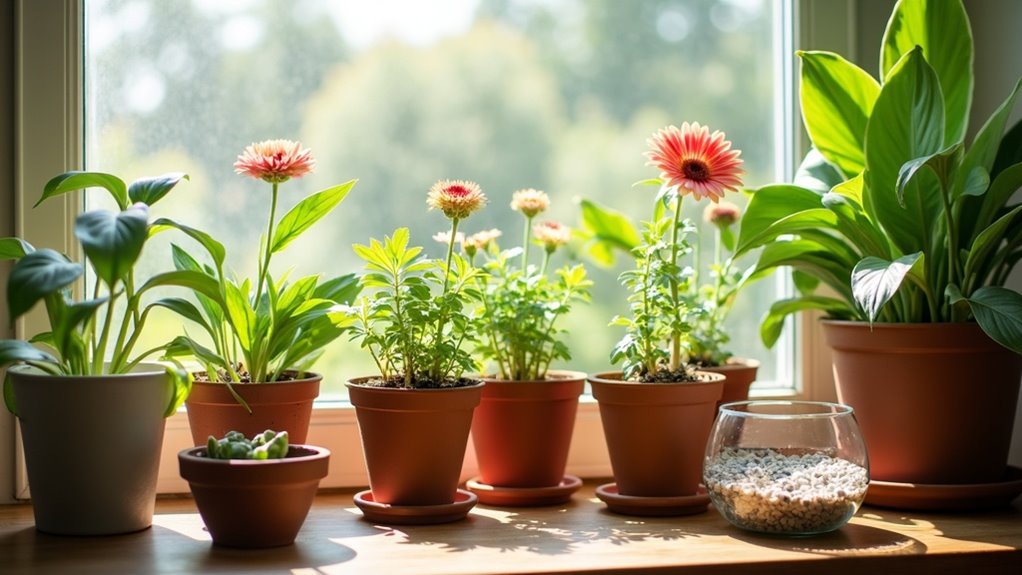
To keep your plants thriving while you’re on vacation, consider using a DIY water wick method with cotton rope for continuous moisture. You can also try the glass bottle technique by inverting a filled bottle with small holes in the cap. For longer getaways, submerging pots in a sink or tub of water can provide necessary hydration. Before you leave, assess your plants’ needs for a tailored approach that secures their health and happiness. There’s more ways to guarantee their care!
Key Takeaways
- Use the DIY Water Wick method by soaking cotton thread in water and placing it in the soil to provide consistent moisture.
- Implement the Glass Bottle Watering Technique by filling a bottle with water, creating holes in the cap, and inverting it into the soil.
- Submerge pots in a sink or bathtub filled with water for a houseplant bath, allowing plants to soak up moisture.
- Assess the daily water needs of each plant before leaving to determine the total water required during your absence.
- Test your watering solutions in advance to ensure they provide adequate moisture levels for your plants.
Essential Tools for Plant Watering Solutions
When you’re getting ready to leave for vacation, it’s important to have the right tools to keep your plants healthy while you’re away.
You’ll need cotton rope to create effective wicks that draw water from resealable plastic bags, ensuring consistent moisture through a water wicking system. A fine needle is vital for making small drainage holes in the bags, controlling water flow and preventing over-saturation.
Don’t forget scissors for cutting the cotton thread to the desired length.
Test your setup with a sample bag to calibrate the drainage rate, ensuring each plant gets the hydration it needs during your absence.
Planning Your Watering Strategy Before Departure
Before you head off on vacation, it’s essential to assess the daily water needs of your plants.
Calculate the total amount of water required for your trip to guarantee they stay hydrated while you’re away.
With this information, you’ll be better equipped to implement an effective watering strategy that keeps your plants thriving.
Assess Plant Water Needs
To guarantee your plants thrive while you’re away, it’s essential to assess their individual water needs ahead of time. Evaluate your plants based on their size, type, and the soil condition. This will help you determine how much water they need while you’re gone.
Here’s a simple guide to help you:
| Plant Type | Daily Water Needs | Self-Watering Method |
|---|---|---|
| Succulents | Low | Wick or bag method |
| Ferns | Moderate | Drip system |
| Flowering | High | Resealable bags |
| Herbs | Moderate | Soil moisture meter |
| Cacti | Minimal | Minimal water delivery |
Adjust your watering strategy based on these assessments for a successful trip!
Calculate Water Requirements
Calculating your plants’ water requirements is essential for guaranteeing they stay healthy while you’re away.
Start by evaluating each plant’s daily water needs based on size, species, and environmental conditions. Multiply these needs by the number of days you’ll be gone to calculate the total water required.
Choose a resealable plastic bag that can fill this amount, ensuring it meets your plants’ needs. Test the drainage rate with a sample bag to prevent over-saturation.
Adjust the number of wicks or bags used based on your calculations to guarantee your plants receive consistent watering throughout your trip.
DIY Water Wick Method for Hydration
If you’re heading out on vacation and worry about your plants staying hydrated, the DIY Water Wick method offers a simple and effective solution.
This self-watering system uses a cotton or polyester thread to draw water from a resealable plastic bag into the soil.
Cut a 20 cm length of thread, tie the ends, and place it near the bottom of the bag. Fill the bag with water for your plants, ensuring it’s submerged.
Seal it and position it in the pot, so the wick touches the soil. This way, your plants receive moisture continuously while you’re away!
Utilizing the Glass Bottle Watering Technique
To keep your plants hydrated while you’re away, the glass bottle watering technique is a simple and effective option.
You’ll need just a few materials, including an empty bottle with a metal cap, and I’ll guide you through the easy steps to set it up.
In no time, you’ll have a reliable watering system that lasts throughout your vacation!
Materials Needed Overview
The glass bottle watering technique is a simple yet effective solution for keeping your plants hydrated while you’re away.
To get started, you’ll need an empty glass or plastic bottle, a hammer and nails to create small holes in the cap for airflow, and, of course, water.
You’ll fill it with water and position it upside down, inserting the neck into the soil near your plant’s roots. This self-watering method guarantees consistent plant watering, especially when your plants are in indirect sunlight.
Avoid cork caps, as they can block airflow, hindering water release. Set it up in under 10 minutes!
Step-by-Step Instructions
Now that you have your materials ready, it’s time to put the glass bottle watering technique into action.
Start by selecting a clean glass bottle, like an empty wine bottle. Use a hammer and nail to create small holes in the cap for controlled water release.
Next, fill the bottle with water and securely replace the cap. Invert the bottle, burying the neck several inches deep into the soil near your plants.
Position it in a slightly shaded area to minimize evaporation. This method acts as an automatic watering system, helping to retain water and keep your plants hydrated while you’re on vacation.
Creating a Houseplant Bath for Extended Moisture
When you’re preparing for a vacation, creating a houseplant bath can be a lifesaver for keeping your plants hydrated. Here’s how to do it:
Preparing for a vacation? A houseplant bath can keep your plants hydrated while you’re away.
- Fill a sink or bathtub with water deep enough to submerge the pots of well-draining pots.
- Verify your tropical plants are ready to soak up moisture for up to a week.
- After soaking, remove the plants and let any excess water drain to prevent waterlogging.
This method offers consistent moisture and added humidity, making it perfect for short vacations—just remember to check your pots for proper drainage to avoid root rot!
Implementing a Water Wicking Drip System
For anyone planning an extended getaway, implementing a water wicking drip system offers an effective way to keep your plants nourished while you’re away.
Start by cutting a length of cotton string, submerging one end in a water-filled container, and placing the other end into the soil. This system provides a consistent moisture supply, allowing the soil to absorb moisture as needed.
Adjust the thickness of the wick based on your plant’s water needs for ideal hydration. Regularly check how quickly the soil absorbs moisture to guarantee the setup remains effective throughout your vacation.
Your plants will thrive!
Setting Up a Plant Saucer for Easy Water Retention
Setting up a plant saucer can be a simple yet effective way to guarantee your plants stay hydrated while you’re away. Here’s how to make certain proper water retention:
- Choose the Right Size: Make certain the saucer is deep enough to hold adequate water based on your potted plants’ size and needs.
- Material Matters: Opt for durable materials like ceramic or plastic that can handle varying temperatures.
- Pre-Vacation Check: Before leaving, refill the saucer to provide moisture for several days, making sure your plants have enough water during your vacation.
With these steps, your plants will thrive while you’re gone!
Selecting Low Maintenance Plants for Your Absence
Choosing the right plants for your home while you’re away can make all the difference in keeping your space vibrant and healthy.
Opt for low-maintenance plants like air plants, Anthuriums, and Bamboo that thrive on minimal watering.
Bromeliads and Kalanchoes tolerate drought, needing water only when the soil is completely dry, perfect for long absences.
Money Trees and Pothos adapt well to low light and irregular watering.
Cacti and Succulents are also excellent choices, requiring infrequent watering.
Consider Orchids and Peace Lilies for moderate needs, ensuring your plants stay happy and healthy during your vacation without constant attention.





