
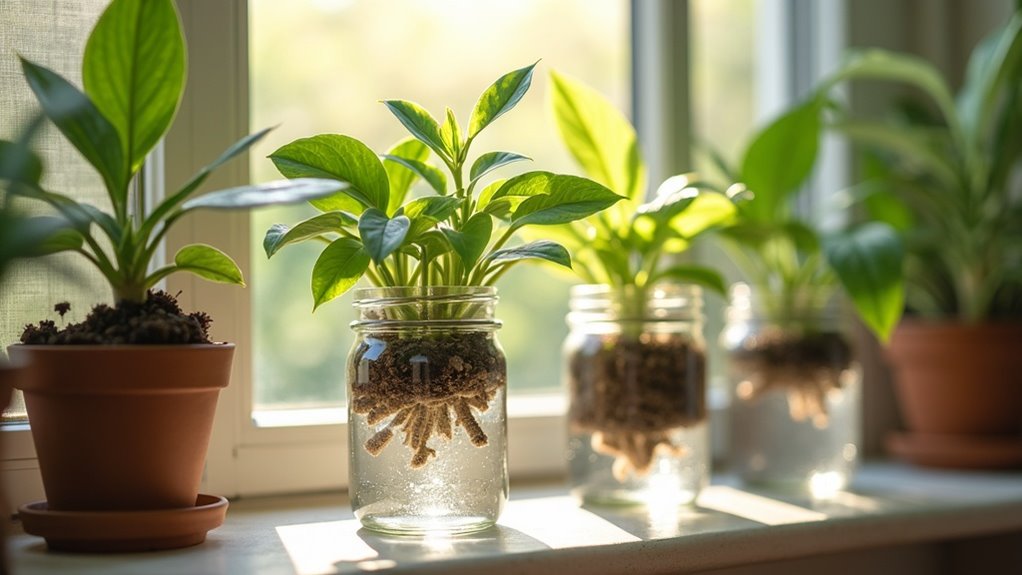
To water your plants consistently with a wick system, position a reservoir above the containers to use gravity for efficient water flow. Use cotton shoelaces as wicks, securing weights to keep them submerged. Bury the wicks three inches deep in porous soil to enhance water absorption. Regularly check soil moisture and adjust wick placement or quantity based on plant needs. With this method, you’ll guarantee proper hydration, and there’s more to explore about optimizing your setup effectively.
Key Takeaways
- Position the water reservoir above plant containers to utilize gravity for consistent water delivery through wicks.
- Use absorbent cotton shoelaces as wicks, ensuring they are properly anchored and submerged in the water reservoir.
- Monitor soil moisture regularly to prevent over-saturation and adjust wick placement as needed for optimal hydration.
- Choose porous soil for better absorption and consider plant-specific water needs when determining wick quantity and placement.
- Protect wicks from direct sunlight and reduce evaporation by using opaque containers and providing shade.
Understanding Wick Watering Systems
Wick watering systems, which rely on capillary action, provide an efficient way to keep your plants consistently hydrated. This system draws water from a water reservoir, transferring it to the soil through absorbent wicks.
For maximum performance, position the reservoir above your containers, enhancing gravity-fed water flow. Typically, two to three wicks per container guarantee adequate delivery.
The soil’s type affects this system’s effectiveness, so choose porous soil for better absorption. Remember to monitor the water reservoir levels regularly, as varying plant needs and your absence may require larger reservoirs to maintain consistent moisture for your plants.
Materials Required for Wick Systems
To successfully set up a wick watering system, you’ll need a few essential materials that guarantee efficient water delivery to your plants. Here’s a quick overview of what you’ll require:
| Material | Purpose | Notes |
|---|---|---|
| 11-quart plastic bucket | Water reservoir | Holds sufficient moisture |
| Cotton shoelaces | Wicks | Adjust length based on container size |
| Weights (nuts/bolts) | Anchors wicks in water | Keeps wicks submerged |
| Water | Essential for system operation | Maintain consistent supply |
| Porous soil | Aids water absorption through wicks | Guarantees effective delivery |
Gather these materials to guarantee your system works efficiently.
Setting Up Your Wick Watering System
Setting up your wick watering system requires careful attention to detail to guarantee efficient hydration for your plants.
First, gather materials: an 11-quart plastic bucket as a water reservoir, cotton shoelaces for wicks, and nuts or bolts for weights. Depending on container size, use two to three wicks per 12-inch square self-watering pot.
Position the reservoir higher than the containers to enhance gravity-driven water movement. Tie weights to the shoelace ends, soak them, then bury them three inches deep in the soil.
Regularly monitor the reservoir’s water levels and adjust wicks according to your plants’ specific water needs.
Adjusting Wick Length for Different Plants
To optimize hydration for your plants, you need to adjust wick lengths based on their specific water requirements.
Thirsty plants might only need a couple of inches above the soil, while moisture-loving varieties should have wicks extending at least halfway up the pot.
Regularly monitor your plants and soil moisture to fine-tune these lengths for the best results.
Plant Water Needs
As you assess the water needs of your plants, it’s important to recognize that each species has unique requirements that dictate how you should adjust your wick length.
Thirsty plants might need just a couple of inches of wick above the plant’s soil, while others may require longer wicks for proper hydration. Overly long wicks can lead to overflow, wasting water.
For plants preferring consistent moisture, deeper wick placement can enhance water flow, particularly in moisture-retaining soils.
Consider utilizing multiple wicks for larger containers or more demanding plants to guarantee they receive the right amount of water to meet their specific watering needs.
Wick Length Adjustments
While adjusting wick length for different plants, it’s important to take into account their individual water needs and soil types.
Thirsty plants typically require a wick length of just a couple of inches above the soil for effective moisture delivery. In contrast, less thirsty plants can benefit from longer wicks to prevent overflow.
For moisture-retaining soils, deeper wick placement enhances water absorption. Keep wick lengths between 15 to 20 centimeters for ideal capillary action, as lengths beyond 33 centimeters may lead to over-saturation.
Regularly monitor water absorption rates and adjust wick length accordingly to meet varying plant needs.
Managing Evaporation and Temperature
Managing evaporation and temperature is essential for ensuring your plants receive consistent hydration through wick systems. Position your water reservoir above the plants to use gravity, which helps reduce evaporation rates.
Opt for opaque containers to minimize light exposure, further lowering evaporation compared to clear ones. Keep the wick shaded from direct sunlight to maintain moisture levels.
Regularly monitor the wick length; adjust or bury it deeper if evaporation seems excessive. Be mindful that full sun exposure can greatly increase evaporation, so consider relocating your setup or using row cover cloth to protect against heat and moisture loss.
Plant Suitability for Wick Watering
Choosing the right plants for wick watering systems can greatly enhance their effectiveness. Focus on water-loving plants that thrive with consistent moisture. Consider these options:
Selecting water-loving plants for wick watering systems boosts their effectiveness and ensures thriving greenery with consistent moisture.
- Ferns with lush fronds that flourish in humidity
- Peace lilies displaying glossy leaves and elegant blooms
- Plants with shallow root systems needing minimal wicks for hydration
Ensure your chosen plants have adequate drainage holes and prefer porous, well-draining soil to maximize wick effectiveness.
Understanding each plant’s needs will help you determine the best plant suitability, providing consistent hydration and reducing stress during your absence.
Benefits of Using Wick Systems for Plant Care
Wick systems offer numerous benefits for plant care, particularly through their ability to deliver consistent moisture directly to the roots.
By utilizing capillary action, they help you water your plants effectively, minimizing the risk of over- or under-watering. This method allows indoor plants to self-regulate their water intake, extending the intervals between watering sessions—ideal for busy lifestyles or vacations.
Absorbent materials like cotton wicks enhance water delivery efficiency, ensuring hydration as needed. Additionally, wick systems reduce evaporation losses, making them a sustainable choice for maintaining ideal moisture levels, especially in warmer climates.
Tips for Maintaining Your Wick Watering Setup
To maintain your wick watering setup, regularly check the water levels in your reservoir to guarantee it’s adequately filled.
If you notice your plants showing signs of stress, adjust the wick placement or add more wicks to better meet their hydration needs.
This proactive approach will help optimize moisture delivery and promote healthy plant growth.
Regular Water Level Checks
Maintaining an effective wick watering setup requires regular water level checks to guarantee your plants receive adequate hydration. You should check the reservoir at least weekly, especially if you’ll be away.
Look for signs of clogging in the wicks, as these can prevent water from reaching the soil effectively.
- Stick your finger into the soil to gauge moisture levels.
- Be ready to refill the reservoir with fresh water every couple of weeks to avoid mineral buildup.
- Adjust the number or length of wicks based on how much water your plants need.
Adjust Wick Placement Accordingly
Adjusting wick placement is essential for maximizing the efficiency of your wick watering system.
Start by evaluating each plant’s water needs; shorter wicks work best for thirsty plants to prevent overflow while maintaining adequate soil moisture.
For ideal water distribution, use 2-3 wicks per 12-inch square container, especially for more hydrated plants.
Regularly monitor soil moisture levels; if saturation occurs, consider placing wicks deeper or reducing their number.
Verify wicks are buried about three inches deep to enhance capillary action.
Test your setup before leaving to confirm all plants receive the hydration they require based on their specific needs.





